
InfoComm 2026 Exhibitor Guide: Booth Builders, Costs & AV Demo Setup
Your booth design at InfoComm 2026 directly impacts how effectively you demonstrate AV technology to 30,000+ integrators, dealers, and end-users. Unlike general technology trade shows, InfoComm demands exhibit layouts that support live AV demonstrations, hands-on product testing, and complex technology integration—all within the operational constraints of the Las Vegas Convention Center.
The Ultimate Guide to InfoComm Exhibit Design: Custom Booth Builders vs. Trade Show Booth Rental
Table of Contents
- InfoComm 2026 Overview
- Key Facts for First-Time Exhibitors
- When Custom Booth Builders Make Sense
- When Booth Rental Makes More Sense
- Design Portfolio Assessment
- Exhibition Timeline & Planning
- Complete Investment Overview
- Common Mistakes to Avoid
InfoComm 2026 Overview:
- Dates: June 13-19, 2026 (Education: June 13-19; Exhibits: June 17-19)
- Location: Las Vegas Convention Center, North & Central Halls, Las Vegas, Nevada
- Expected Attendees: 30,000+ pro AV professionals from 95+ countries
- Exhibitors: 800+ audiovisual solution providers
- Organizer: AVIXA (Audiovisual and Integrated Experience Association)
- Format: Technology demonstration-focused, hands-on product testing
Ready to find your InfoComm booth partner? Compare vetted InfoComm 2026 booth builders on Exhibitorly and get free quotes from experienced AV exhibit specialists.
Key Facts for First-Time InfoComm Exhibitors:
- Exhibit floor open June 17-19 (Education runs June 13-19)
- Installation window typically June 15-16
- Union labor mandatory (IATSE Local 720, IBEW Local 357)
- Advanced warehouse receiving closes 2 weeks before show
- Line-of-sight display rules: 8-foot height limit for inline booths
- Three complimentary badges per 10x10 booth
InfoComm vs. Other AV Trade Shows
InfoComm is the largest professional audiovisual trade show in North America, significantly larger than regional AV events or technology-specific conferences like ISE or CEDIA Expo.
Key differences:
- Scale: 30,000+ attendees vs. 5,000-15,000 at regional AV shows
- Buyer composition: 43% hold purchasing authority
- Technology breadth: All AV categories from audio to command & control
- Global reach: 95+ countries represented
- Education focus: 100+ hours of workshops and certifications
This scale explains why booth design quality matters—you're competing for attention among 800+ exhibitors showcasing cutting-edge AV technology to highly technical audiences.
InfoComm Exhibit Design Requirements: What Makes This Show Different
InfoComm attracts AV integrators, dealers, consultants, and end-users who attend with specific technology evaluation objectives. This technical buyer environment creates unique exhibit design requirements that standard trade show booths fail to address.
- Live demonstration environments: AV solutions require functioning technology demonstrations, not static displays. Effective booth design must support multiple simultaneous product demos—audio systems, video displays, control interfaces, digital signage, and conferencing solutions—all operating reliably throughout multi-day shows.
- Hands-on testing capability: Unlike passive viewing experiences, InfoComm attendees expect to interact with technology directly. Booth layouts must accommodate hands-on product testing without staff bottlenecks or equipment conflicts during peak traffic hours.
- Complex AV integration: Professional AV buyers evaluate how components work together, not individual products in isolation. Booth design must demonstrate system integration including audio/video synchronization, control system operation, and multi-source switching that mirrors real-world installation scenarios.
- Technical consultation spaces: Purchase decisions involve detailed technical specifications, installation planning, and integration requirements. Semi-enclosed meeting areas allow technical conversations without noise interference from adjacent demonstrations.
First-time InfoComm exhibitors consistently underestimate audio interference from neighboring booths. By day two, many regret not investing in acoustic panels or sound isolation strategies.
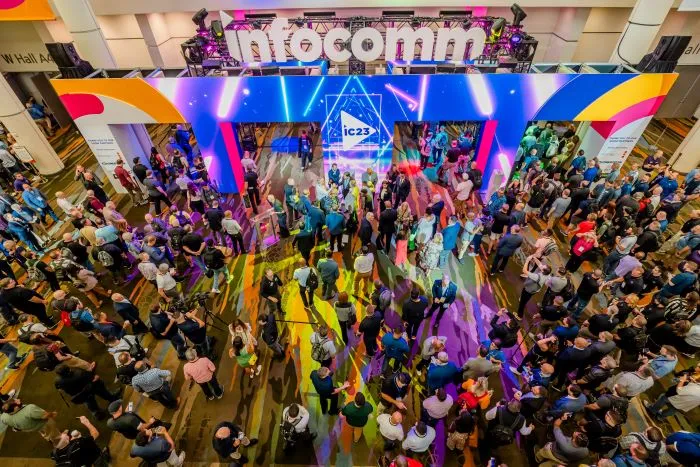
Custom Booth Builders vs. Trade Show Booth Rental for InfoComm
When Custom Booth Builders Make Strategic Sense
Custom builders create tailored exhibit designs offering complete control over AV infrastructure, technology integration, and demonstration environments.
Best for brands that:
- Exhibit at 3+ major AV trade shows annually (InfoComm, ISE, regional shows)
- Require specialized AV demonstration environments including sound isolation, lighting control, or complex signal routing
- Need permanent AV infrastructure including built-in audio systems, video walls, or control room environments
- Have climate-controlled storage between events
- Want consistent brand presentation across multiple shows
Typical custom design investment:
- 10x10: $18,000 - $35,000
- 10x20: $35,000 - $70,000
- 20x20: $70,000 - $140,000
- 20x30: $105,000 - $210,000+
These ranges include design, fabrication, graphics, basic AV mounting infrastructure, and installation. Complex AV integration increases costs beyond these baselines.
When Booth Rental Makes More Sense
Rental options provide professionally designed structures without long-term ownership commitments or technology obsolescence concerns.
Best for brands that:
- Attend InfoComm once annually
- Want predictable budgeting without repair or depreciation concerns
- Value design flexibility to showcase different AV solutions between shows
- Prefer turnkey solutions where providers handle transportation, installation, and maintenance
- Need faster design-to-show timelines (4-6 weeks vs. 10-14 weeks)
Typical rental investment:
- 10x10: $7,000 - $14,000
- 10x20: $14,000 - $30,000
- 20x20: $30,000 - $60,000
- 20x30: $45,000 - $90,000
Rental packages typically include booth structure, transportation, installation labor, dismantle, and storage. Custom graphics and AV integration may carry additional fees.
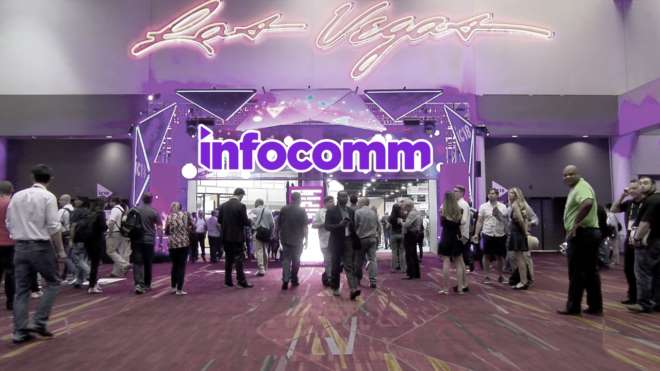
Modular Booth Solutions: The Flexible Alternative
Modular systems use reconfigurable framework components that adapt from 10x10 configurations to 20x30 or larger as exhibition needs change. Unlike custom builds designed for one specific size, modular systems scale with your business.
Key advantages for InfoComm exhibitors:
- Scalability: Start with 10x10, expand to 20x20 using same components
- Reconfiguration: Adapt booth layout for different floor plans or locations
- Technology flexibility: AV mounting systems accommodate changing display sizes as technology evolves
- Cost efficiency: Lower per-show costs than full custom for multi-year programs
Typical modular investment: 10x10 configuration: $12,000-$25,000 initial; 10x20 expansion: $8,000-$15,000 additional components.
Working With Booth Contractors: Evaluation Criteria
Define your AV demonstration requirements before contacting contractors.
Design Portfolio Assessment
- AV trade show experience: Request examples of demonstration-focused booths for audio, video, control system, or conferencing technology companies. Generic technology portfolios don't demonstrate InfoComm-specific expertise.
- Technology integration capabilities: Evaluate how contractors handle AV equipment mounting, cable management, power distribution, signal routing infrastructure, and acoustic considerations. Poor technology design creates demonstration failures that technical audiences immediately notice.
- Las Vegas Convention Center familiarity: Contractors experienced with LVCC understand union labor coordination, load-in logistics, electrical service procedures, and material handling requirements.
Critical Questions for Contractors
- "How many AV trade show booths have you designed in the past three years?"
- "What AV demonstration challenges do you typically address?"
- "How do you integrate audio systems, video displays, and control interfaces into structural design?"
- "Can you provide examples of sound isolation or acoustic treatment you've incorporated?"
- “Who manages LVCC coordination and union labor scheduling during installation?”
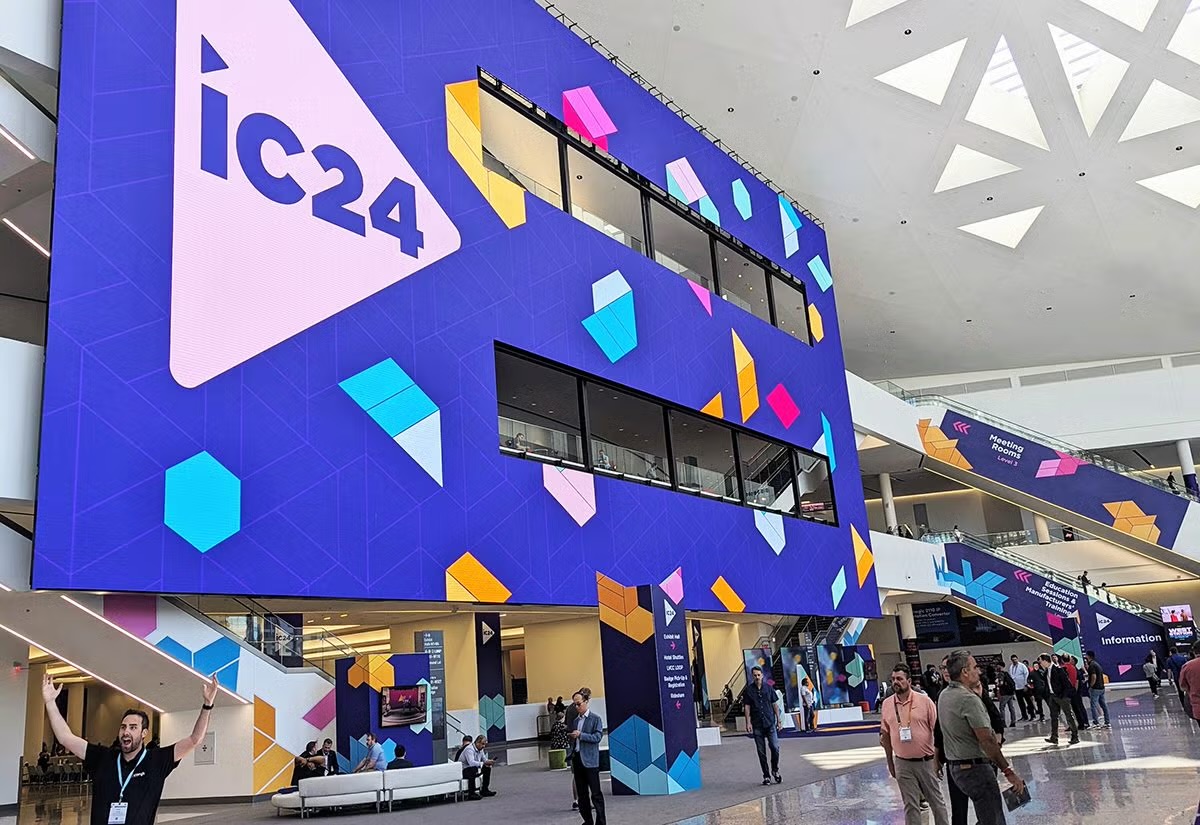
InfoComm Exhibit Design Timeline
5-6 Months Before: Requirements Definition
Clarify primary AV demonstration requirements, number of demo stations needed, hands-on testing areas, technology infrastructure requirements (power, signal routing, networking), brand priorities, and budget with 15-20% contingency.
4-5 Months Out: Design Approach Decision
Determine whether custom builders, rental providers, or modular solutions best serve your operational requirements and budget.
3-4 Months Out: Design Development and AV Integration
Validate designs against operational realities: test AV demonstration flow, verify technology mounting and infrastructure, confirm power distribution and signal routing, walk through staff demonstration patterns.
2 Months Out: Convention Center Logistics
Experienced contractors coordinate union labor scheduling, material handling procedures, electrical service ordering for AV equipment loads, internet connectivity, and advanced warehouse shipping windows.
Why Las Vegas Convention Center Experience Matters
LVCC operates under specific regulations that experienced contractors navigate effectively.
Nevada Union Labor Requirements
All installation and dismantle work must use authorized union labor:
- IATSE Local 720 handles exhibit installation and dismantle
- IBEW Local 357 handles all electrical work including AV equipment power
- Strict jurisdictional rules for rigging, electrical, and general labor
Contractors unfamiliar with Nevada regulations often underestimate costs by 20-30%. Union overtime rates apply outside scheduled windows, and non-compliance can result in work stoppages.
AV Equipment Power and Infrastructure
InfoComm booths typically require significantly more electrical service than general trade shows. Higher power loads for audio amplification, video walls, and multiple displays require dedicated circuits to avoid ground loop issues. Network connectivity for IP-based AV demonstrations and proper cable routing preventing signal interference are critical.
LVCC requires advance electrical service orders (typically 30-45 days before show). Experienced contractors factor these requirements into design planning and budgets. AV exhibitors who've shown at both ISE and InfoComm report that Las Vegas power coordination is the biggest logistical difference.
Line-of-Sight Display Rules
LVCC enforces line-of-sight regulations affecting booth design:
- Inline booths: 8-foot maximum height for back walls; side walls must lower to 4 feet within 5 feet of aisle
- Island booths: Greater height allowances with proper clearances
These regulations impact AV demonstration visibility, screen placement, and sound isolation strategies.
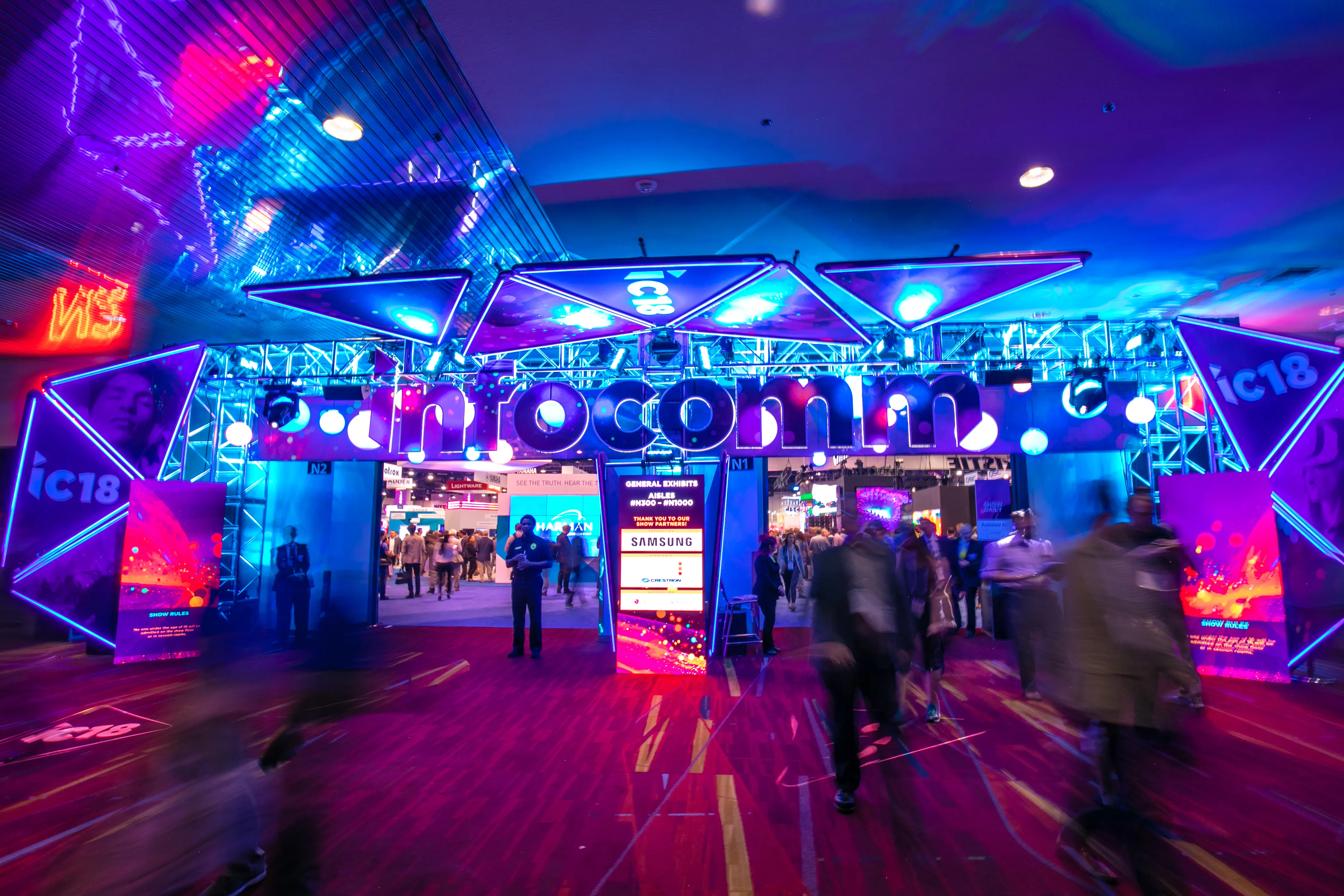
InfoComm Exhibit Budget: Complete Cost Breakdown
First-time InfoComm exhibitors frequently underestimate total costs by focusing only on booth construction without accounting for AV equipment, power, and labor.
Complete Investment Overview (20x20 Booth)
- Booth design and construction/rental: $35,000 - $70,000
- AV equipment rental (if not using owned gear): $8,000 - $20,000
- Drayage and material handling: $4,000 - $10,000
- Installation and dismantle labor: $5,000 - $12,000
- Graphics production: $3,000 - $8,000
- Electrical and internet services: $2,000 - $6,000
- Furniture and accessories: $2,000 - $5,000
- Flooring: $1,500 - $4,000
Total realistic budget: $60,500 - $135,000
Experienced exhibitors include 15-20% contingency buffers for last-minute technology changes, overtime labor charges, or unexpected power requirements during setup.
Common InfoComm Exhibit Design Mistakes
Mistake 1: Prioritizing Aesthetics Over AV Functionality
Visually impressive designs that don't support effective technology demonstrations create operational problems. AV buyers attend InfoComm to see and hear technology in action, not admire booth graphics.
Fix: Design demonstration zones first based on actual AV equipment requirements including viewing angles, listening positions, and equipment access, then build visual elements around functional needs.
Mistake 2: Inadequate Power and Infrastructure Planning
AV demonstrations require reliable power, proper grounding, and adequate circuit capacity. Undersized electrical service, shared circuits causing ground loops, or inadequate cable management creates demonstration failures that technical audiences immediately notice.
Fix: Integrate electrical infrastructure, cable routing, and signal isolation during structural design phases, not as installation-day afterthoughts. Factor power requirements into booth placement decisions during space selection.
Mistake 3: Poor Acoustic Design for Audio Demonstrations
Open booth layouts with no sound isolation make it impossible to demonstrate audio quality in noisy convention center environments. Competing sound from adjacent booths compromises audio demonstrations and frustrates both staff and attendees.
Fix: Include acoustic treatment, partial enclosures, or strategic booth placement away from high-noise areas. Invest in directional speaker systems or headphone listening stations for critical audio evaluation.
How Exhibitorly Simplifies Comparing Booth Options
Evaluating builders and rental providers for InfoComm typically means contacting vendors individually—coordinating multiple outreach emails, waiting for responses, and comparing proposals with inconsistent formats.
Exhibitorly streamlines this process:
- Submit requirements once — booth size, AV demonstration needs, technology integration requirements, budget, and timeline
- Receive multiple proposals from contractors experienced with InfoComm and LVCC operations
- Compare side-by-side — design options, AV integration capabilities, and pricing structures
- Vetted contractors with Las Vegas venue familiarity, union labor coordination experience, and AV demonstration expertise
- Free for exhibitors — no cost to submit requirements or compare options
Instead of chasing five separate AV-focused contractors, exhibitors can evaluate qualified options side by side before installation windows close.