

The Ultimate Las Vegas Trade Shows Checklist for 2026
According to the LVCVA, Las Vegas hosted nearly 6 million convention attendees in 2023, making it the highest-stakes environment for trade shows in the world. You already know that a Vegas floor is a different beast. Between navigating complex union labor rules at the Las Vegas Convention Center and managing drayage costs that often account for 25% of your total spend, there's no room for planning errors. It's a high-pressure landscape where a single oversight can derail your budget.
Key Takeaways
- Identify high-impact trade shows in 2026 and align your strategy with the latest LVCVA attendee demographic projections.
- Navigate complex union labor rules and early-bird deadlines to avoid costly logistical delays at the LVCC or Mandalay Bay.
- Execute a six-month planning timeline that prioritizes interactive technology to capture attention on a crowded floor.
- Compare custom builds against modular systems to select the booth format that maximizes your multi-show durability and ROI.
- Vet exhibit builders using a rigorous three-quote system focused on proven technical expertise within Las Vegas venues.
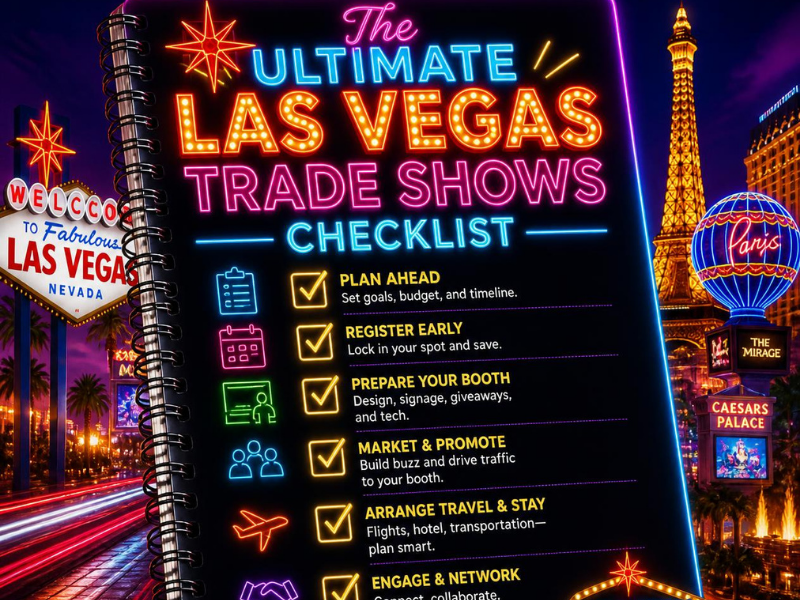
Preparing for Las Vegas Trade Shows in 2026
Success in the 2026 Las Vegas circuit requires a lead time of at least 12 months. Las Vegas continues to dominate as the premier destination for a trade show, with the Las Vegas Convention and Visitors Authority (LVCVA) reporting over 5 million convention attendees annually. For 2026, the focus shifts toward high-impact venues like the Las Vegas Convention Center (LVCC) and Mandalay Bay. These facilities host massive events like CES and World of Concrete, which set the tone for global industry standards. LVCVA projections suggest a 4.2% increase in international C-suite attendees for the 2026 season. You must account for this demographic shift by tailoring your engagement tech to handle professional, data-heavy interactions.
Budgeting for Nevada events requires precision. Las Vegas isn't a low-cost environment. Labor rates at the LVCC and Mandalay Bay are historically higher than in mid-tier cities like Orlando or Chicago. Plan for a 15% premium on drayage, rigging, and electrical services compared to 2024 rates. Establish a firm budget that accounts for these specific local costs to prevent ROI erosion. Focus on high-performance areas where your presence generates the most value.
Selecting Your 2026 Event Portfolio
Don't select events based on tradition alone. Evaluate show relevance using the latest TSNN industry rankings to ensure the audience matches your vertical. Check the Las Vegas Trade Shows 2026 calendar for date overlaps that could split your team's resources. Many major trade shows in the tech and construction sectors have compressed schedules in 2026. Secure your booth space 9 to 12 months in advance. Prime spots in the LVCC West Hall or the Mandalay Bay Ballroom often sell out during the previous year's wrap-up. Early commitment often secures better floor positioning and lower square-foot pricing.
Setting Strategic Objectives
Define what success looks like before you ship a single crate. Differentiate between lead generation and brand awareness goals. If your 2026 product launch timeline peaks in Q3, prioritize shows like PACK EXPO or NAB. Determine specific KPIs for onsite engagement, such as a target number of qualified scans per hour or a set number of executive meetings. Align your booth strategy with these goals to ensure your staff remains focused. This approach allows you to close the loop between physical interactions and your CRM data, turning floor conversations into measurable revenue growth.
The Pre-Show Design and Planning Checklist
Finalize your booth concept and physical layout at least six months before the event. According to the LVCVA, Las Vegas hosted over 6 million convention attendees in 2023. On a floor this crowded, a last-minute design is a recipe for invisibility. You need a 180-day lead time to secure high-quality materials and ensure your tech integrations are flawless. Success at major trade shows depends on early preparation and a clear vision for attendee interaction.
- Finalize booth concept: Lock in your layout 6 months out to avoid rush fees and limited material availability.
- Integrate interactive technology: Use touchscreens, VR, or gamification to compete for attention on the high-energy Vegas floor.
- Develop a marketing plan: Start outreach 90 days before the show to book in-booth appointments with key prospects.
- Schedule staff training: Ensure every team member is proficient in booth etiquette and your specific lead capture technology.
Conceptualizing the Custom Exhibit
Review our list of qualified exhibit builders for design inspiration and structural expertise. Prioritize open floor plans that remove physical barriers. A 2024 CEIR study suggests that open layouts significantly increase dwell time by making the space more inviting. Select durable, high-quality materials like aluminum frames or tension fabrics. These reflect brand authority and withstand the rigors of the Las Vegas shipping process. The International Trade Administration notes that U.S. and international trade shows are essential for brand positioning, so your physical presence must mirror your market status.
Digital and Social Integration
Plan for seamless CRM integration to enable real-time lead capture. Your follow-up should happen while the prospect is still walking the floor, not weeks after the event. Design social media "moments" within the booth, such as interactive kiosks or branded backdrops, to drive organic reach. Audit all digital assets to ensure they are optimized for high-resolution LED walls. Low-resolution graphics look pixelated and unprofessional on the massive screens common at the Las Vegas Convention Center. High-performance exhibitors use these digital touchpoints to close the loop between physical interactions and digital data. To ensure your tech stack is ready for the 2026 season, you can request a custom lead capture consultation to maximize your impact.
Selecting the Right Booth Format for Las Vegas Venues
Your booth format dictates your logistical overhead and your floor presence. Las Vegas venues like the LVCC or Mandalay Bay demand a strategic approach to physical structure. Selecting the wrong format leads to ballooning drayage costs and installation delays. You must align your booth choice with your 2026 marketing objectives and your total number of scheduled trade shows for the year.
Custom vs. Rental: A Strategic Choice
Owning a custom exhibit typically delivers a positive ROI if you plan to use the asset at least three times over a 24-month period. This amortizes the high initial design and fabrication costs. Custom builds allow for unique architecture that reflects your brand identity with precision. If you're looking for specialized partners to execute these designs, you can find and compare booth builders who specialize in the Nevada market.
Rentals offer a tactical advantage for one-off Las Vegas events or for testing new product categories. They eliminate long-term storage fees and depreciation. To avoid a generic look, prioritize rental packages that support high-impact tension fabric graphics and custom lighting. This ensures your presence remains premium while preserving capital for lead generation and booth staffing. High-end rentals now account for nearly 35% of the floor space at major tech events, according to industry reports from Exhibitor Magazine.
Modular and Portable Flexibility
Modular systems provide the most versatility for a busy event calendar. These systems use standardized components that reconfigure from a 10x10 to a 20x20 or larger. This flexibility allows you to adapt to different booth spaces without purchasing new hardware. When selecting a system, audit the weight and shipping dimensions. Las Vegas drayage rates are calculated per hundredweight; choosing lightweight aluminum frames over heavy wood structures can save thousands in material handling fees.
Portable solutions are ideal for smaller 10x10 footprints where speed is the priority. However, you must verify that all materials meet local safety codes. The Clark County Fire Department is strict about fire-retardant certifications. Ensure your portable displays have NFPA 701 documentation readily available. For a step-by-step breakdown of compliance, consult the First-Time Exhibitor Checklist to avoid on-site fines.
Double-deck exhibits are effective in high-ceiling halls like the LVCC West Hall. These structures require structural engineer-stamped drawings and specific permits. While they double your usable square footage, they also increase your labor costs for installation and dismantle (I&D). Only commit to a multi-level structure if your trade shows strategy requires private meeting spaces away from the noisy main floor.
Las Vegas Logistics, Labor, and Compliance
Las Vegas operates on a rigid logistics schedule that rewards early planners. Success depends on mastering the intersection of union labor and strict venue deadlines. Missing a single cutoff can increase your onsite costs by 30 percent or more. According to the Las Vegas Convention and Visitors Authority (LVCVA), the city hosted over 6 million convention attendees in 2023, making the local labor market one of the busiest in the world. You aren't just competing for floor space; you're competing for skilled hands.
Labor rules in Nevada require a clear understanding of jurisdiction. Teamsters typically handle freight movement and drayage, while I&D (Installation and Dismantle) crews focus on the booth structure. While Nevada is technically a Right to Work state, most major trade shows at the LVCC or Mandalay Bay utilize union labor for specialized tasks like rigging, electrical, and plumbing. Submit your utility orders at least 21 days before move-in to secure early-bird pricing and ensure your booth has power when the crates arrive.
Manage drayage costs by shipping materials to the advance warehouse instead of the show floor. This strategy ensures your crates are at your booth space the moment the I&D crew starts. It also helps you avoid the "waiting time" surcharges that carriers often bill when stuck in marshalling yard queues. Review Clark County fire safety codes early. All booth materials, including fabrics and carpeting, must be flame-retardant and carry a certificate of flame resistance, such as NFPA 701, to pass inspection.
Managing Onsite Labor
Schedule your I&D crews for the start of the move-in window to maximize efficiency. This prevents paying overtime rates, which typically kick in after 4:30 PM on weekdays and all day on weekends. Keep a digital folder containing your labor contracts, approved floor plans, and electrical diagrams. If a jurisdictional dispute arises regarding who can plug in a monitor or move a chair, having your paperwork ready allows for instant resolution. Efficiency on the floor translates directly to higher event ROI.
Venue-Specific Regulations
The Venetian Expo and the Las Vegas Convention Center (LVCC) have different structural limits that impact your design. The LVCC North Hall offers different height clearances than the newer West Hall. Always secure permits for overhead rigging 30 days in advance to avoid onsite penalties. Confirm your Wi-Fi and networking needs through the exclusive onsite provider; personal hotspots often fail in high-density trade shows due to signal interference. Clear communication with the venue coordinator ensures your tech-heavy exhibit runs without a glitch.
Get quotes from vetted booth partners to streamline your next Las Vegas event.
Vetting and Hiring Your Exhibit Builder
Your booth is your brand's physical handshake. In Las Vegas, where the LVCVA reported 4.9 million convention attendees in 2023, the competition for floor space and attention is fierce. You can't afford a builder who doesn't understand the specific nuances of the Las Vegas Convention Center (LVCC) or Mandalay Bay. Logistics here are unique. Union labor rules and drayage calculations can sink a budget if your partner lacks local expertise.
Just as homeowners in Massachusetts rely on Aureli Construction for complex structural renovations and additions, exhibitors in Las Vegas must choose partners who are experts in their specific local building codes and logistical hurdles. Whether the project is a trade show booth or a home expansion, the quality of the general contractor determines the final outcome.
Identify builders with significant experience in Las Vegas venues. Request detailed quotes from at least three vetted contractors to ensure competitive pricing and transparent service levels. Don't just look at pretty pictures. Verify builder portfolios specifically for the 2026 show season to confirm they have the bandwidth and modern materials required for current design trends. Confirm storage and maintenance capabilities for multi-year programs. If you plan to attend multiple trade shows throughout 2026, climate-controlled storage is vital for protecting high-end finishes and electronics from the desert heat.
The Vetting Framework
Check builder references for reliability during the "Vegas Rush." This peak period, often surrounding major events like CES or NAB, tests a builder's capacity. Ask for three references from clients who exhibited during these high-traffic windows. Ensure the builder provides full-service project management. You need a single point of contact who handles everything from I&D to electrical orders. Verify insurance and bonding requirements for high-value builds; most major Nevada venues require $1 million to $2 million in coverage minimums.
Leveraging the Exhibitorly Network
Finding the right partner shouldn't be a manual chore. Use the Exhibitorly platform to find and compare booth builders who specialize in the West Coast circuit. Submit your specific project requirements to receive curated builder matches that fit your industry vertical and 2026 goals. For more granular vetting tips, read our guide on choosing the right booth partner. It breaks down the selection process into actionable steps that protect your ROI.
Secure Your 2026 Las Vegas Competitive Advantage
Success at 2026 trade shows depends on early execution and precise logistics. The Las Vegas Convention and Visitors Authority (LVCVA) reported nearly 6 million convention attendees in 2023, and 2026 is projected to maintain this high-stakes momentum. You've now identified the core requirements for navigating venue compliance and selecting a booth format that maximizes your footprint at major hubs like the LVCC or Mandalay Bay.
Your next step is moving from planning to production. Vetting an exhibit builder who understands the specific labor regulations and drayage nuances of the Nevada market is essential for a seamless setup. Don't waste time on manual vendor searches; instead, leverage a network built for efficiency and high-performance results.
Connect with vetted Las Vegas exhibit builders on Exhibitorly to streamline your quoting process for custom builds. Our expertise in major venues ensures you'll close the loop between your brand vision and a physical presence that drives real ROI. You're ready to make 2026 your most successful year on the floor.