
Best Trade Show Lighting Setups for Every Booth Size
Looking for trade show booth lighting ideas that actually work? The best setup depends on your booth size. Use LED (not halogen) in every case; it's cooler, cheaper to power, and lasts 25x longer. For a 10x10 booth, two angled arm lights on the back wall plus one accent spotlight are enough. A 10x20 adds a second lighting zone, LED strips under a counter or shelf, for the section built for longer conversations. A 20x20 corner or peninsula booth benefits most from backlighting (visible from two aisles) plus uplights to avoid rigging fees. An island booth is the one case where rigged, suspended LED lighting makes sense, since you have hall access on all sides. Full breakdown, cost table, and Kelvin/color-temperature guidance below.
Whether you're renting a 10x10 booth at CES or building a 30x30 island exhibit at IMTS, the right lighting can completely change how your booth looks and how many visitors stop. The challenge is that the ideal lighting setup for a small inline booth is completely different from what's needed for a large island exhibit.
This guide shows exactly what trade show lighting ideas works for every booth size, typical costs, and common mistakes to avoid.
Why Lighting Matters More Than Most Exhibitors Think
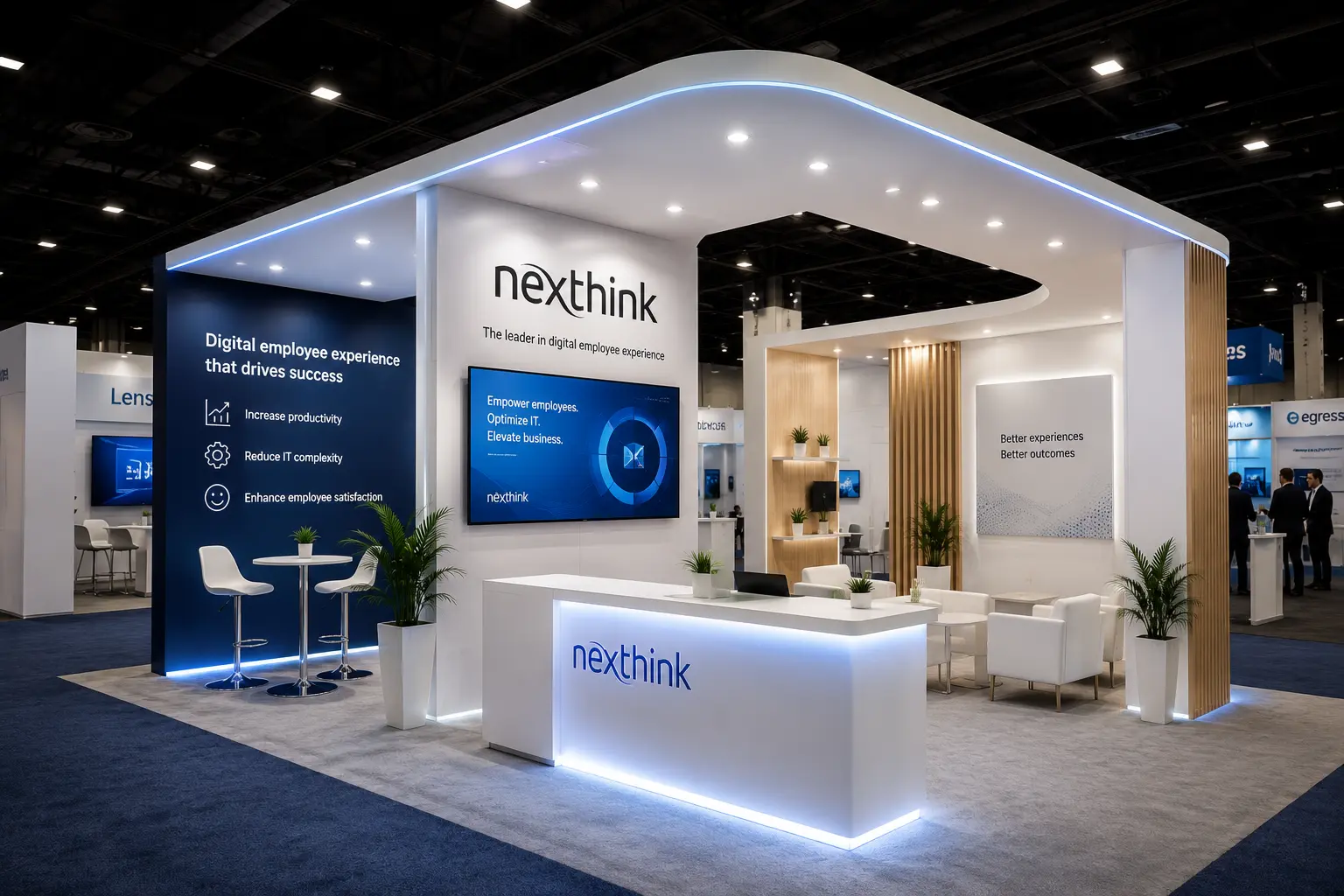
Trade show booth lighting does three jobs at once on a show floor: it makes your booth visible from a distance, it directs attention once visitors arrive, and it signals quality. A booth lit unevenly, or lit with mismatched color temperatures, reads as unfinished even if the structure and graphics are expensive. A well-lit booth with a modest structure often outperforms an expensive booth with flat, uneven lighting, because attention on a show floor is won in the first few seconds, before anyone has read a single word of your messaging.
LED vs. Halogen: This One's Settled
If you're still weighing LED trade show lights against halogen fixtures, the decision is easier than it looks. LEDs use up to 85% less power, generate almost no heat, and last roughly 25 times longer than incandescent or halogen equivalents. Halogens run hot enough to be a fire-code issue in some venues, and a growing number of convention centers restrict or outright prohibit them. Unless you've inherited halogen fixtures you're trying to use up, buy LED.
The one place halogen or warmer incandescent-style lighting still gets used intentionally is in booths going for a deliberately warm, "boutique" feel, but even then, most exhibitors now get that effect from a warm-temperature LED rather than an actual halogen bulb.
Trade Show Lighting Types at a Glance
Whether you're shopping for trade show display lights or planning a full rig, here's how the most common types compare:
| Type | What it does | Typical cost | Best for |
|---|---|---|---|
| Arm/stem lights | Clip onto the back wall, shine down on graphics | $50–$150 each | Small booths, tight budgets |
| Backlighting | Illuminates fabric graphics or logos from behind | $200–$800 per panel | Making a single graphic the focal point |
| LED strip/linear lighting | Flexible strips along edges, shelves, counters | $30–$100 per run | Ambient glow, path-lighting, accenting product tables |
| Uplights | Floor-based, wash light up a wall or curtain | $40–$120 each | Avoiding rigging fees; changing booth mood with color |
| Spotlights | Precise beam on one product or area | $60–$200 each | Highlighting a hero product or demo station |
| Floodlights | Wider beam, bigger area | $80–$250 each | Large graphics, full back walls |
| Track lighting | One rail, multiple adjustable fixtures | $150–$400 per section | Booths that need flexible, repositionable light |
| Suspended LED ceilings | Rigged overhead lighting | $500+ (plus rigging fees) | Island booths with hall access to rigging points |
Most well-lit booths combine two or three types of LED trade show lights rather than relying on just one. A single lighting type across an entire booth tends to look flat.
How to Choose the Right Lighting for Your Booth
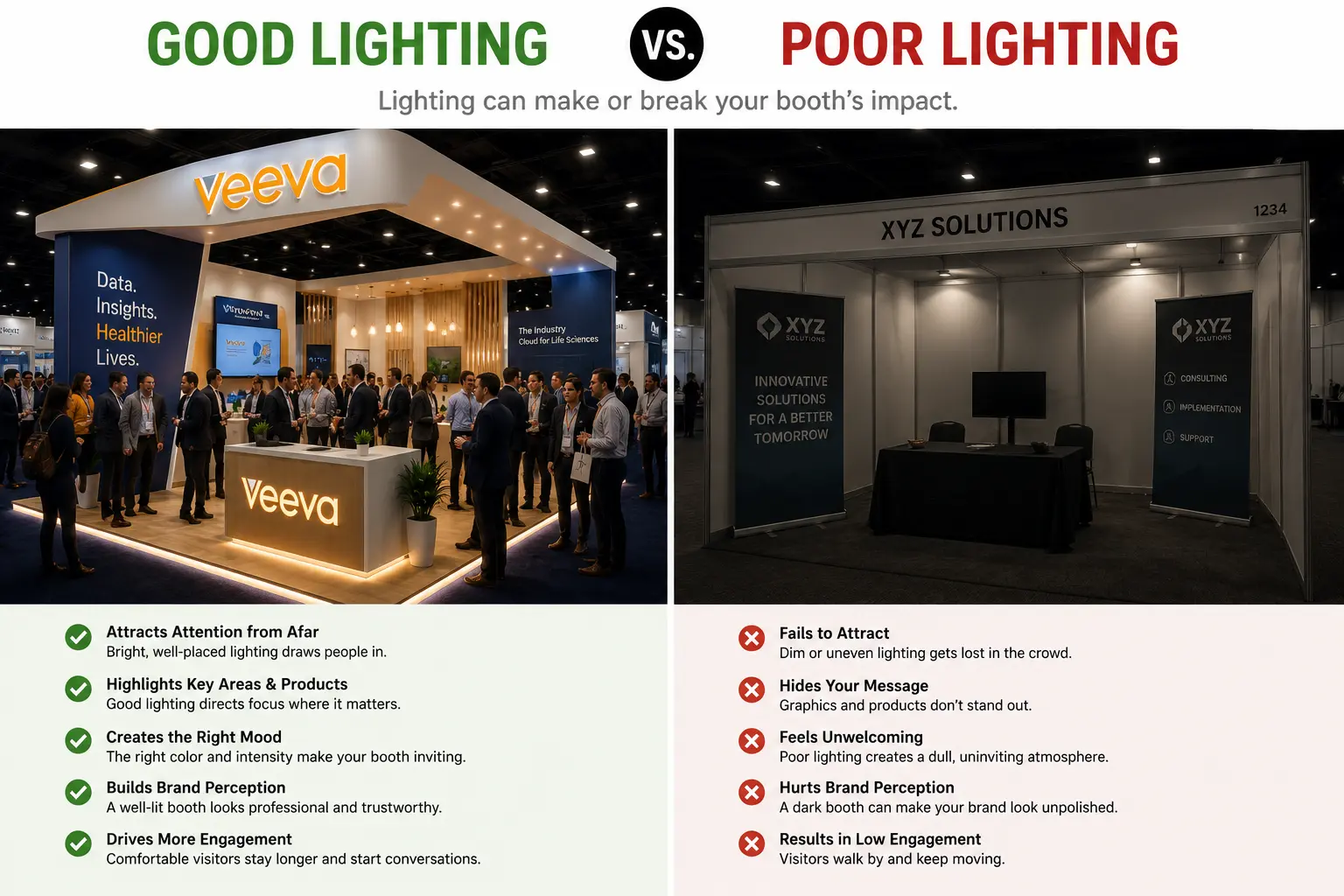
Before choosing any fixtures, think about what you want your lighting to achieve. The best trade show lighting isn't necessarily the brightest, it's the lighting that draws attention to the right areas without overwhelming your space.
Use this quick guide to decide what you need:
| Your Goal | Recommended Lighting |
|---|---|
| Make graphics stand out | LED arm lights or backlit graphics |
| Highlight products | Adjustable spotlights |
| Create a premium feel | Backlit fabric walls |
| Add depth and ambience | LED strip lighting |
| Avoid expensive ceiling rigging | Uplights |
| Evenly illuminate a large booth | Suspended LED lighting |
Most successful booths combine two or three lighting types. For example, a 10x20 booth might use arm lights for graphics, LED strips under the reception counter, and a spotlight for its featured product instead of relying on a single lighting solution.
Best Lighting Setups by Booth Size
Here are practical trade show lighting ideas for each footprint, from a single inline booth to a full island exhibit.
10x10 Inline Booths
This is the tightest footprint and the one where lighting mistakes show the most, because there's nowhere for a bad setup to hide. Start with two arm lights mounted on the top corners of your back wall, angled inward at roughly 30–45 degrees toward your graphics. If you have a product table or a single item you want to spotlight, add one small spotlight or a strip of LED tape underneath the table edge. That's it, three light sources are usually the ceiling for a 10x10 before it starts looking cluttered.
Budget: $150–$400 total for a fully lit 10x10.
10x20 Inline Booths
The extra width means you can separate "attract from the aisle" lighting from "engage once they're inside" lighting. Keep the two-arm-light setup on your primary back wall, but add a second, lower-key lighting zone, LED strip lighting under a counter or along a product shelf, for the section of the booth built for longer conversations. If you have a secondary graphic panel or a side wall, a single spotlight, or a backlit panel there prevents the booth from feeling front-loaded.
Budget: $300–$700 total.
20x20 Corner or Peninsula Booths
At this size, you're visible from two aisles, which changes the lighting job: you need the booth to read well from both approach angles, not just one. Backlighting is particularly effective here; a backlit fabric graphic or logo panel is visible and legible from a distance in a way that flat-printed graphics aren't. Combine that with uplights along any structural walls to avoid rigging costs, and 2–3 spotlights on any demo stations or product displays. Corner and peninsula booths also tend to have sightline restrictions from neighboring booths, so keep taller lighting elements away from shared boundary lines.
Budget: $600–$1,500 total.
Island Booths (20x20 and larger, open on all sides)
Island booths are the one situation where suspended overhead lighting, rigged from the venue's ceiling, starts to make sense, because you have hall access and the budget usually scales with the booth size. A suspended LED ceiling or truss-mounted lighting rig lets you light the whole space evenly and dramatically without floor clutter. Layer in backlighting on any hero graphics or your reception/meeting area, plus targeted spotlights on demo areas. Because island booths are visible from every direction, avoid lighting that only works from one angle; anything mounted on a single wall should be mirrored or balanced elsewhere in the space.
Budget: $1,500–$5,000+, largely driven by rigging fees rather than the fixtures themselves.
Questions to Ask Your Exhibit Builder About Lighting
Lighting is often one of the last items discussed during booth design, but it's much easier and usually less expensive to plan it from the beginning rather than adding fixtures just before the show.
Before approving your booth design, ask your builder:
- Are all lighting fixtures included in the quotation?
- How many electrical outlets will the booth require?
- Will the lighting be installed before delivery, or assembled on-site?
- Does the lighting comply with the venue's regulations?
- Are replacement drivers or power supplies included if something fails during the show?
- Will any fixtures require ceiling rigging or additional labour charges?
A few simple questions can prevent unexpected electrical costs, labour fees, or last-minute design compromises once you arrive at the venue.
Choosing the Right Color Temperature
Trade show exhibit lighting color is measured in Kelvin (K), and it's one of the fastest ways to signal what kind of brand you are before anyone reads your signage.
- Warm (2700K–3000K): Feels inviting and residential. Works well for lifestyle, food and beverage, and hospitality brands.
- Neutral (3100K–4500K): A safe, professional default for mixed-product or B2B booths.
- Cool (4600K–6500K): Reads as modern and high-tech. Common choice for software, medical, and industrial exhibitors.
Whatever you choose, keep it consistent across every fixture in the booth. A booth with one arm light running warmer or cooler than its neighbors looks like a maintenance issue, not a design choice, it's one of the most common (and most avoidable) mistakes on a show floor.
Common Lighting Setups by Booth Size
Every booth doesn't need the same number of lights. Here's a simple starting point used by many exhibitors.
| Booth Size | Recommended Setup |
|---|---|
| 10x10 Inline | 2 LED arm lights + 1 spotlight |
| 10x20 Inline | 2 arm lights + LED strip lighting + 1 spotlight |
| 20x20 Peninsula | Backlit graphic wall + 2–3 spotlights + uplights |
| 20x20 Island | Suspended LED lighting + backlit graphics + spotlights |
| 30x30+ Island | Suspended lighting grid + feature lighting + meeting area lighting |
Your builder may recommend additional fixtures depending on ceiling height, product displays, or the venue's ambient lighting, but these setups provide a solid starting point for budgeting.
Budget, Power, and Compliance Basics
A few practical constraints apply to trade show booth lighting, no matter what size you're working with:
- Power costs money. Convention centers routinely charge $150–$350+ for a single electrical outlet drop. LED fixtures are worth it here, too, since you can often run several off one outlet instead of paying for multiple drops.
- Height limits are real. Most shows cap the inline booth wall height at 8 feet under IAEE guidelines, and anything mounted above that, including lighting, can get you a visit from show management. Check your exhibitor manual before you finalize your lighting plan, not after it's shipped.
- Keep lighting inside your footprint. Uplights on the aisle carpet or arm lights that extend past your booth boundary are a common violation, especially in corner and peninsula booths.
- Plan cable management early. Cords should run under flooring, through structural frames, or along wall bases, never loose across walkways. If you're renting your exhibit, confirm with the builder whether they'll pre-drill cable routing before it ships.
Trade Show Lighting Checklist
Before your booth ships, make sure you've covered the essentials.
- Choose LED fixtures instead of halogen.
- Verify all fixtures use the same colour temperature.
- Confirm how many electrical outlets you'll need.
- Review venue lighting and rigging regulations.
- Plan cable routing before installation.
- Test every fixture before shipping.
- Pack spare drivers, power supplies, and extension cords.
- Check that lighting remains within your booth footprint.
A simple pre-show check can help you avoid expensive last-minute electrical orders and installation delays.
Common Trade Show Lighting Mistakes
Even experienced exhibitors get lighting for trade show booths wrong. Watch for these common mistakes:
- Buying consumer-grade puck-style trade show lights: They're rarely bright enough to register on a show floor, with the exception of small, shallow display cases like jewelry.
- Mixing color temperatures across fixtures: Even a great lighting plan looks unfinished if one bulb runs warmer or cooler than the rest.
- Lighting the whole booth evenly and calling it done: Undirected, uniform lighting doesn't tell visitors where to look. Reserve your brightest points for what you actually want to be noticed.
- Skipping the exhibitor manual: Height limits and rigging rules vary by venue and by show; what worked at your last event isn't guaranteed to work at the next one.
Need Help Choosing the Right Booth Setup?
Lighting is just one part of building a successful trade show booth. Through Exhibitorly, you can compare experienced exhibit builders who can recommend the right lighting, materials, layout, and booth design based on your show, budget, and objectives.
Getting trade show exhibit lighting right is one piece of a much bigger build. Whether you're exhibiting with a compact 10x10 booth or a custom island exhibit, getting multiple expert proposals makes it easier to compare ideas, pricing, and what's actually included.
Get matched with trusted trade show booth builders and receive custom proposals for your next event.