Modern Booth Design Trends 2026: What's Actually Working on the Show Floor
Modern booth design trends 2026 reflect this shift. The brands outperforming their peers are not following trends blindly; they are selecting specific design approaches that align with their objective and executing them well.
Modern Booth Design Trends 2026: What's Actually Working on the Show Floor
Why 2026 Is a Genuine Inflection Point for Booth Design?
- Several forces have converged to raise the bar across the industry.
- Visitor expectations have shifted. After years of hybrid and virtual alternatives, the people who show up to trade shows in person are doing so deliberately — they want an experience worth the trip. Generic displays don't meet that expectation.
- Technology costs have dropped significantly. What required a six-figure budget three years ago is now accessible to mid-size exhibitors. That's good for innovation, but it also means screens and interactive elements no longer differentiate on their own — they're table stakes.
- Sustainability is being evaluated differently. It has moved from a brand value to a procurement criterion. Many corporate buyers now assess exhibitor ESG practices as part of supplier evaluation, which changes how sustainable design choices are weighted in a brief.
- Experience design expertise has matured. The discipline that once belonged to retail and hospitality has moved into the exhibition industry in a meaningful way. Builders who understand spatial psychology and visitor journey design are now accessible outside of top-tier custom builds.
As a result, trade show booth design trends 2026 are less about spectacle and more about intentional execution.
The 7 Modern Booth Design Trends Shaping 2026
The most impactful modern booth design trends 2026 include experience-first environments, sustainable materials, intentional minimalism, modular flexibility, purposeful technology integration, hospitality-led layouts, and biophilic elements
Trend 1 — Experience-First Environments
The most fundamental shift in exhibition booth design right now is the move from display logic to experience logic.
Display logic asks: what do we need to show? Experience logic asks: what should the visitor feel when they walk in, and what do we want them to walk away understanding?
These are completely different design briefs, and they produce completely different booths.
At recent technology and enterprise shows, enclosed narrative booths are consistently generating longer dwell times than open backwall formats.
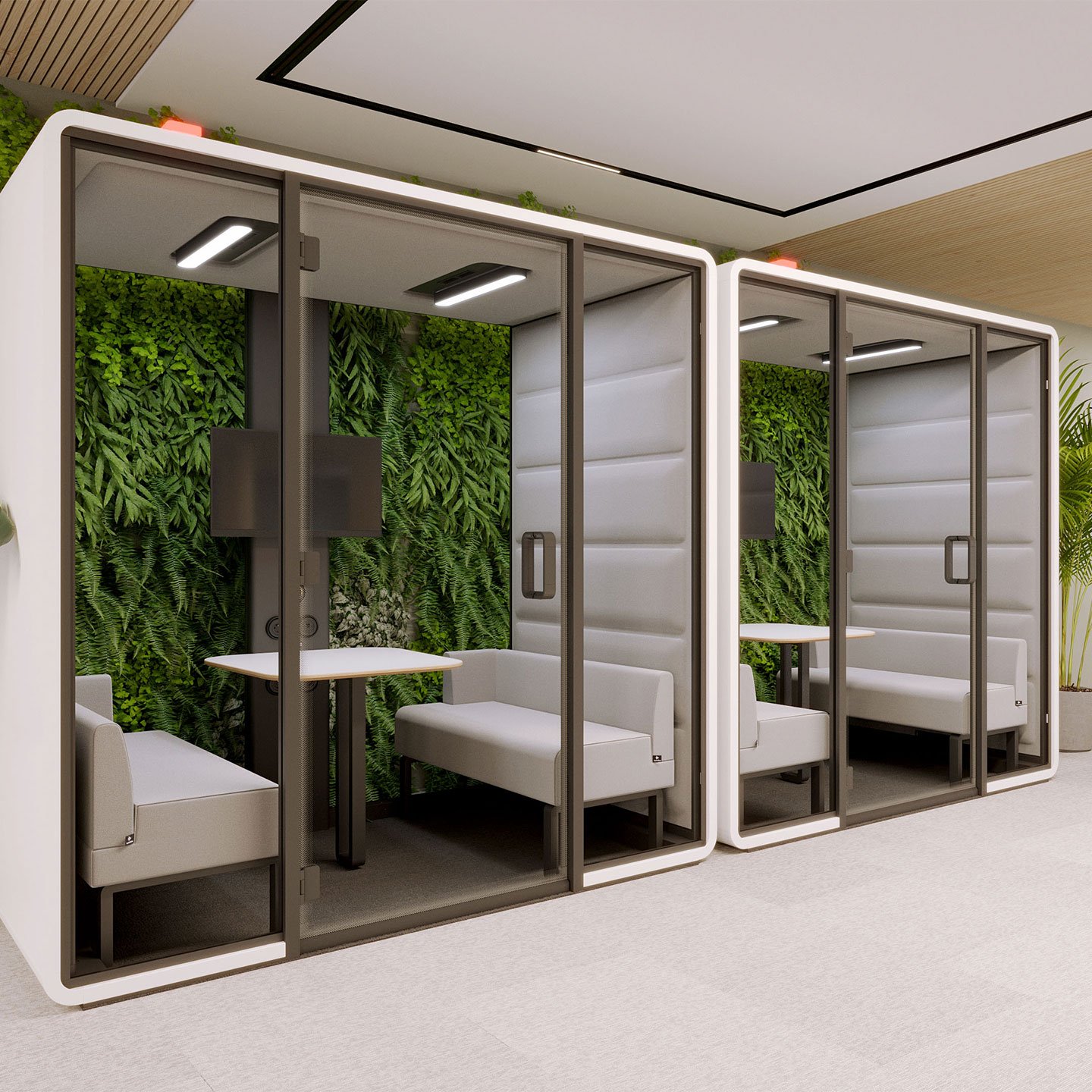
What experience-first design looks like in practice:
A well-executed experience booth has a defined spatial journey — an entry moment that creates transition, an engagement zone built around a specific interaction or demonstration, and an exit designed to carry the brand forward. Materials are chosen for how they feel underfoot and in hand, not just how they photograph. Lighting is controlled, often lowered from the hall's ambient ceiling wash. Sound, if present, creates atmosphere rather than competing with it.
The booth doesn't try to communicate everything about the brand. It tries to make the visitor feel one thing clearly.
- Where this goes wrong: Experience design is easy to gesture toward and difficult to execute. The failure mode is a booth with theatrical ambitions and generic execution — a semi-enclosed structure with the same backwall graphics it would have had if it were open. The spatial container alone doesn't create the experience. The journey inside it does.
- Who this is most relevant for: Brands in competitive halls where dwell time and conversation quality matter more than raw footfall. Technology, professional services, and premium consumer brands are most commonly using this approach effectively.
Trend 2 — Sustainability as a Design Language, Not a Policy Statement
Sustainable booth design has been talked about for years, but in 2026, the conversation has changed in a specific way: sustainability is no longer being treated as a constraint or a checkbox. It's being treated as an aesthetic.
The difference matters. When sustainability is a constraint, it produces booths that apologize for what they're not using. When it's an aesthetic, it produces booths that are visually distinctive because of the materials they've chosen.
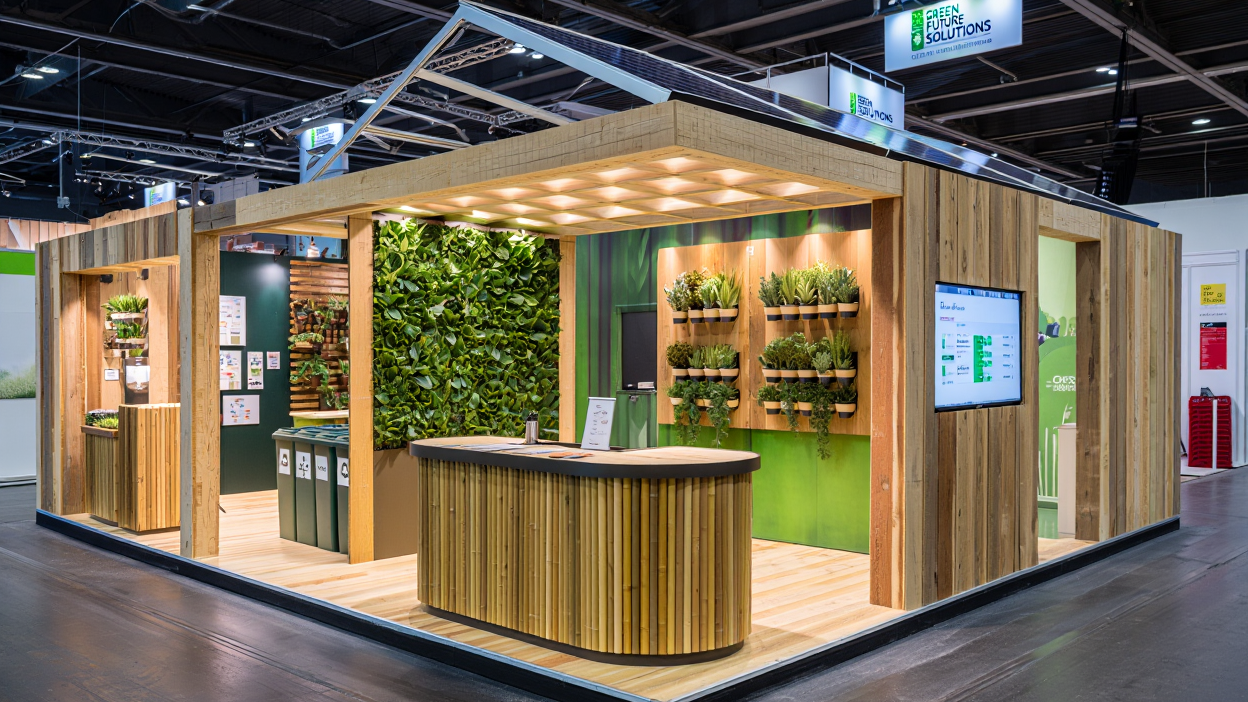
What this looks like now:
FSC-certified timber, bamboo joinery, and reclaimed wood finishes are replacing standard aluminum extrusion not just because they're greener but because they look different in a hall full of white laminate. Recycled fabric graphics have reached a quality level where they're indistinguishable from standard print at typical viewing distances. LED-only lighting has become the baseline, with warm-spectrum fixtures replacing the cool wash that made booths feel clinical.
Modular reusable systems, covered separately below, are also part of this trend — the environmental argument and the cost argument have converged.
- What's driving adoption beyond brand values: The shift in procurement practices is real. Exhibitors showing at industry events where their audience includes sustainability-conscious buyers or B-Corp brands are finding that booth design choices get noticed and discussed in a way they didn't three years ago.
- What to watch for: The gap between sustainable claims and sustainable execution is still wide. Builders who genuinely work with certified materials and have waste reduction processes are worth distinguishing from those who've added green language to existing offerings. Ask for specifics.
Trend 3 — Technology With a Job to Do
This trend is less about what technology is present in a booth and more about how it's being deployed.
Screens have been in trade show booths for over a decade. So have tablets, badge scanners, and video loops. At this point, visitors move past most of this without registering it. The technology that's earning attention in 2026 is technology that does something for the visitor — not technology that performs for them.
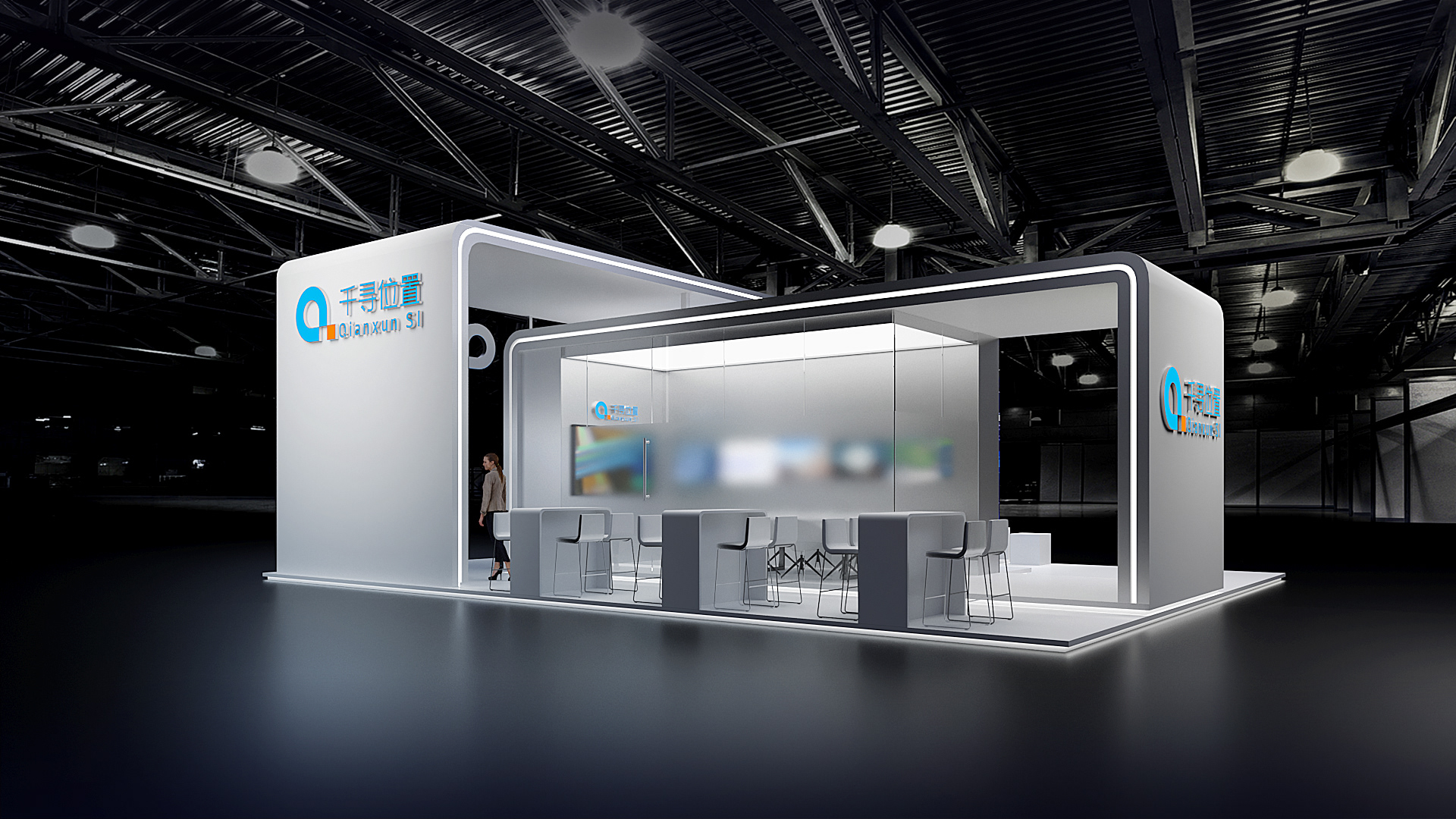
What's working and why:
AI-powered product configurators are gaining traction because they flip the dynamic. Instead of presenting the visitor with information and hoping they engage, a configurator invites the visitor to make choices — and gives them a personalized output at the end. It becomes a conversation tool for booth staff and a lead qualification mechanism at the same time.
Spatial computing for large or complex products is genuinely impressive when the product warrants it. Demonstrating industrial machinery, architectural systems, or infrastructure at scale in a physical booth is impossible. Demonstrating it in a well-executed spatial environment is not.
Interactive LED data walls are evolving past static content loops. The versions that respond to visitor presence or change based on time of day and audience density are creating moments worth stopping for, rather than a familiar backdrop visitors have already tuned out.
NFC-enabled content delivery is replacing the QR code/lead capture model with something more useful: tap-to-connect interactions that link visitors to content hubs personalized to the conversation they just had, rather than a generic homepage.
- What's declining: Standalone video loops playing brand content with no visitor interaction. Generic tablet surveys with no clear value exchange. Badge scanners used as the primary engagement mechanism with no follow-up system attached to them.
- The underlying principle: Before adding any technology to a booth brief, it's worth asking what the visitor gains from the interaction. If the answer is nothing specific — if the technology is there to signal modernity rather than to serve a purpose — it's likely to become invisible.
If you're evaluating builders for 2026, review recent installed projects — not just renders. Compare verified portfolios before committing to a direction.
Trend 4 — Intentional Minimalism
Minimalism is not a new concept in design. What's new in 2026 is the version of minimalism that's winning on trade show floors, which is distinct from the minimalism that fails.
Minimalism fails when it's the result of under-investment — empty space, thin materials, a single banner with nowhere to go. Visitors read this quickly and accurately as a brand that didn't have the budget to fill the space.
Minimalism succeeds when it's the result of deliberate restraint — when every element present has earned its place, when the negative space is as designed as the positive space, and when material quality is higher precisely because fewer materials were chosen.
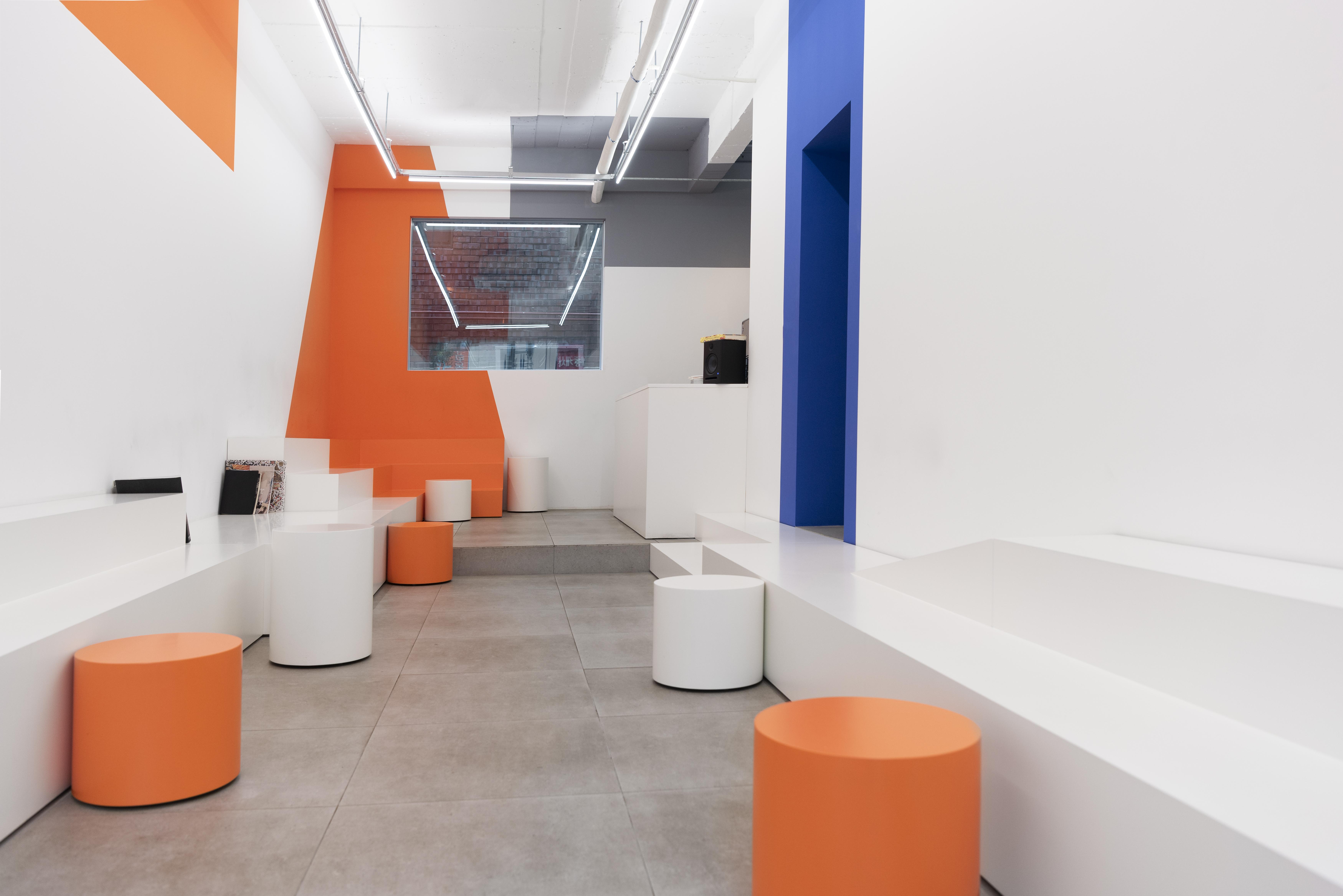
What intentional minimalism looks like in practice:
One dominant visual anchor rather than competing graphic planes. A single message, stated clearly, rather than a hierarchy of value propositions fighting for attention. Open floor space that reads as confidence, not absence. Premium execution on every surface that's present — because the budget that would have gone into additional elements was redirected into quality.
- Why it's gaining ground in 2026: In crowded, visually dense exhibition halls, restraint stands out. Busy booths with layered messaging require cognitive effort from a visitor who is already fatigued. A booth that communicates clearly and immediately — that tells the visitor exactly what the brand is in the first few seconds — earns the pause that leads to conversation.
- This approach is hardest to execute well because it requires confidence at the brief stage. The instinct when designing a booth is to add another message, another product, another element. Intentional minimalism requires an organization that knows what it's for and is willing to leave the rest out.
Trend 5 — Modular Systems Built for Genuine Flexibility
Among all modern booth design trends 2026, modular flexibility may offer the strongest operational return. Modular booth systems are not new. What's changed is the quality ceiling.
For most of their history, modular systems were recognizably modular — the trade-off for flexibility and reusability was a look that announced itself as a system. The gap between modular and custom was visible from across the hall.
That gap has largely closed in the upper tier of modular products. Fabric graphic quality, connector aesthetics, lighting integration, and structural finish have all improved to the point where a well-specified modular system is visually indistinguishable from a custom build at typical show distances.
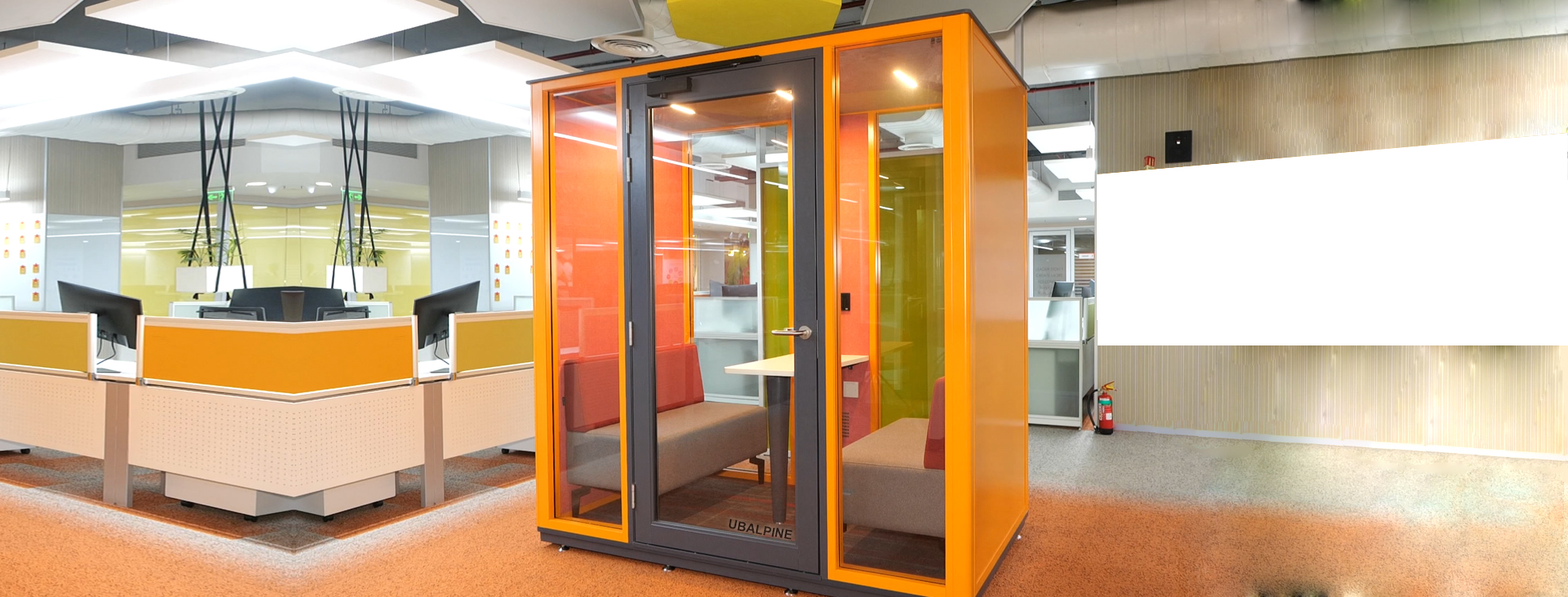
What modern modular systems offer:
Genuine scalability — the same system that operates as a 10x10 reconfigures to a 20x20 and adds a tower or hospitality element without requiring new structural components. Tool-free or near-tool-free assembly that reduces installation time and labor cost significantly. Integrated lighting and monitor mounting designed into the structure from the start rather than added on. Packing systems optimized for freight cost and damage reduction across multiple shipments.
- The ROI case: For brands exhibiting at three or more shows per year, the economics of modular systems are often more favorable than repeated custom builds — especially when shipping, storage, and installation labor costs are factored in alongside the build itself. The upfront investment can be recovered quickly.
- What to ask before committing: Modular quality varies enormously across builders and systems. The same brief executed in different modular products will produce different results. Always ask to see installed examples from recent shows — not renders, not product photography, but actual deployed booths — before choosing a system or a builder.
Trend 6 — Hospitality as Strategy
Hospitality at trade shows has traditionally been treated as a nice addition — branded coffee for visitors who were already going to stay. In 2026, forward-thinking exhibitors are treating it as a core design element, not an afterthought.
The reason is straightforward: seated visitors stay longer. Visitors who stay longer have deeper conversations. Deeper conversations convert at higher rates. The hospitality element isn't a comfort offering — it's a dwell time mechanism, and dwell time is one of the most important variables in show floor performance.
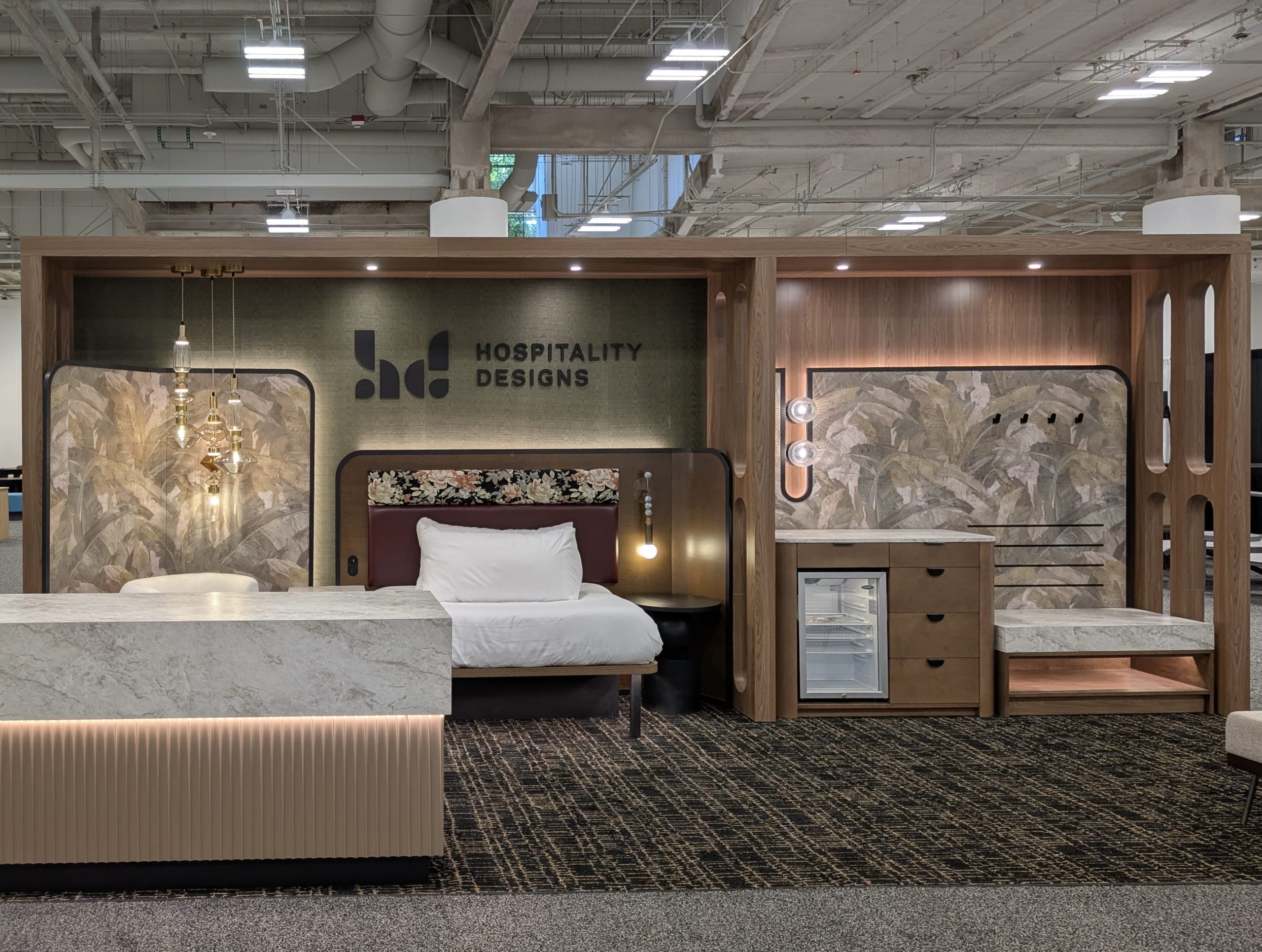
What this looks like across different scales:
At any booth size, high-quality branded coffee or refreshments serve a function that goes beyond the offering itself. The sensory cue — scent, warmth, something to hold — creates a brief pause that gives booth staff an opening. Visitors who stop for coffee are, for a moment, standing still.
At 10x20 and above, a defined lounge area with comfortable seating — separated from the main traffic zone so it doesn't block flow — changes the character of conversations. Visitors who sit down are implicitly committing to a longer interaction. They rarely leave quickly.
At 20x20 and above, a fully designed hospitality zone can become a destination in its own right. A well-designed space with good seating, considered lighting, and something worth having draws visitors who weren't planning to stop and turns scheduled meetings into extended conversations.
The design principle: Hospitality needs to be built into the floor plan from the start. Adding a high-top table and a coffee machine to a booth that wasn't designed for them doesn't produce the same result as designing the hospitality moment into the spatial journey from the beginning.
Trend 7 — Biophilic Design Elements
Biophilic design — the integration of natural materials, living elements, and organic forms into built environments — has been a significant trend in office and hospitality design for several years. In 2026, it has moved meaningfully into exhibition booth design, and the reason is partly aesthetic and partly psychological.
Convention halls are among the least natural environments humans spend time in. Hard floors, industrial lighting, recycled air, and an overwhelming visual density of artificial surfaces create a low-grade sensory fatigue that most visitors don't consciously register. Natural elements — moss, timber, stone texture, living plants — read as genuinely different in this context. They arrest attention in a way that another backlit graphic does not.
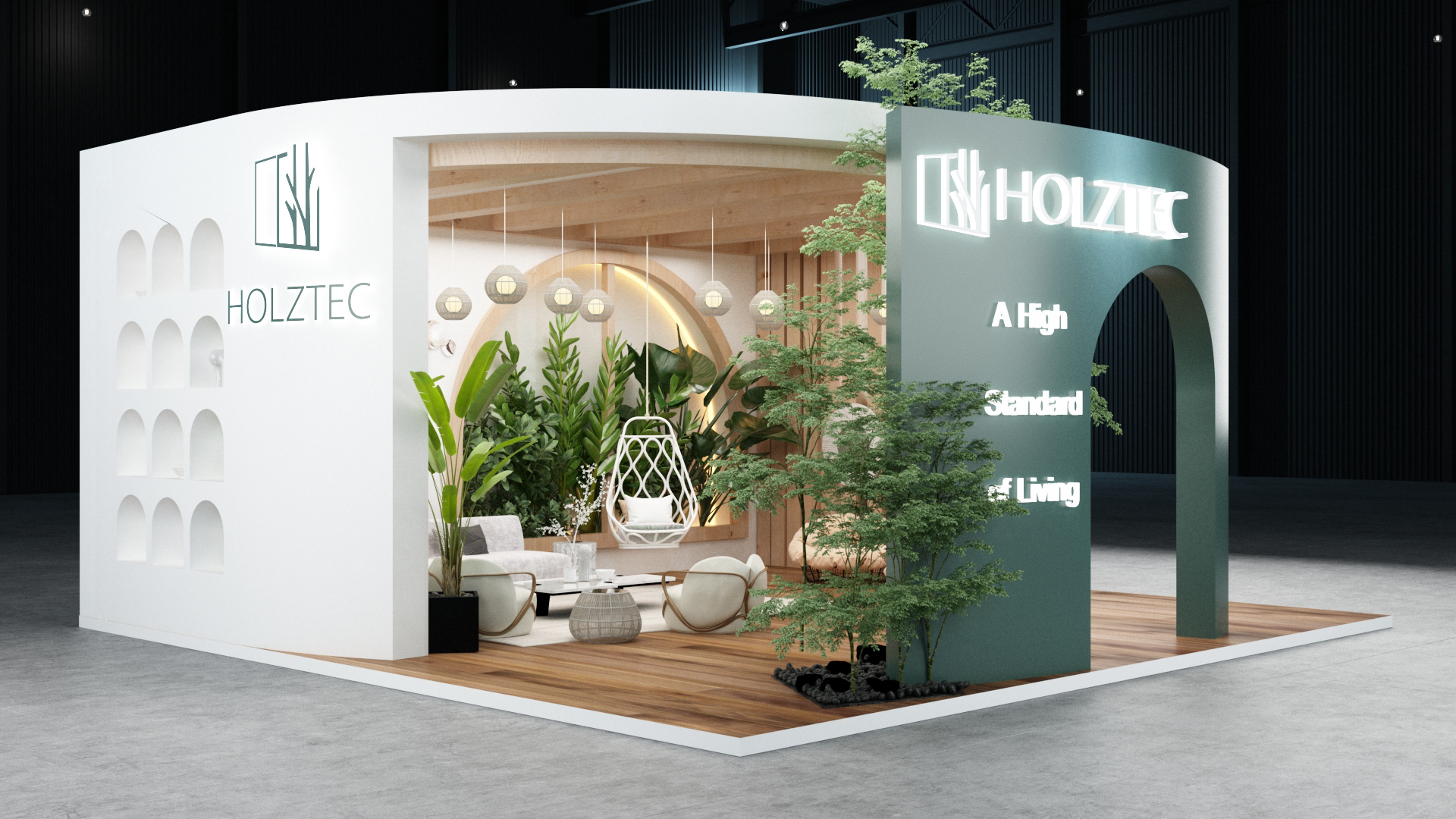
What biophilic booth design looks like:
Preserved moss walls are the most widely used element — maintenance-free, visually distinctive, and highly photogenic in a way that generates organic social content from visitors who photograph them. Natural wood finishes on counters, flooring, and structural elements create warmth that standard materials don't. Integrated planters in display and counter structures bring living elements into the booth without requiring maintenance support on site. Stone and concrete texture panels used as wall treatments add materiality that reads as premium without the cost of actual stone.
Warm-spectrum LED lighting, tuned to mimic natural daylight, completes the effect — it makes visitors look better (which they notice, even if they don't know why) and creates an atmosphere that feels less fatiguing than the hall's standard overhead wash.
Where this is heading: This trend has been strongest in wellness, consumer goods, and food and beverage brands. In 2026, it's moving into B2B technology and professional services companies that want to create a warmer, more human environment — brands that recognize their visitors are fatigued by screens and hard surfaces and want to offer something that feels meaningfully different.
How to Choose the Right Trends for Your Booth
Running through all seven trends and trying to incorporate each one is a reliable route to a booth that does none of them well.
The more productive approach is to start with two questions: what is this booth trying to accomplish, and who specifically are we trying to reach? The answers narrow the field considerably.
A brand focused on lead quality over lead volume should prioritize hospitality-led design and experience-first environments — longer dwell time, deeper conversations, better qualified exits. A brand trying to establish premium positioning in a competitive category should look at intentional minimalism and material quality. A brand exhibiting multiple times per year with variable budget should evaluate modular systems before anything else.
Once the strategic priorities are clear, run each candidate trend through four questions:
Does it feel true to the brand — not bolted on, but genuinely consistent with how the brand presents itself everywhere else? Does it serve the specific objective of this show, not trade shows in general? Will the specific audience encountering this booth respond to it — B2B procurement teams and consumer buyers respond to fundamentally different design cues? And is the budget honest — some trends are accessible across price points, others require real investment to execute at the quality level where they work?
One or two trends executed exceptionally will always outperform five trends executed adequately.
The Builder Question
As booth design becomes more experience-driven, the execution gap between builders widens. Finding the right booth builders becomes critical.
Many builders specialize in specific system types — rental-heavy modular, full custom fabrication, double-deck structures, or tech-integrated environments. Comparing capability before requesting quotes prevents misalignment later.
Immersive environments require structural expertise and AV integration. Technology builds require electrical planning and coordination. Biophilic elements require material sourcing and quality control. Modular systems require familiarity with the specific product being specified.
Two builders quoting the same brief will produce different results — sometimes dramatically different. Portfolio review matters more in 2026 than it did when most booths were variations on the same backwall structure. Look for builders whose recent show work demonstrates current thinking, not three-year-old renders. Ask how they made specific design decisions, not just whether they can execute instructions.
Exhibitorly lets you compare verified booth builders by portfolio, evaluate recent installed work side by side, and request quotes from builders already working with these trends across the USA.
Final Note
The exhibitors getting the most from trade shows in 2026 are not trying to win on scale or on spend. They're winning on clarity — knowing exactly what their booth is for, choosing one or two design approaches that serve that purpose, and finding builders capable of executing those approaches at the quality level where they actually work.