

Modular Trade Show Booths: Reuse One Build Across Events
A modular trade show booth is one kit of frames, panels and connectors that reconfigures into different footprints across your show calendar. This guide covers what modular exhibition stands cost, how far a single kit really stretches, where modular loses to custom, and the questions that separate a genuinely reusable system from a repackaged one-off.
Most exhibitors buy a booth for the show in front of them. Two shows later the footprint is different, the build does not fit, and they are quoting a second structure. A modular trade show booth is the answer to that pattern: one kit of standardised parts that reconfigures across footprints instead of one structure locked to a single floor plan.
This guide covers what modular exhibition stands actually cost, how far a single kit genuinely stretches, where modular loses to custom, and the questions that separate a real system from a one-off dressed up as one.
What Makes a Booth Modular
Modular is not a look, it is a construction method. The system is built from standardised aluminum extrusion, repeatable panel sizes, and connectors that let a given part serve in more than one position. Change the arrangement and you change the booth.
The test is simple. If your builder can hand you a drawing and a parts list for three different footprints using the same inventory, it is modular. If they can only show you the layout you asked for, you are buying a custom build with modular marketing attached.
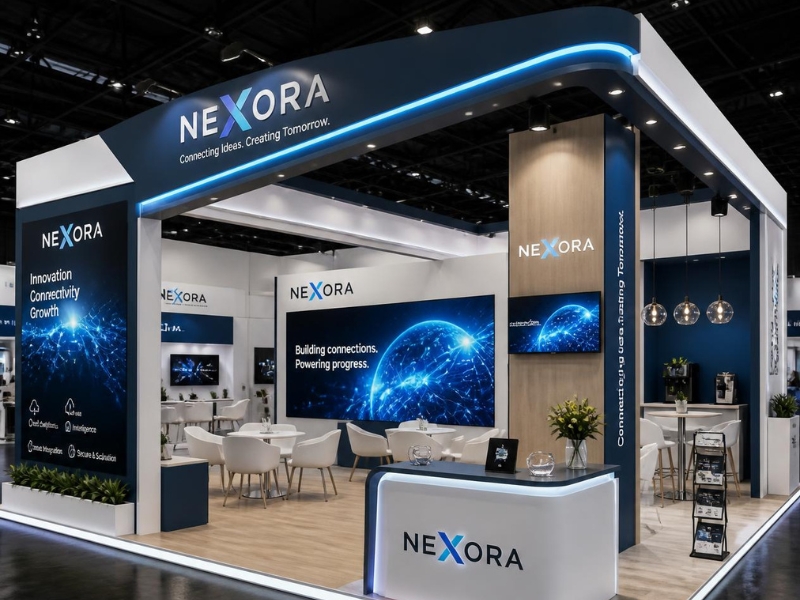
What Modular Exhibition Stands Cost
| Kit scope | Configurations covered | Buy | Rent per show |
|---|---|---|---|
| Entry kit | 10x10 only, two layouts | $6,000-$12,000 | $2,500-$4,500 |
| Growth kit | 10x10 and 10x20 | $12,000-$30,000 | $5,000-$9,000 |
| Scale kit | 10x10, 10x20 and 20x20 island | $30,000-$70,000 | $12,000-$25,000 |
Those numbers cover frames, panels, graphics and cases. They exclude storage, drayage, electrical, refurbishment and the reprints you will want when branding changes.
The Break-Even Maths
The question is never whether modular costs more than one rental. It is what your cost per show looks like across two years.
Take a growth kit at $20,000. Add storage at $150 a month and roughly $800 per show in refurbishment and reprints. Across eight shows in two years that is about $3,700 in running costs, so total cost of ownership is near $23,700, or roughly $2,960 per show. Renting a comparable 10x20 at $7,000 per show costs $56,000 over the same eight shows.
The crossover typically lands between the third and fifth show. Below that, rent. Above it, modular wins and keeps winning.
Where Modular Loses to Custom
A builder who tells you modular does everything is selling inventory. It does not.
- Unusual geometry. Curves, angles and anything sculptural fight a system built on repeatable rectangles.
- Double-deck structures. Second storeys are engineered builds with their own permitting and load requirements.
- Heavy product display. Modular frames carry graphics, not machinery. Weight needs its own structure.
- Enclosed meeting rooms. Achievable, but the walls, doors and acoustics usually come from custom work bolted onto the modular core.
The realistic answer for most exhibitors above 200 square feet is hybrid: a modular backbone for walls and structure, custom pieces for counters, storage and anything load-bearing.
Reconfiguration Limits Nobody Mentions
Two constraints catch buyers out.
You buy for your largest footprint. A kit sized for a 10x20 will scale down to a 10x10 with parts left in the case. It will not scale up to a 20x20 without buying more inventory. Size the purchase against the biggest show on your two-year calendar, not the next one.
Graphics are footprint-specific. The frames reconfigure but a 20ft printed panel does not become two 10ft panels. Ask which graphics carry across configurations and which need separate prints, then add those prints to the quote before you compare vendors.
Proprietary Versus Standard Extrusion
This single question determines what you own. Systems built on open industry extrusion profiles let you buy parts, graphics and repairs from multiple suppliers. Proprietary systems lock everything to the original vendor, which shows up years later as inflated spare-part prices and slow lead times when something breaks two days before a show.
Ask directly: is this profile proprietary, and can I source replacement parts elsewhere? A confident builder answers plainly. A vague answer is the answer.
Get Quotes on Your Modular System
Quotes for the same modular scope routinely differ by 30-50%, usually on extrusion quality, whether graphics for all configurations are included, and whether refurbishment is bundled or billed. Ask every builder for a line-item quote plus a drawing for each configuration you need, or you cannot compare like for like.
Exhibitorly matches you with three vetted builders who quote your exact configurations, with free design concepts and no cost to exhibitors. You compare designs, parts lists and prices side by side and keep whichever partner fits.