

The Ultimate SFA Summer Fancy Food Show Booth Planning Guide for Exhibitors
An exhibitor-focused guide to planning booths for the SFA Summer Fancy Food Show, with insights into specialty food booth design, show logistics, and why early comparison of booth builders reduces risk.
In the trade show industry, food shows are some of the most demanding and most rewarding events to exhibit at. When it comes to the U.S. market, the SFA Summer Fancy Food Show sits at the top of that list.
But what makes SFA exciting also makes it unforgiving. Sampling-heavy booths, dense foot traffic, and buyers moving quickly from aisle to aisle mean there’s very little margin for error. A booth that isn’t planned for how food trade shows actually function can struggle within hours of the show opening.
That’s why planning a booth for the SFA Summer Fancy Food Show often starts with evaluating experienced SFA Summer Fancy Food Show booth builders who understand sampling-heavy environments and high buyer traffic.
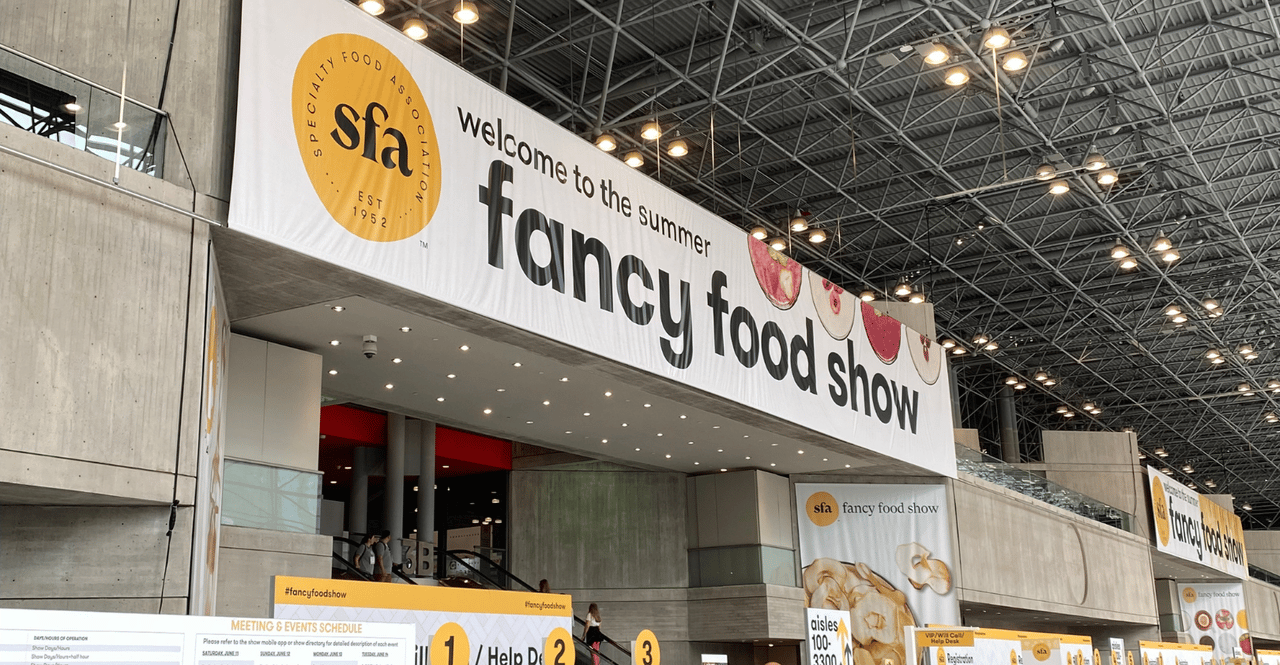
Why SFA Trade Show Booth Design Matters More Than at Other Food Events
At SFA, buyers are not browsing casually. They arrive with full schedules, limited time, and specific objectives. Booths are evaluated in seconds, often while attendees are juggling multiple samples, conversations, and meetings.
This makes SFA trade show booth design fundamentally different from most other food events.
Sampling drives engagement, but sampling also creates pressure. Crowds form quickly. Storage fills faster than expected. Staff need room to move, prep, and reset without disrupting the experience. Booths that look visually impressive but fail to support these realities tend to struggle.
This is why specialty food booth design is less about trends and more about functionality. At SFA, design must support movement, hygiene, replenishment, and conversation—simultaneously.
An SFA Booth Planning Timeline: What to Decide, and When
Planning a booth for the SFA trade show works best when decisions are made in sequence, not in parallel. Each phase below reflects how booth design, logistics, and builder evaluation typically unfold for SFA exhibitors.
Six Months Out: Strategy and Show Objectives
Before thinking about booth visuals or vendors, exhibitors should clarify:
- What success at SFA looks like (new retail accounts, distributor meetings, press exposure)
- Which products will be sampled and in what volume
- Budget range, including contingencies
- Internal ownership for decisions and approvals
Clarity at this stage reduces rushed compromises later. Most SFA execution issues trace back to unclear goals set early on.
Four to Five Months Out: Booth Size and Budget Reality
This is where many SFA planning issues begin.
Exhibitors often select booth sizes based on visibility goals without fully accounting for:
- Sampling storage requirements
- Power, refrigeration, and waste needs
- Staff movement behind the booth
At food trade shows, booth size is not just a marketing decision. It directly affects how well sampling and conversations function during peak hours.
Three to Four Months Out: Design Feasibility and Stress Testing
This is when specialty food trade show booths should be evaluated against real show-floor conditions.
Booths that appear strong in renderings often struggle at SFA when sampling volume, storage access, and staff circulation are not designed into the layout from the start. Designs should be reviewed with questions like:
- Where does product get stored during peak hours?
- How quickly can staff replenish samples?
- What happens when three conversations start at once?
Answering these questions early prevents friction later.
Two Months Out: Logistics Lock-In
Logistics decisions at SFA shape what can realistically be built and installed.
At this stage, exhibitors typically finalize:
- Freight and drayage planning
- Labor schedules
- Install and dismantle windows
Because the SFA Summer Fancy Food Show is held at a high-demand venue, late changes here often carry cost or feasibility consequences.
Final Month: Execution Readiness
The final weeks before SFA should focus on validation rather than discovery.
Exhibitors should be confirming:
- Installation plans
- Sampling workflows
- Staffing coverage
- Contingency scenarios
Most show-floor stress does not come from last-minute surprises—it comes from earlier decisions that were never pressure-tested.
Booth Design Tradeoffs Unique to Specialty Food Exhibitors at SFA
Designing for SFA means balancing competing priorities.
Sampling throughput must be weighed against visual impact. Open layouts may feel inviting but can bottleneck quickly. Booths designed purely for branding often struggle under sustained sampling demand.
Storage is another critical tradeoff. At SFA, storage is not optional. Product, supplies, waste, and personal items all need designated space. Poor storage planning leads to clutter, which buyers notice immediately.
Staff comfort is equally important. If staff are constantly navigating obstacles or tight spaces, conversations suffer. Effective SFA trade show booth design supports the people working inside the booth as much as the audience outside it.
How the Jacob Javits Center Shapes SFA Booth Design and Contractor Decisions
For exhibitors, the Jacob Javits Center is not just a venue. It directly shapes booth design, labor planning, and installation timelines for the SFA trade show.
Experienced food trade show booth contractors understand:
- Union labor rules and scheduling
- Strict load-in and load-out windows
- Drayage procedures and material handling
- Height and rigging limitations
Exhibitors working with partners unfamiliar with the Javits Center often encounter rushed installs or unexpected costs. Venue familiarity plays a meaningful role in execution quality.
Budget Realities for Specialty Food Trade Show Booths at SFA
Many SFA exhibitors budget primarily for booth construction while underestimating the full cost of executing a specialty food trade show booth.
Commonly overlooked expenses include:
- Drayage and material handling
- Union labor and potential overtime
- Storage between shows
- Last-minute changes or replacements
A realistic SFA budget typically includes a 10–20% buffer to account for variables outside an exhibitor’s direct control.
How to Evaluate Booth Builders for the SFA Trade Show Without Rushing Decisions
Evaluating booth builders for the SFA trade show should come after design and logistics requirements are understood, not before.
Instead of focusing only on visuals, exhibitors benefit from asking:
- Does this team have experience with food trade shows?
- Do they understand sampling workflows?
- Who will be responsible on-site?
- How are logistics and labor coordinated?
This is why many exhibitors choose to compare multiple SFA trade show booth builders rather than committing to a single quote early in the process.
Platforms like Exhibitorly exist to help exhibitors compare SFA booth contractors based on scope, experience, and execution readiness—before deposits are paid and flexibility disappears.
How Exhibitorly Fits Into SFA Booth Planning
By the time exhibitors reach the stage of evaluating booth builders for the SFA trade show, most of the high-risk decisions have already been made. Booth size, sampling requirements, logistics constraints, and budget realities are largely defined. What’s left is execution and choosing the right partner to deliver it.
This is where many exhibitors struggle. The SFA Summer Fancy Food Show is a specialized event, but most exhibitors are still asked to make booth builder decisions with limited visibility. Quotes vary widely. Scopes are difficult to compare. And it’s often unclear which SFA trade show booth builders have real experience with food shows, sampling-heavy booths, and the Jacob Javits Center.
Exhibitorly was built to address this exact problem.
Instead of relying on a single recommendation or committing to the first proposal that looks acceptable, exhibitors can use Exhibitorly to find and compare booth builders for the SFA Summer Fancy Food Show in one place. The goal is not to push a specific vendor, but to give exhibitors enough context to make informed decisions before deposits are paid and timelines lock in.
For exhibitors planning SFA, having that comparison early can reduce risk, surface better questions, and prevent last-minute compromises that often show up on the show floor.
Common SFA Exhibitor Mistakes Seen Every Year
Certain mistakes appear repeatedly at the Summer Fancy Food Show:
- Treating SFA like a standard B2B trade show
- Underestimating sampling volume
- Locking in SFA booth builders too late
- Designing without logistics input
- Selecting vendors based on price alone
These issues are rarely about effort. They are about decision sequencing and visibility.
When Should You Start Evaluating Booth Builders for SFA?
As a general rule, exhibitors should begin evaluating food trade show booth builders four to six months before the event, once booth size and budget ranges are defined.
Early evaluation allows exhibitors to:
- Compare execution approaches
- Surface logistics assumptions
- Understand scope differences
- Reduce last-minute compromises
If you are approaching this stage, reviewing available options for SFA trade show booth builders can provide valuable context before commitments are locked in.
Final Thoughts: Planning Before Selection
Planning a successful booth for the SFA Summer Fancy Food Show requires more than good design. It requires understanding how sampling, logistics, and execution intersect within the realities of a busy food trade show.
Exhibitors who approach SFA booth planning deliberately are better positioned to evaluate builders, manage risk, and perform confidently on the show floor. And when it is time to choose between food trade show booth contractors, having the right planning context makes that decision far more effective.