

Trade Show Logistics 101: Shipping, Drayage, and What It All Actually Costs
Trade show logistics breaks into distinct cost layers: origin freight, advance warehouse fees, drayage, and return shipping. Origin freight for a small booth runs $200 to $600 round trip, a mid-size modular booth runs $600 to $2,000, and a large island exhibit runs $2,500 to $8,000 or more. Trade show drayage is the cost of moving freight from the loading dock to your booth space. It typically runs $60 to $180 per hundredweight (CWT) round trip, with Las Vegas and Chicago venues running 20 to 30% higher. Shipping to the advance warehouse instead of direct-to-show usually costs less overall, since the drayage rate is lower even after adding storage fees. Total shipping and handling for a mid-size booth typically lands between $3,000 and $10,000 per show. Keep reading for exactly how drayage is calculated, the penalties that catch first-timers, and the moves that actually bring the bill down.
Trade show logistics is the part of exhibiting that catches the most first-timers off guard, mostly because the invoice arrives in layers. There's the cost of shipping your booth to the show city, plus a possible advance warehouse fee if you ship early. Then comes drayage to move it from the loading dock to your booth space, and the whole thing in reverse to get home. Each layer is billed separately, by a different party, on a different schedule. This guide breaks down what trade show logistics actually involves, what each layer costs, and how to avoid the penalties that turn a manageable shipping bill into a budget problem.
What Trade Show Logistics Actually Covers
Trade show logistics is everything involved in getting your exhibit from your facility to the show floor and back again. It breaks into four distinct layers that stack on top of each other, and most exhibitors only budget for the first one:
- Origin freight - transporting your exhibit from your facility to the show city
- Advance warehouse fees - if you ship early to a staging facility near the venue
- Drayage and material handling - moving your freight from the venue dock to your booth space
- Return shipping - getting everything home after the show closes
Each layer is billed by a different party on a different schedule, which is part of why trade show shipping costs surprise so many first-time exhibitors.
Trade Show Freight: Getting Your Booth to the Venue
Trade show freight pricing is driven by weight, distance, mode, and how tight your timeline is.
| Booth Type | Typical Origin Freight (Round Trip) |
|---|---|
| Small booth (banner stands, pop-up in hard cases) | $200 - $600 |
| Mid-size modular booth (3-5 crates) | $600 - $2,000 |
| Large island exhibit (pallets, custom crates) | $2,500 - $8,000+ |
Exhibitors generally choose between a dedicated truck, where your freight is the only load and tracking is precise, or standard LTL freight through the show's official carrier network. Dedicated service typically costs 30 to 50% more but reduces handling risk, while LTL is cheaper but shares trailer space and follows a consolidation schedule.
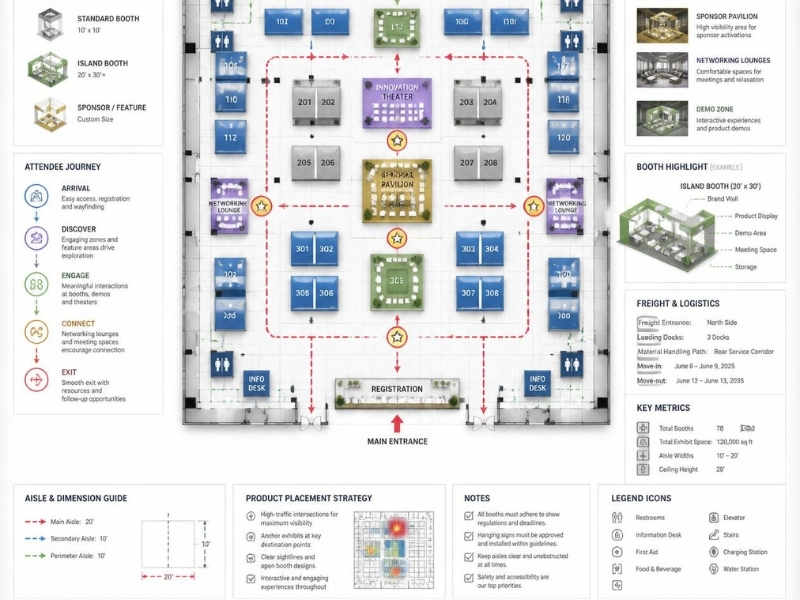
Advance Warehouse vs. Direct-to-Show Shipping
Most major shows offer an advance warehouse: a staging facility near the venue where you can ship freight days or weeks ahead of the show's target move-in date. The show's contractor receives, inventories, and stores it, then delivers it to your booth space during move-in.
Advance warehouse storage typically costs $5 to $15 per hundredweight per month, plus a handling fee on receipt and delivery. For a 1,200-pound booth stored two weeks, that's roughly $200 to $400 in warehouse fees. The advance warehouse drayage rate is almost always lower than the show-site rate, both listed side by side in the exhibitor services manual. Shipping to the advance warehouse instead of direct-to-show can save 20 to 30% on drayage, which usually more than offsets the storage fee.
Trade Show Drayage Explained
Trade show drayage, also called material handling, is the charge for moving your freight from the loading dock to your booth space, and back again after the show. It's provided by the show's general service contractor under a union labor agreement with the venue, which means you can't hand-truck or forklift your own freight to the floor at most major shows. You pay for it, and it's mandatory.
Drayage is priced per hundredweight, or CWT, where one CWT equals 100 pounds. Typical rates at major US venues run $60 to $180 per CWT for round-trip handling, with Las Vegas and Chicago commanding a 20 to 30% premium above average.
How Drayage Is Actually Calculated
A few pricing rules catch first-time exhibitors off guard:
- Weight rounds up. Every piece is rounded to the next 100 pounds, so a 201-pound crate is billed as 300 pounds, or 3 CWT.
- Minimums apply per piece. Most shows impose a 200-pound minimum charge per piece, regardless of actual weight. A 25-pound box still gets billed at the 200-pound minimum.
- Each piece is charged separately. Five small boxes shipped individually generate five minimum charges. The same items consolidated onto one pallet generate a single charge based on actual weight.
A real example: a 10x20 exhibit weighing 700 pounds generates roughly 7 CWT. At $140 per CWT for advance warehouse drayage, that's about $980. At $180 per CWT direct-to-show, the same booth costs about $1,260, a $280 difference for identical freight.
The Overtime and Off-Target Penalties That Add Up Fast
Most general service contractors define straight time as Monday through Friday, 8 a.m. to 4:30 p.m. Unloading that starts after 4:30 p.m., on a weekend, or on a holiday triggers an overtime surcharge of 30 to 50% on the entire drayage bill. Arriving at 4:00 p.m. doesn't help if the dock queue means your truck isn't unloaded until 4:31.
Off-target penalties are the other trap. Every exhibitor is assigned a target move date, a specific day and window the venue expects the truck. Trucks arriving off-target get unloaded only after all on-target trucks are processed, and many shows add a surcharge on top for arriving outside the assigned window.
Full Cost Example: What Trade Show Logistics Really Costs
For a mid-size 10x20 modular booth weighing about 1,200 pounds, shipped through the advance warehouse:
| Cost Layer | Typical Range |
|---|---|
| Origin freight (round trip) | $1,800 - $2,500 |
| Advance warehouse storage (2 weeks) | $200 - $400 |
| Drayage inbound (advance rate, ~12 CWT) | ~$1,680 |
| Drayage outbound (same rate) | ~$1,680 |
| Cargo insurance (~1.5% of declared value) | ~$300 |
Total shipping and handling for a scenario like this typically lands between $5,000 and $6,500, not including booth space rental, show services, or travel. For most mid-size booths, total trade show shipping and handling runs $3,000 to $10,000 per show.
How to Reduce Trade Show Logistics Costs
A handful of moves consistently bring the bill down:
- Consolidate everything onto as few pallets as possible. Fewer pieces means fewer per-piece minimum charges.
- Ship to the advance warehouse instead of direct-to-show. The lower drayage rate usually offsets the storage fee.
- Use standard LTL carriers where possible. Freight moving through common carrier networks often attracts lower drayage rates than specialty exhibit carriers.
- Reduce total weight. Every pound not shipped is a pound you don't pay drayage on. Digital displays instead of printed collateral and lighter booth materials both help.
- Hit your target date during straight time. Arriving on-target during standard hours avoids both overtime surcharges and off-target penalties.
- Submit material handling forms before the exhibitor kit deadline. Late submissions can add fees or push your freight lower in the move-in priority order.
Booth design itself also affects drayage, since the cost is weight-driven. A heavy, bulky exhibit built without shipping in mind costs more to move than a comparable display engineered to be lighter and pack efficiently.
Return Shipping: Don't Forget the Trip Home
Return freight costs roughly the same as inbound freight, but the logistics are tighter. Move-out windows are shorter than move-in, and every exhibitor at the show is trying to ship out at the same time, which strains carrier capacity at the venue. Outbound drayage is included in the round-trip CWT rate, but the return freight itself needs to be booked separately. Book return freight before the show rather than waiting until move-out day, when spot rates in a constrained market can run well above what you'd pay booking in advance.
Common Trade Show Logistics Mistakes to Avoid
- Budgeting for freight only. Drayage, advance warehouse fees, and return shipping are separate line items that add up fast if they're not planned for from the start.
- Shipping loose pieces instead of consolidating. Every extra piece can trigger its own per-piece minimum charge.
- Ignoring the target move date. Off-target arrivals get unloaded last and often carry an added surcharge.
- Cutting it close on straight-time hours. A dock queue can push your unloading into overtime even if your truck arrives on time.
- Waiting until move-out to book return freight. Spot-market rates during a show's tear-down window are rarely the cheapest option.
Planning Trade Show Logistics That Don't Blow the Budget
If you're planning logistics for a fall show, a couple of major events are coming up worth checking freight and advance warehouse deadlines for early. FABTECH 2026 runs October 21-23 in Las Vegas, and heavy equipment exhibitors there deal with exactly the kind of oversized-freight logistics this guide covers. DEMA Show 2026 runs November 3-6 in New Orleans, a useful reminder that drayage rates and target move dates vary by venue, not just by show.
What Is Exhibitorly?
Exhibitorly is an American marketplace that helps exhibitors find the right booth builder for a trade show. Instead of contacting builders one by one, you submit a single request with your show, your booth size, your timeline, and your budget. Exhibitorly matches that request with a small number of vetted builders who have real experience at that show and venue, not every builder on the platform.
Builders apply to join and get reviewed before approval, so you're only hearing from companies with a track record of delivering. You compare their designs and pricing side by side, and you decide who to work with. There's no obligation, and searching shows or submitting a quote request costs nothing.
Browse and compare vetted exhibit builders on Exhibitorly to find a team that plans logistics into the design from day one. Read the full platform guide for a closer look at how the matching process works.