

What to Expect at a Trade Show: A First-Timer’s Complete Guide (2026)
Your first trade show is going to be bigger than you expect. Louder than you expect. More exhausting than you expect. And honestly? More valuable than you expect — if you know what you are walking into. Most first-timers show up with no real idea of what a trade show day actually feels like. They leave tired, slightly overwhelmed, and wishing someone had just told them what to expect beforehand. That is exactly what this guide is for.
First Things First: The Scale Will Surprise You
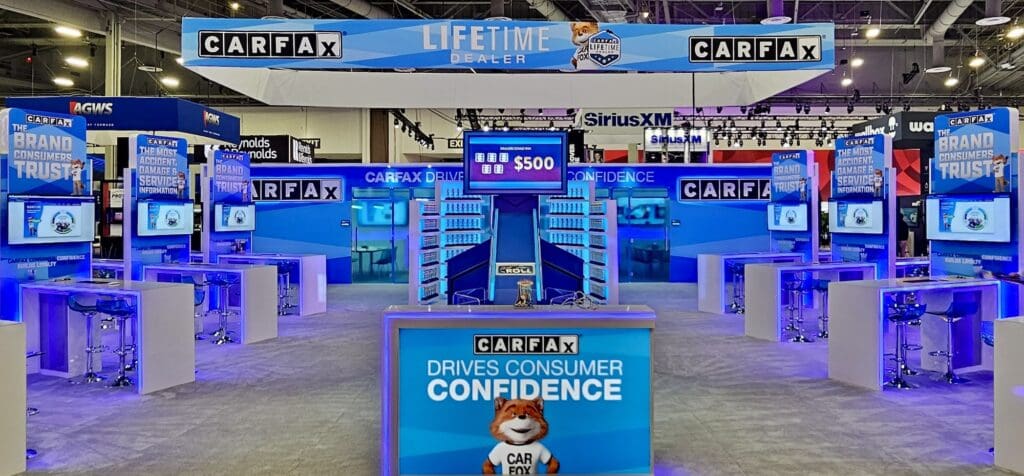
Let’s start with something nobody really warns you about. Trade show venues are enormous. The Las Vegas Convention Center — home to shows like InfoComm 2026 and CES — spans millions of square feet across multiple halls. The Mandalay Bay Convention Center, where SuperZoo 2026 takes place, covers six full halls. The Orange County Convention Center for SHRM 2026 draws over 23,000 attendees.
Walking in for the first time and seeing thousands of booths stretching in every direction is genuinely disorienting. This feeling passes quickly. But plan for it. When you first step onto the floor, resist the urge to immediately rush to the nearest booth. Take five minutes. Walk a loop. Get your bearings. Match the floor map to what you see in front of you.
Every experienced attendee does this. Now you will too.
What to Expect: Hour by Hour
The First Two Hours — High Energy, Best Conversations. This is your golden window.
The floor just opened. Exhibitors are fresh. Crowds are manageable. Staff are alert and genuinely happy to talk.
Use this time for your highest-priority booths. Not the ones you are casually curious about — the ones you came specifically to see. The quality of conversations in the first two hours is noticeably better than mid-afternoon, when booth staff have already answered the same questions 200 times and are running low on energy.
- Practical tip: Before you leave for the venue, write a shortlist of your top 5 must-see booths. Hit those first. Everything else is a bonus.
Mid-Morning to Midday — Peak Crowds
The floor fills up fast. By 10 am at most major shows, the aisles are busy. Popular booths develop short wait times. The noise level rises. It starts feeling genuinely crowded.
This is when the classic first-timer mistake happens.
You get caught up at one booth for 45 minutes because the conversation is interesting. Then another. Then you look up and realize it is noon, you are tired, and you have seen maybe 8% of what you planned to.
The solution is not to be rude or rush people. It is to be intentional. If a booth is not what you need within the first five minutes, take their card politely and move on. You can always follow up. You cannot get those two hours back.
Early Afternoon — The Wall Hits
Nobody talks about this enough. Between 2 pm and 4 pm, almost everyone on a trade show floor hits a wall. Not a gradual slowdown — an actual wall.
You have been standing and walking on hard concrete or carpet-over-concrete for five to six hours. You have had dozens of conversations. You have processed an enormous amount of new information. Your feet hurt. Your brain is full.
This is completely normal. It is not a sign that you are doing it wrong. Build a real break into your afternoon. Find a seat somewhere — a session room, a café, a quiet corner. Drink water. Eat something. Give yourself 20 minutes before your final push.
First-timers who do not plan for this break often leave early and miss the last stretch of the day entirely.
Late Afternoon — Quieter, Underrated
Here is something most people do not realize. The last 90 minutes of the show floor are often surprisingly good for real conversations.
The casual browsers have gone. The serious buyers are still there. Booth staff have more time and are often more relaxed. If you have booths left on your list that you did not get to yet, this is your second chance.
Do not leave early just because you are tired. Push through the wall. The late afternoon is often where the most honest conversations happen.
What Actually Happens at Booths
- Expect to get your badge scanned. Nearly every booth at a modern trade show uses a badge scanning system. When a staff member scans your badge, they capture your contact information for follow-up.
You do not have to let them scan you. There is no obligation. But if you are genuinely interested in what they are showing, letting them scan is normal and expected. It is how the relationship continues after the show. If you are not interested, a simple “I will grab your card and follow up if there is a fit” is all you need. No explanation required. Booth staff are used to this and will not be offended.
- Small booths are often more valuable than big ones. This surprises almost every first-timer. The massive booths from household-name brands are impressive. The lights, the screens, the production value. But the conversations there are often scripted, rushed, and heavily managed.
The smaller booths — emerging companies, niche specialists, regional players — often give you direct access to a founder or senior decision-maker. The conversations are more real. The willingness to actually talk through your specific problem is higher. Do not skip the smaller booths because they look less impressive. Some of the best conversations at any trade show happen there.
- You will collect more stuff than you expected:
Brochures. Business cards. Product samples. Branded giveaways. USB drives. Tote bags. By mid-afternoon, first-timers are often carrying genuinely heavy bags of accumulated show materials. Have a system before you walk in. Photograph anything you want to remember, and leave the physical copy if it is bulky. Be ruthless about what actually goes in your bag. Most of what people collect at trade shows ends up in a hotel bin anyway — keep only what you will genuinely look at again.
What to Expect as a First-Time Exhibitor
Running a booth for the first time is a different experience entirely. Here is what catches most people off guard.
- Setup takes longer than you think: Move-in day is chaotic. Freight arrives in waves. Things get delayed. Last-minute booth problems — a damaged graphic, a missing component, a power issue — are extremely common.
Experienced exhibitors build buffer time into their setup schedule. Arrive at the start of your designated window, not the end. Shows like SHRM 2026 have structured move-in schedules by booth size — large booths move in first, followed by standard booths closer to opening day. Check your exhibitor manual for your specific window and treat it seriously
Exhibitorly connects you with booth builders who have managed setup logistics at specific shows dozens of times. That experience matters more on setup day than almost any other factor.
- Your booth staff will be exhausted by day two. Standing and actively engaging with visitors for six to eight hours is physically demanding in a way most office workers are not used to. By day two of a multi-day show, staff energy visibly drops. Conversations get shorter. Enthusiasm fades.
Plan for this. Rotate your team so no one is standing the entire day without a break. Have food and water inside the booth. Make sure everyone has comfortable shoes — not new shoes, not fashion-first shoes, but shoes they have already worn for long days and know work for them.
- Leads are only as good as your follow-up: You can leave a three-day show with 400 badge scans and generate almost no business if you do not follow up properly.
The trade show itself is the introduction. Everything valuable comes after.
Before you leave for the show, prepare your follow-up email templates. Decide who on your team owns lead follow-up and by what deadline. The industry standard is 48–72 hours. Leads contacted within that window convert at significantly higher rates than those reached a week later.
Do’s and Don’ts for Your First Trade Show
Do’s
- Do arrive with a goal written down. Three specific things you want to accomplish. Without this, you will wander and leave having accomplished nothing in particular.
- Do hit your must-see booths in the first two hours. That is your best window. Do not save them for later.
- Do take a real break in the afternoon. Sit down, eat something, drink water. You will be glad you did.
- Do visit the smaller booths. Some of the most valuable conversations you will have are there.
- Do follow up within 48 hours. Every connection has a short window while it is still warm.
Don’ts
- Don’t try to see everything. You cannot. Choose what matters and go deep on those.
- Don’t spend more than 15 minutes at any booth unless you are in a real sales conversation. Time is the scarcest resource on the floor.
- Don’t skip the evening events. Networking receptions, hosted dinners, brand parties — the most relaxed conversations happen after the floor closes.
- Don’t leave early because you are tired. The late afternoon is underrated. Push through.
- Don’t forget to follow up. Seriously. The follow-up is where the value is.