

Trade Show Furniture and Flooring: The Complete Buyer's Guide
Most exhibitors spend thousands on booth graphics but overlook the two elements that shape every visitor's experience: furniture and flooring. The wrong choices can increase costs, reduce comfort, and even shorten the time visitors spend in your booth. Before you rent your next exhibit, here's what you need to know.
Most exhibitors rent rather than buy. Trade show furniture rental covers everything from a single counter to a full lounge setup, and it typically costs far less than owning and storing pieces you use a few times a year. Trade show flooring works the same way: modular tiles, carpet, and vinyl are rented or purchased in sections sized to your booth, not installed like a permanent floor. Together, furniture and flooring do more to shape how a booth feels than almost any other decision you'll make. They're also among the easiest to get wrong by treating them as an afterthought.
Why Trade Show Furniture and Flooring Matter More Than You Think
A well-designed backdrop only does half the job. Trade show booth furniture is what actually gets used, sat on, and leaned against for hours at a time, and trade show flooring is what visitors feel underfoot the moment they step onto your booth. Skimp on either one and even a strong graphic wall can feel unfinished or uncomfortable.
Furniture and flooring also affect how long people stay. A booth with nowhere to sit pushes conversations to be short and transactional. Booths with hard concrete underfoot tend to see shorter visits than booths with padded trade show flooring. Standing on bare concrete for extended periods is simply less comfortable than standing on a cushioned surface.
Trade Show Furniture Rental: What's Actually Available
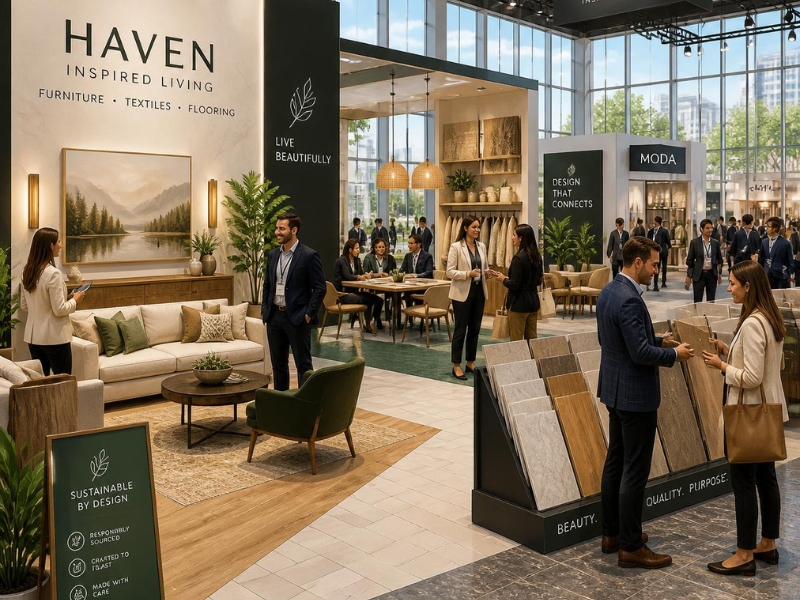
Trade show furniture rental catalogs are larger than most first-time exhibitors expect. Rather than a handful of generic chairs, most rental companies offer curated collections built specifically for exhibit use. Pieces are lightweight, easy to ship, and designed to look intentional rather than borrowed from a conference room.
Common categories include:
- Seating: bar stools, lounge chairs, sofas, and ottomans
- Tables: meeting tables, cocktail tables, and reception counters
- Storage and display: locking counters, literature stands, and product pedestals
- Lounge sets: pre-matched groupings of seating and tables designed to furnish a defined area quickly
Choosing trade show booth furniture that matches your brand's look matters as much as function. Modern, minimal pieces read differently than plush, traditional lounge furniture, and mismatched styles can make a booth feel disjointed even when the individual pieces are nice.
Trade Show Furniture Rental Costs at a Glance
Trade show furniture rental cost varies by piece, market, and how long you need it, but industry pricing gives a useful starting point for budgeting.
| Furniture Type | Typical Rental Cost |
|---|---|
| Bar stool | $80 - $180 each |
| Lounge chair | $200 - $500 each |
| Meeting table | $300 - $600 each |
| Standard counter | $200 - $600 each |
| Premium backlit counter | $400 - $800 each |
| Full lounge setup (seating + tables) | Starting around $2,500 |
For exhibitors doing one or two shows a year, trade show furniture rental cost is almost always lower than buying and storing furniture between events, since you avoid freight, warehousing, and refresh costs entirely. Exhibitors doing three or more shows a year with strict brand color requirements sometimes find that owning custom pieces amortizes better over time, but that's the exception rather than the rule.
Trade Show Flooring Options Explained
Trade show flooring isn't optional. Most convention centers have concrete or existing carpet that isn't meant to be your final look, so exhibit booth flooring gets installed on top, sized to your exact footprint.
The three most common trade show flooring options are:
- Modular interlocking tiles. These snap together without tools, ship flat in stackable cases, and hold up through multi-day shows without compressing. They store cleanly and can be reused across multiple events, which is part of why modular flooring can cut long-term costs by up to 40% compared to flooring you replace every show.
- Trade show carpet. Carpet tiles give a polished, familiar look that many corporate and healthcare exhibitors expect. Dye-matched trade show carpet can be produced in exact brand colors, and stain-protected versions hold up to spilled coffee and heavy foot traffic across a multi-day event.
- Vinyl flooring. Printed vinyl can carry a high-resolution logo, product image, or a realistic wood or stone texture across the entire booth footprint. Faux-wood vinyl in particular gives a retail-quality finish without the weight or cost of real hardwood.
Trade Show Carpet vs. Other Trade Show Flooring: Which Wins?
There's no single right answer, since trade show carpet and the alternatives solve different problems.
Trade show carpet still wins on familiarity. It's what most attendees expect underfoot, and it hides seams and minor venue floor imperfections well. Modular tiles win on durability and reuse, since they're built to survive repeated shows rather than one. Vinyl wins on branding impact, since it's the only option that can carry full-color graphics across the entire floor.
If your priority is a traditional, comfortable look for a healthcare or corporate booth, trade show carpet is usually the safer choice. If you exhibit at three or more shows a year and want to control long-term costs, modular tiles typically pay for themselves. If your floor itself is part of the brand story, vinyl is worth the extra design time.
How Trade Show Flooring Affects Visitor Behavior
Exhibit booth flooring isn't just cosmetic. Exhibitors using padded flooring, whether modular tile, cushioned carpet, or foam-backed vinyl, see visitors stay 20 to 30% longer than booths with bare concrete or thin, unpadded surfaces. That extra dwell time translates fairly directly into more conversations, more scanned badges, and more qualified leads collected per day.
This matters most in booths where staff are actively demoing products or running longer conversations, since standing fatigue sets in faster on hard, unpadded floors. A comfortable trade show flooring choice is one of the lowest-cost ways to extend the average visit without changing anything else about your booth.
Renting vs. Buying Trade Show Furniture and Flooring
For most exhibitors, trade show furniture rental and rented flooring make more sense than buying. Rental avoids freight costs to and from storage and avoids paying for warehouse space between shows. It also lets you match furniture style to each specific show without being locked into one look.
Buying starts to make sense once you're exhibiting at three or more shows a year with consistent branding needs. At that pace, the upfront cost of owning custom furniture and flooring can amortize down to less than a single rental over several years. Even then, many exhibitors still rent flooring, since it's harder to store, ships less efficiently, and wears out faster than furniture.
How to Choose Trade Show Furniture and Flooring for Your Booth Size
Your trade show booth size sets real limits on what furniture and flooring choices make sense. A few guidelines:
- 10x10 booths generally fit one or two seating pieces and a single counter. Prioritize trade show flooring that's easy to install fast, since smaller booths often get set up with less crew time.
- 10x20 booths can support a small lounge grouping or a demo table in addition to a standard counter, giving more room to mix trade show booth furniture styles.
- 20x20 and larger booths can support full lounge sets, multiple counters, and more elaborate flooring designs, including multi-color vinyl zones that mark off different activity areas.
- Match furniture density to staff count. Too much seating in a small booth blocks foot traffic; too little in a large booth makes the space feel empty.
- Budget flooring and furniture together, not separately, since the two typically come from different vendors and get overlooked when budgets are built line by line.
Common Trade Show Furniture and Flooring Mistakes to Avoid
A few patterns show up repeatedly with exhibitors renting furniture and flooring for the first time:
- Ordering furniture without measuring the booth first. A lounge set that looks reasonable on a rental site can overwhelm a 10x10 booth.
- Skipping padded flooring to save a small amount of money. The dwell-time difference usually outweighs the modest cost gap between bare and padded exhibit booth flooring.
- Mismatching furniture style to brand tone. Ultra-modern furniture in a traditional industry booth, or vice versa, can undercut an otherwise strong design.
- Forgetting flooring seams and edges. Poorly finished seams on trade show flooring are one of the most common trip hazards on a show floor.
- Booking rentals too late. Popular styles and premium counters get reserved early for major shows, especially in high-traffic markets like Las Vegas and Orlando.
Choosing Furniture and Flooring That Actually Work for Your Booth
Trade show furniture rental and trade show flooring decisions are easy to rush, but they shape comfort, dwell time, and first impressions more than most exhibitors expect going in. Start with your booth size, decide whether rental or ownership fits your show schedule, and choose flooring that matches both your budget and how long you need visitors to stay. Our guide to hiring a trade show booth builder and our trade show booth design guide both cover how furniture and flooring fit into the bigger design picture.
If you're prepping for a fall show, a few major events are coming up where these choices matter most. NACS Show 2026 runs October 7-9 in Las Vegas, SEMA Show 2026 runs November 3-6, also in Las Vegas, and IAAPA Expo 2026 runs November 16-20 in Orlando. If you're exhibiting at any of these, you can compare builders who already know the venue and can help plan furniture and flooring alongside the rest of your booth.
What Is Exhibitorly?
Exhibitorly is an American marketplace that helps exhibitors find the right booth builder for a trade show. Instead of contacting builders one by one, you submit a single request with your show, your booth size, your timeline, and your budget. Exhibitorly matches that request with a small number of vetted builders who have real experience at that show and venue, not every builder on the platform.
Builders apply to join and get reviewed before approval, so you're only hearing from companies with a track record of delivering. You compare their designs and pricing side by side, and you decide who to work with. There's no obligation, and searching shows or submitting a quote request costs nothing.
Browse and compare vetted exhibit builders on Exhibitorly to get quotes that include furniture and flooring recommendations built around your exact booth. Read the full platform guide for a closer look at how the matching process works.