Hybrid Trade Show Booth Guide: What It Takes to Do It Right
A hybrid trade show booth adds a livestream or broadcast layer to a physical exhibit, using a dedicated camera, hardwired internet, and a directional microphone to reach remote viewers alongside in-person visitors. Hybrid technology typically adds 15 to 25% to a mid-size exhibit budget for equipment, plus another 10 to 20% of that technology budget for show services like electrical and internet. The right choice depends on your goals, your booth size, and how much remote reach actually matters for your audience. Keep reading for the full cost breakdown, the gear that makes or breaks a hybrid stream, and the mistakes worth avoiding.
Hybrid Trade Show Booth Guide: What It Takes to Do It Right
A hybrid trade show booth serves two audiences at once: the people standing in front of you on the show floor and a remote audience watching through a trade show livestream or virtual platform. A fully virtual trade show, by contrast, has no physical booth at all, just a digital presence attendees visit from their browser. Most companies exploring this space are really deciding between three options: a standard in-person booth, a hybrid trade show booth with streaming built in, or a fully virtual trade show presence. This guide breaks down what each one actually requires, what it costs, and how to avoid the mistakes that turn a hybrid setup into a headache.
Why Hybrid and Virtual Trade Show Booths Are Worth Considering
Even at shows running at full in-person capacity, hybrid elements can extend the value of an exhibit investment well past the days it's staffed. A hybrid trade show booth turns the physical structure into something closer to a broadcast studio. It reaches people who couldn't travel to the show without giving up the in-person experience for the visitors who did.
Virtual trade shows serve a different purpose. Without booth space, drayage, or travel costs, a virtual trade show can reach a wider, more geographically spread audience for a fraction of the cost of a physical presence. For companies testing a new market or a new show before committing to a full exhibit, going virtual first is a lower-risk way to gauge interest.
What Is a Hybrid Trade Show Booth?
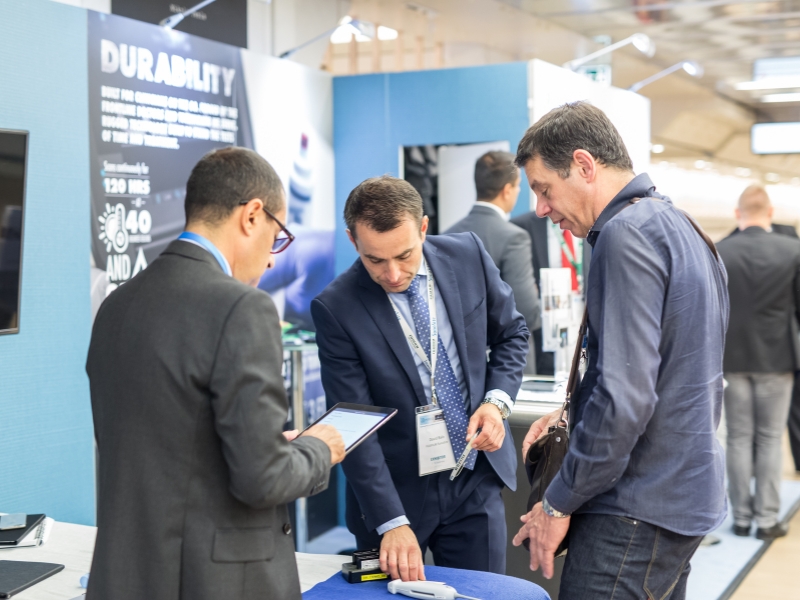
A hybrid trade show booth is a physical exhibit with broadcast infrastructure built in, so it can present to a remote audience at the same time it's hosting visitors in person. The core setup includes one or two dedicated camera positions with a clean sightline, a stable hardwired internet connection, and a directional microphone. Ambient show floor noise is usually the first thing that ruins a hybrid stream's audio quality.
Content for a hybrid trade show booth needs to work differently than content for an in-person-only exhibit. In-person visitors can wander, touch products, and set their own pace. Remote viewers need a schedule: a product demo at a set time, a live Q&A that takes remote questions, and a recorded replay available after the show ends. Booths designed for hybrid streaming from the start, with a defined presentation zone and branded backdrop, look far more intentional on camera than a camera clamped to a truss as an afterthought.
Hybrid Trade Show Booth Components and What They Cost
Building hybrid capability into a booth means budgeting for a specific set of components, most of which are rented per show rather than owned outright.
| Component | Purpose | Typical Cost |
|---|---|---|
| Broadcast camera (1-2 units) | Captures presenter and product demos | Included in AV rental package |
| Hardwired internet connection | Stable upload bandwidth for streaming | $400 - $1,500+ per show |
| Interactive kiosk | Self-serve content and lead capture | $500 - $1,500 per unit, per show |
| Commercial display monitor | Product demos and sales content | $200 - $600 per unit, per show |
| LED video wall (rental) | High-visibility brand content | $2,000 - $8,000+ per show |
| Electrical service | Powers all AV and streaming equipment | $300 - $2,000+ per show |
| Content production | Looping video, demo footage, kiosk apps | $500 - $5,000+ |
For a hardwired internet connection supporting a livestream or interactive kiosks, plan on at least 10 Mbps of upload bandwidth. Show floor Wi-Fi is shared across thousands of devices and is not reliable enough for a hybrid trade show booth stream that can't afford to drop mid-demo.
What Is a Virtual Trade Show?
A virtual trade show replaces the physical booth with a digital one. Instead of a structure on a show floor, exhibitors get a branded page or virtual room that attendees visit online, often featuring product videos, downloadable content, and a way to chat or book time with a sales rep.
The appeal of a virtual trade show is mostly about cost and reach. There's no booth to fabricate, ship, or staff on-site, and no venue-specific electrical or internet fees to budget for. That makes virtual trade show participation a reasonable way to test a new industry event or reach an international audience that wouldn't otherwise attend in person.
The tradeoff is engagement. A virtual trade show can't replicate the physical presence, product handling, or spontaneous conversations that happen on a real show floor. Most companies that see strong results from a virtual trade show treat it as a supplement to in-person exhibiting, not a full replacement.
Hybrid vs. Virtual: Which Fits Your Show Strategy?
The choice between a hybrid trade show booth and a fully virtual trade show comes down to what you're trying to get out of the event.
A hybrid trade show booth makes sense when in-person presence still matters for your industry, but you also want to reach people who can't attend. That could be remote team members, prospects in other regions, or press who need footage after the fact. It costs more than a standard booth because of the added AV and connectivity requirements, but it doesn't require giving up the in-person floor presence.
A fully virtual trade show makes sense when the physical show either doesn't exist for your niche, or when the cost of a physical booth doesn't yet justify the return. It's also a reasonable starting point for companies exhibiting for the first time who want to test demand before committing an exhibit budget to a physical presence.
How Much Does Hybrid Trade Show Technology Cost?
Trade show technology, including hybrid streaming components, typically represents 15 to 25% of the total exhibit budget for a mid-tier technology package on a 20x20 exhibit. That range covers two to four commercial monitors, an interactive kiosk, and a professional lighting package.
Show services, meaning the electrical circuit capacity and hardwired internet ordered through the venue's general service contractor, typically add another 10 to 20% on top of the technology budget itself. These costs vary by venue and by how close to the show date you place the order, since ordering electrical and internet after the discount deadline usually costs significantly more than ordering early.
Content production is a separate line item that's easy to forget when budgeting for a hybrid trade show booth. Looping video, demo footage, and any kiosk application content generally run $500 to $5,000 or more. This work needs to be planned and finished well before the exhibit ships, not scrambled together the week of the show.
Interactive Kiosks and Trade Show Technology That Support Hybrid Booths
An interactive kiosk does double duty in a hybrid trade show booth. For in-person visitors, it's a self-serve product configurator or demo station that keeps people engaged even when every staff member is already in a conversation. For a hybrid setup, the same kiosk can capture leads that feed directly into the same system as your livestream audience.
Screen brightness matters more at trade shows than most people expect. Commercial-grade monitors run 500 to 700 nits or brighter, while consumer televisions typically run 200 to 300 nits, which looks washed out under convention center lighting. Content on any trade show technology display should be built for a 3-to-5-second attention window, since that's roughly how long a passing visitor gives a screen before deciding whether to stop.
Common Technical Failure Points in a Hybrid Trade Show Booth
A hybrid trade show booth introduces failure points that a standard exhibit doesn't have to plan for. The most common ones, based on real show-floor troubleshooting:
- Audio quality. Ambient show floor noise overwhelms a built-in camera microphone almost every time. A directional lapel or boom microphone on the presenter is close to mandatory.
- Wi-Fi congestion. Shared show floor Wi-Fi supports thousands of concurrent devices and is not reliable for streaming. A dedicated hardwired connection is the only dependable option.
- No confidence monitor. Presenters who can't see what remote viewers see often don't realize when they've walked out of frame or when the stream has dropped.
- No backup plan. Encoders crash and platforms go down. A tested backup platform or hardware encoder prevents a dropped trade show livestream from becoming a dead show.
- Camera position blocked by foot traffic. A camera without a dedicated sightline gets walked in front of constantly on a busy show floor.
How Booth Size Affects Hybrid Trade Show Booth Design
A 10x10 trade show booth can support basic hybrid elements, like a single kiosk and a simple camera setup, but there's little room for a dedicated broadcast zone. A 10x20 gives enough space to carve out a defined presentation area with a branded backdrop. A 20x20 or larger island booth is where hybrid booth design really opens up, with room for a full camera setup, an LED video wall, and multiple kiosks running at once without crowding the space used by in-person visitors. Good hybrid booth design treats the broadcast zone as its own space, not a corner squeezed in after everything else is planned.
Common Mistakes to Avoid with Hybrid and Virtual Trade Show Booths
A few patterns show up repeatedly with exhibitors trying hybrid or virtual for the first time:
- Treating the camera as an afterthought. A camera clamped to a truss after the booth is built looks exactly like what it is. Plan the broadcast zone during the design phase.
- Relying on show floor Wi-Fi. It's rarely reliable enough for a live hybrid trade show booth stream or a kiosk that depends on a live connection.
- Skipping the confidence monitor. Without one, presenters have no way to know what remote viewers are actually seeing.
- Underbudgeting content production. Looping video and demo footage take real time to produce and are easy to leave out of the initial budget.
- Going fully virtual without a follow-up plan. A virtual trade show generates leads just like an in-person one, and those leads still need a fast, direct follow-up process.
Deciding If Hybrid or Virtual Is Right for Your Next Show
A hybrid trade show booth extends your reach without giving up the in-person floor presence, while a fully virtual trade show trades physical impact for lower cost and broader access. Either can work well depending on your goals, your audience, and your budget. Our guide to hiring a trade show booth builder and our trade show booth design guide both cover how to plan technology into a booth from the start rather than adding it as an afterthought.
If you're weighing a hybrid setup for an upcoming show, a few major events this fall are worth planning around. NACS Show 2026 runs October 7-9 in Las Vegas, SEMA Show 2026 runs November 3-6, also in Las Vegas, and IAAPA Expo 2026 runs November 16-20 in Orlando. You can compare builders with hybrid and AV integration experience for each of these shows before you commit to a design.
What Is Exhibitorly?
Exhibitorly is an American marketplace that helps exhibitors find the right booth builder for a trade show. Instead of contacting builders one by one, you submit a single request with your show, your booth size, your timeline, and your budget. Exhibitorly matches that request with a small number of vetted builders who have real experience at that show and venue, not every builder on the platform.
Builders apply to join and get reviewed before approval, so you're only hearing from companies with a track record of delivering. You compare their designs and pricing side by side, and you decide who to work with. There's no obligation, and searching shows or submitting a quote request costs nothing.
Browse and compare vetted exhibit builders on Exhibitorly to get quotes that account for hybrid or AV technology needs, not just the booth structure. Read the full platform guide for a closer look at how the matching process works.