Portable Show Displays 2026: The Complete Exhibitor's Guide to Portable Trade Show Booths
A portable show setup is one of the smartest moves an exhibitor can make — and one of the most misunderstood. Done right, a portable trade show display delivers professional brand presence, fast setup, low shipping costs, and the flexibility to hit multiple events throughout the year without the overhead of a full custom build. Done wrong, it can look underprepared on a competitive show floor. This guide covers everything you need to know: the types of portable displays, how to choose the right one, when to buy versus rent, and how to make a portable setup perform at its best.
Portable Show Displays 2026: The Complete Exhibitor's Guide to Portable Trade Show Booths
What Is a Portable Show Display?
A portable show display is a lightweight, self-contained exhibit system designed to be transported by standard ground shipping — or in some cases, carried as luggage — and assembled quickly without tools or a professional installation crew.
Portable displays sit in contrast to custom-fabricated booths, which require freight shipping, dedicated installation labor, and significant lead time. The portability advantage comes down to four things:
- Speed: Most portable systems set up in minutes, not hours.
- Cost: Shipping via UPS or FedEx is far cheaper than trade show freight.
- Flexibility: One exhibitor can manage setup and teardown alone.
- Scalability: Most portable systems can reconfigure across different booth sizes and events.
For brands exhibiting at multiple shows annually, a portable show strategy is often the smartest financial decision — especially when combined with a strong graphic design and targeted messaging. For more on building a complete exhibitor strategy, see the Ultimate Guide to Trade Show Planning.
Types of Portable Show Displays
Not all portable displays are the same. Here's a breakdown of the most common formats, what they're best suited for, and what to watch out for with each.
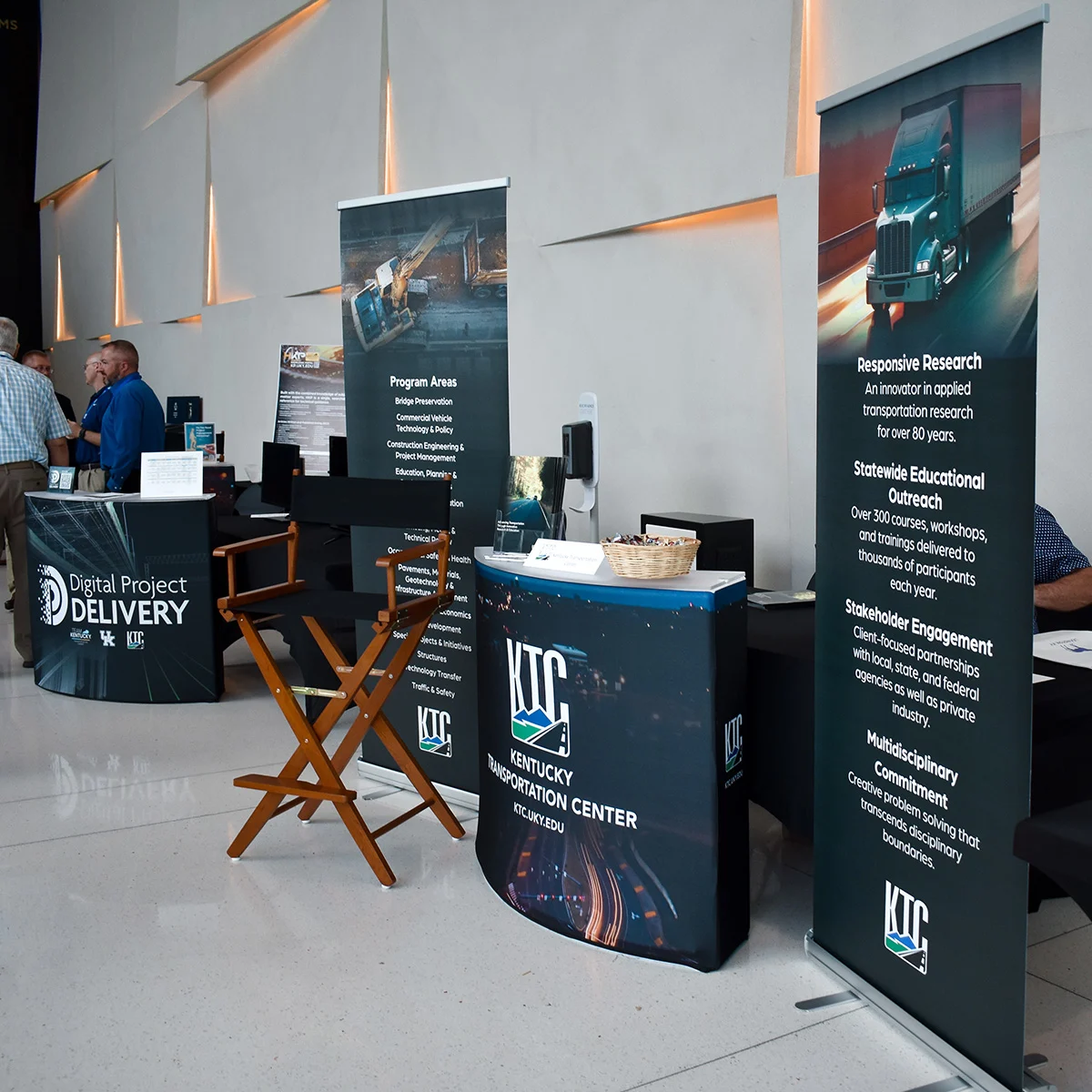
Retractable Banner Stands
The most entry-level portable option. A retractable banner stand houses a printed graphic inside a base unit that pulls up on a telescoping pole and locks in place. Setup takes under two minutes. The entire system packs into a carry bag.
Best for: First-time exhibitors, small events, conference booths, and as supplemental signage alongside a larger display. Not ideal as your only exhibit at a competitive trade show — the format signals a minimal investment to experienced buyers walking the floor.
Price range: $100–$400 per unit.
Pop-Up Displays
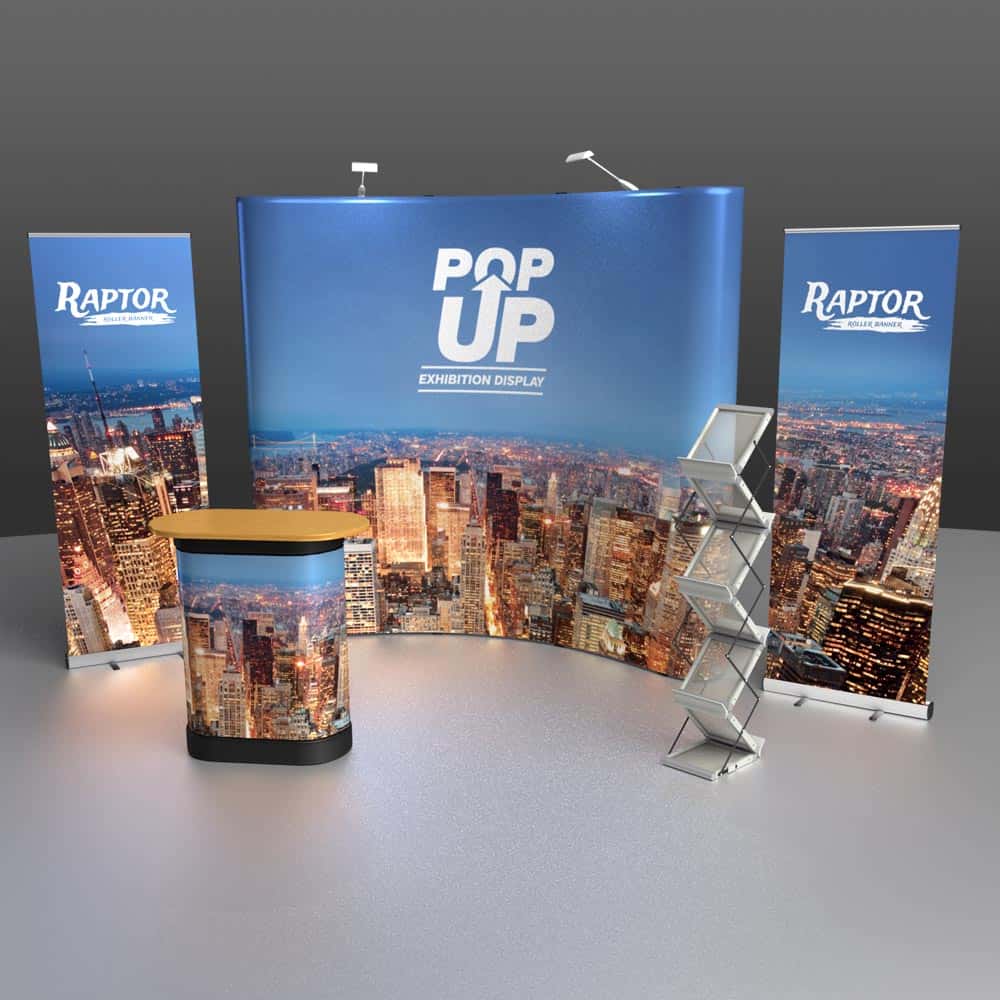
Pop-up displays use an accordion-style frame that expands and snaps into position, supporting a graphic skin (either panel-based or tension fabric). They're among the most popular portable formats in the US market because they balance visual impact, speed, and durability.
Fabric pop-ups produce seamless, high-resolution graphics with no visible panel joints. Panel pop-ups are slightly more portable but show seams in the final print. Either way, a pop-up backwall is a strong, affordable backbone for a 10×10 inline booth.
Best for: 10×10 inline booths, first and second-time exhibitors, brands attending 3–6 shows per year.
Price range: $500–$3,000 depending on size and graphic quality.
Tension Fabric Displays
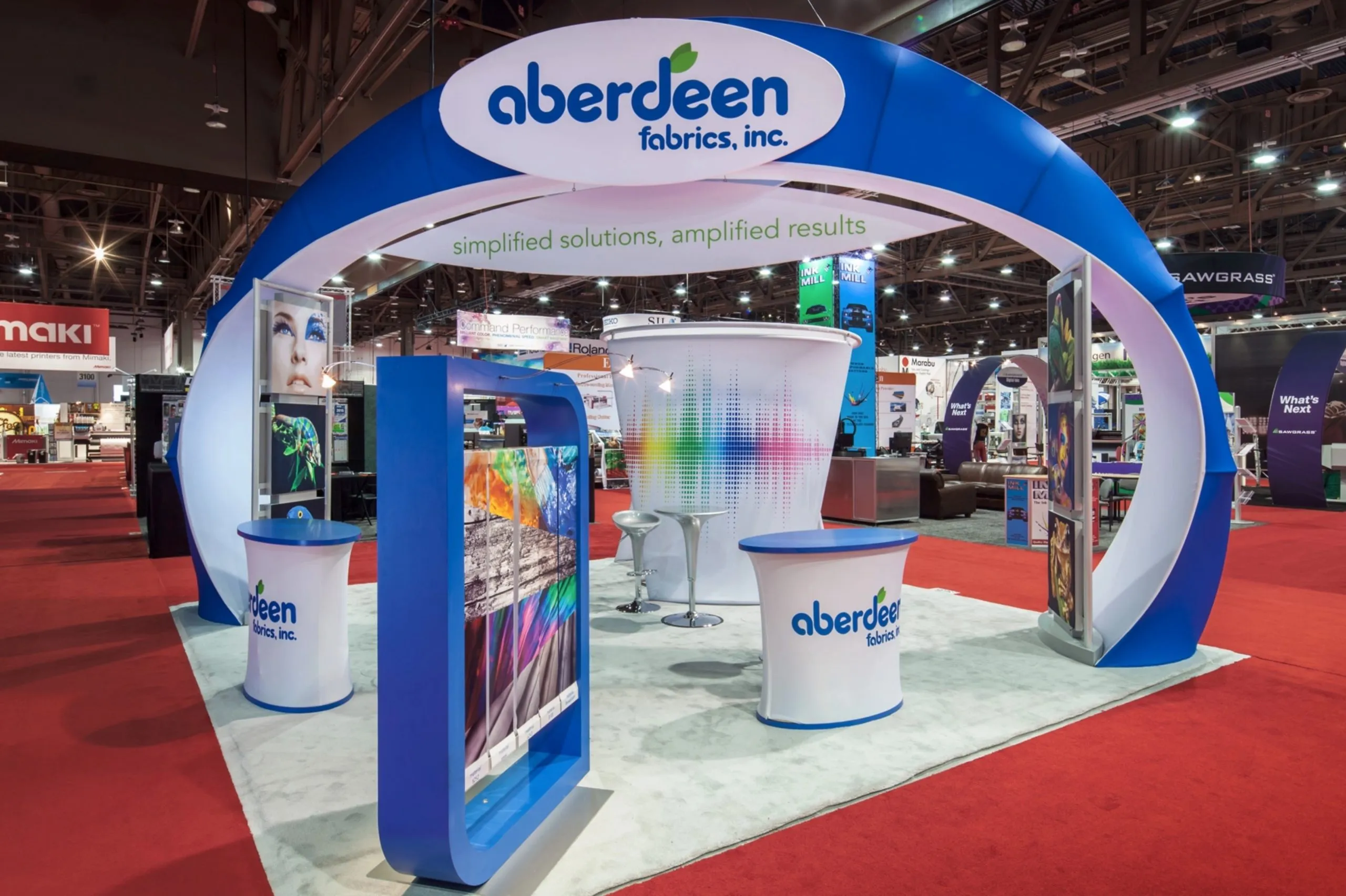
Tension fabric systems stretch a printed dye-sublimation graphic over a lightweight aluminum frame — similar in concept to pulling a fitted sheet over a mattress. The result is a clean, seamless, high-impact visual with no visible seams or hardware.
These are the current standard for professional portable displays at major US trade shows. They come in backwall, curved, and S-curve configurations. Frames typically snap together without tools, and graphics attach via hidden zippers or silicone edge graphics (SEG).
Best for: Exhibitors who want a polished, premium look without a custom build. Works across 10×10, 10×20, and larger inline configurations.
Price range: $800–$5,000+ depending on size, frame, and lighting additions.
Tabletop Displays
Tabletop displays are compact systems designed to sit on a standard 6- or 8-foot banquet table. They're ideal for smaller events, roadshows, hosted-buyer meetings, and academic conferences where floor space is allocated per table rather than per square foot.
Setup typically takes under five minutes and requires no tools. The entire system packs into a single carry bag. Most tabletop displays comply with the 48–60 inch height restrictions common at tabletop-style events.
Best for: Smaller events, roadshows, internal conferences, first-time exhibitors testing the waters before investing in a full floor display.
Price range: $200–$800.

Modular Portable Systems
Modular systems sit between a true portable and a custom build. They use interlocking aluminum extrusion components that can reconfigure from a 10×10 to a 10×20 or larger, depending on how many components you add. Graphics typically clip or zip onto the frame.
The key advantage of modular portable systems is scalability — one kit can serve multiple show configurations without purchasing a new structure. Many exhibitors who exhibit at 5–10 shows per year with varying booth sizes find modular systems the most cost-efficient long-term solution.
Best for: Growing brands with a varied show calendar. Ideal for exhibitors moving between 10×10 and 10×20 footprints across different events.
Price range: $2,000–$10,000 for a complete system.
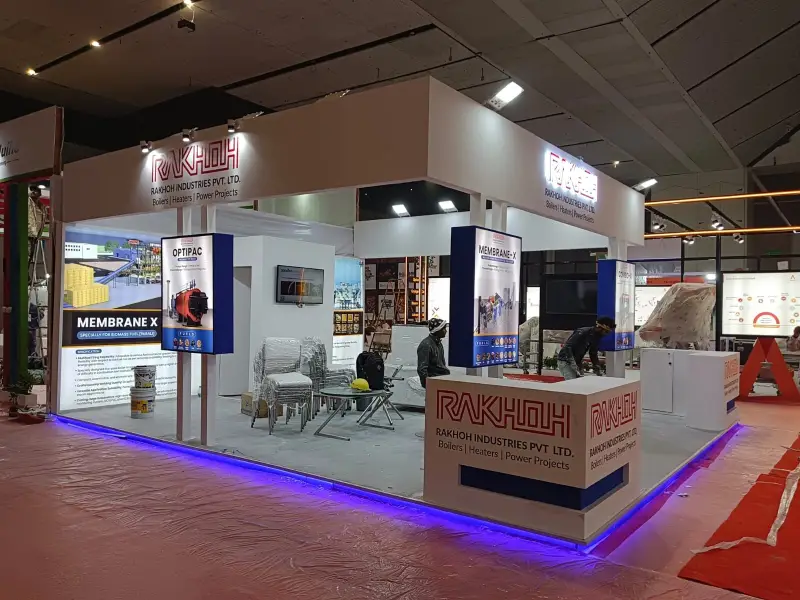
For a deeper look at how design choices affect traffic and ROI, the Ultimate Guide to Trade Show Booth Design and Modern Booth Design Trends 2026 are strong reads.
Buying vs. Renting a Portable Show Display
This is one of the most common decisions exhibitors wrestle with — and the right answer depends entirely on your show schedule, budget, and brand strategy.
When Buying Makes Sense
- You're attending four or more shows per year at consistent booth sizes
- Your brand identity is stable and unlikely to require frequent graphic updates
- You have a dedicated logistics contact or marketing team to manage storage and shipping
- You're exhibiting at shows with predictable floor plans where the same display works each time
Owning a portable display gives you full control over scheduling, graphics, and setup. The cost-per-show drops significantly once you've used the same system across multiple events. However, ownership comes with hidden costs: storage, annual repairs, graphic reprints, and eventual replacement. These expenses typically add 20–30% annually to the original purchase price.
When Renting Makes Sense
- You're attending one to three shows per year
- Your booth size varies between events
- You're testing a new market or event before committing capital
- You have overlapping show dates that would require two displays simultaneously
- You want to refresh your look for each show without reprinting owned graphics
Rental programs convert what would be a capital expense into a predictable per-event cost. Modern rental displays are far from generic — dye-sublimation stretch fabric graphics can produce show-specific visuals that are indistinguishable from purchased displays on the show floor.
The Hybrid Approach
Many experienced exhibitors find the hybrid model most practical: own a portable backwall or pop-up system for standard shows, and rent supplemental components — counters, lighting, monitor mounts, flooring — for events that require a larger presence. This approach maximizes flexibility without full dependence on rental availability or full capital commitment to a build that may not serve every show on your calendar.
What to Look for in a Portable Show Display
Not all portable systems are built equally. Before purchasing or renting, evaluate on these criteria:
Graphic Quality
Dye-sublimation printing on stretch fabric consistently produces better results than direct printing on vinyl or rigid panels. Look for seamless graphic coverage with no visible joints, vibrant color reproduction, and a smooth surface finish. Backlit displays — where LED lighting illuminates the graphic from behind — significantly increase visual impact on a busy show floor and are now available at portable price points.
Frame Weight and Durability
Aluminum alloy frames offer the best balance of lightweight portability and long-term durability. Steel frames are heavier and rarely worth it for portable applications. Check the frame connection system — snap-button, twist-lock, and tool-free extrusion systems are all reliable; avoid systems that require tools or complex assembly instructions.
Pack Size and Shipping Footprint
The goal of a portable show display is to ship via standard ground carriers without freight costs. Confirm that the packed dimensions and weight fall within UPS and FedEx standard parcel limits. Systems that require even a small freight shipment lose most of their cost advantage.
Configuration
If your show calendar includes events with different booth sizes, prioritize displays that reconfigure without purchasing additional structural components. Even a basic pop-up backwall should be able to shrink from an 8-foot to a 6-foot configuration for tabletop events.
Accessories and Add-Ons
The best portable systems are designed to grow. Look for compatible counters, literature holders, monitor mounts, overhead lighting, and flooring tiles that integrate with your display's frame system. These add-ons can transform a minimal portable into a complete, professional exhibit without a custom build.
For ideas on what draws foot traffic and boosts engagement at shows, 20 Trade Show Booth Ideas That Attract Visitors in 2026 is worth reading before your next event.
Budgeting for a Portable Show
Portable displays are the most budget-accessible entry point into professional trade show exhibiting — but that doesn't mean the costs stop at the display itself. Here's a realistic budget framework:
- Display purchase: $500–$10,000 depending on type, size, and graphic quality
- Graphic design: $500–$2,000 for professional design work (if not in-house)
- Shipping (per show): $50–$300 via ground carriers
- Drayage (at venue): $100–$500 — the venue's charge to move your shipment from the loading dock to your booth
- Accessories: $200–$1,500 for counters, lighting, monitor mounts, flooring
- Branded collateral: $500–$2,000 for giveaways, brochures, and printed materials
A fully equipped portable 10×10 show presence — including display, accessories, shipping, and collateral — typically runs between $3,000 and $8,000 all-in for a single event. This is substantially lower than the $15,000–$30,000+ cost of a comparable custom-built booth experience.
How to Make a Portable Show Display Perform
The biggest mistake exhibitors make with portable displays is treating the format as a limitation rather than a design brief. A well-executed portable show setup can outperform larger custom booths — if you approach design correctly.
Lead With One Clear Message
Portable displays have limited visual real estate. The most effective approach is one primary headline, readable from 15–20 feet, that communicates your core value proposition in five words or fewer. Resist the urge to fill every panel with product features — visitors won't stop to read them.
Invest Heavily in Lighting
Portable and rental displays consistently underperform because of poor lighting. Backlit graphics, overhead LED spotlights, and accent lighting cost relatively little and immediately signal professionalism. A lit display at a trade show reads as premium — even if the structure behind it is lightweight and portable.
Use Height Strategically
Even portable systems can incorporate height. Retractable banner stands, tall counters, and overhead printed arches are available for most portable formats and help your booth get noticed across a crowded hall. If your show allows hanging signs above your space, even a simple fabric sign can dramatically extend visibility.
Keep Traffic Flow Open
Portable setups can easily become cluttered if exhibitors try to cram too much into a small footprint. Leave at least 40–50% of your floor space open and walkable. Clear access draws casual traffic in — tight, crowded setups push it away.
Pair Your Display With Strong Pre-Show Marketing
A portable show display works best when attendees already know you're there. Email outreach, LinkedIn posts, and show-hashtag activity before the event primes your target audience to find your booth. For a complete framework, the Ultimate Guide to Trade Show Marketing covers pre-show, on-site, and post-show strategy in full.
Finding the Right Builder for Your Portable Show Setup
Whether you're purchasing a portable display or renting one for a specific show, the vendor you work with matters. Design quality, graphic production standards, frame durability, and shipping reliability all vary significantly across the market.
That's where Exhibitorly.com helps. Exhibitorly is a marketplace platform that connects exhibitors with verified booth builders across the United States. You can compare builders by capability, review their work, and find a vendor suited to your portable show needs — whether that's a simple pop-up graphic refresh or a complete modular portable system for a multi-show calendar.
For a complete guide to vetting and hiring the right builder, read The Ultimate Guide to Hiring a Trade Show Booth Builder.
Top US Trade Shows Where Portable Displays Work Well
Portable show setups are highly effective across a wide range of US trade shows — particularly at events where 10×10 and 10×20 inline booths dominate the floor plan. Here are some 2026 events where exhibitors commonly bring portable or hybrid setups:
- Booth Builders for SHRM Annual Conference 2026
- Booth Builders for Small Business Expo 2026
- Booth Builders for InfoComm 2026
- Booth Builders for SuperZoo 2026
- Booth Builders for PACK EXPO 2026
- Booth Builders for IFT FIRST 2026
- Booth Builders for HR Tech 2026
- Top US Trade Shows June & July 2026
- Top US Trade Shows August 2026
Start Your Portable Show Strategy With Exhibitorly
A portable show done well is a competitive exhibit strategy, not a compromise. The right display format, combined with professional graphics, smart lighting, and a clear message, can match the impact of booths three times the investment.
Exhibitorly.com makes it easier to find the right builder for your portable display needs — whether you're purchasing for the first time, upgrading an existing system, or sourcing a rental for a specific show. Browse verified builders, compare capabilities, and show up ready.