
Trade Exhibit Guide 2026: Everything Exhibitors Need to Plan, Design, and Execute a Winning Booth
A trade exhibit is one of the highest-leverage marketing investments a brand can make — and one of the most complex to execute well. Whether you're planning your first 10×10 inline booth or upgrading to a custom island exhibit at a major national show, success depends on decisions made months before the show floor opens. This guide covers everything you need to know: exhibit types, design strategy, booth sizing, budgeting, vendor selection, and the on-floor tactics that separate high-performing exhibitors from costly, forgettable ones.
Trade Exhibit Guide 2026: Everything Exhibitors Need to Plan, Design, and Execute a Winning Booth
What Is a Trade Exhibit?
A trade exhibit is a branded display structure that a company sets up at a trade show or exhibition to showcase its products, services, and brand to an audience of industry buyers, prospects, and partners. The exhibit is the physical centerpiece of your trade show presence — it's where conversations start, products get demonstrated, leads get captured, and brand impressions get formed.
Trade exhibits range from simple portable pop-up displays to fully custom-fabricated environments with private meeting rooms, multi-story structures, integrated AV systems, and interactive product demonstration stations. The right exhibit format depends on your goals, budget, show type, and how many events you attend annually.
At its core, a great trade exhibit does three things: stops traffic, communicates value, and creates conversations. Every design and investment decision should be evaluated against those three outcomes. For a full framework on how to approach this strategically, the Ultimate Guide to Trade Show Planning is the right starting point.
Types of Trade Exhibits
Understanding exhibit types before engaging a builder is essential. The format you choose determines your cost, logistics, flexibility, and on-floor visual impact.
Inline Exhibits (Linear Booths)
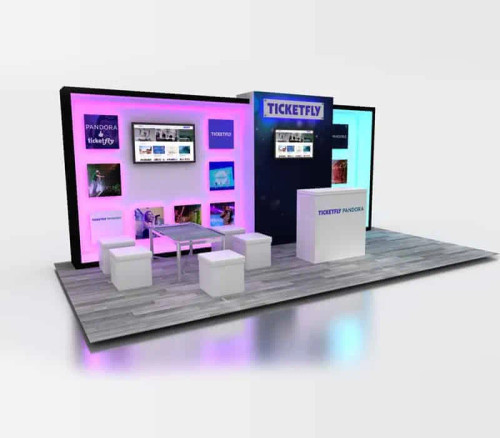
The most common trade exhibit format in the US market. Inline exhibits are positioned in a row alongside neighboring exhibitors, with one open side facing the aisle. Standard sizes are 10×10 and 10×20, though some shows allow 10×30 or larger inline configurations.
Inline exhibits work with virtually any display format — portable pop-ups, tension fabric backwalls, modular systems, or custom builds. The key design challenge is maximizing visibility and traffic draw from a single aisle-facing direction. Strong backwall graphics, height, and lighting are the primary levers.
- Best for: First-time exhibitors, brands attending multiple shows with consistent footprints, events where inline is the dominant or only booth type available.
Cost range: $5,000–$40,000+ depending on size, materials, and custom vs. modular construction.
Island Exhibits
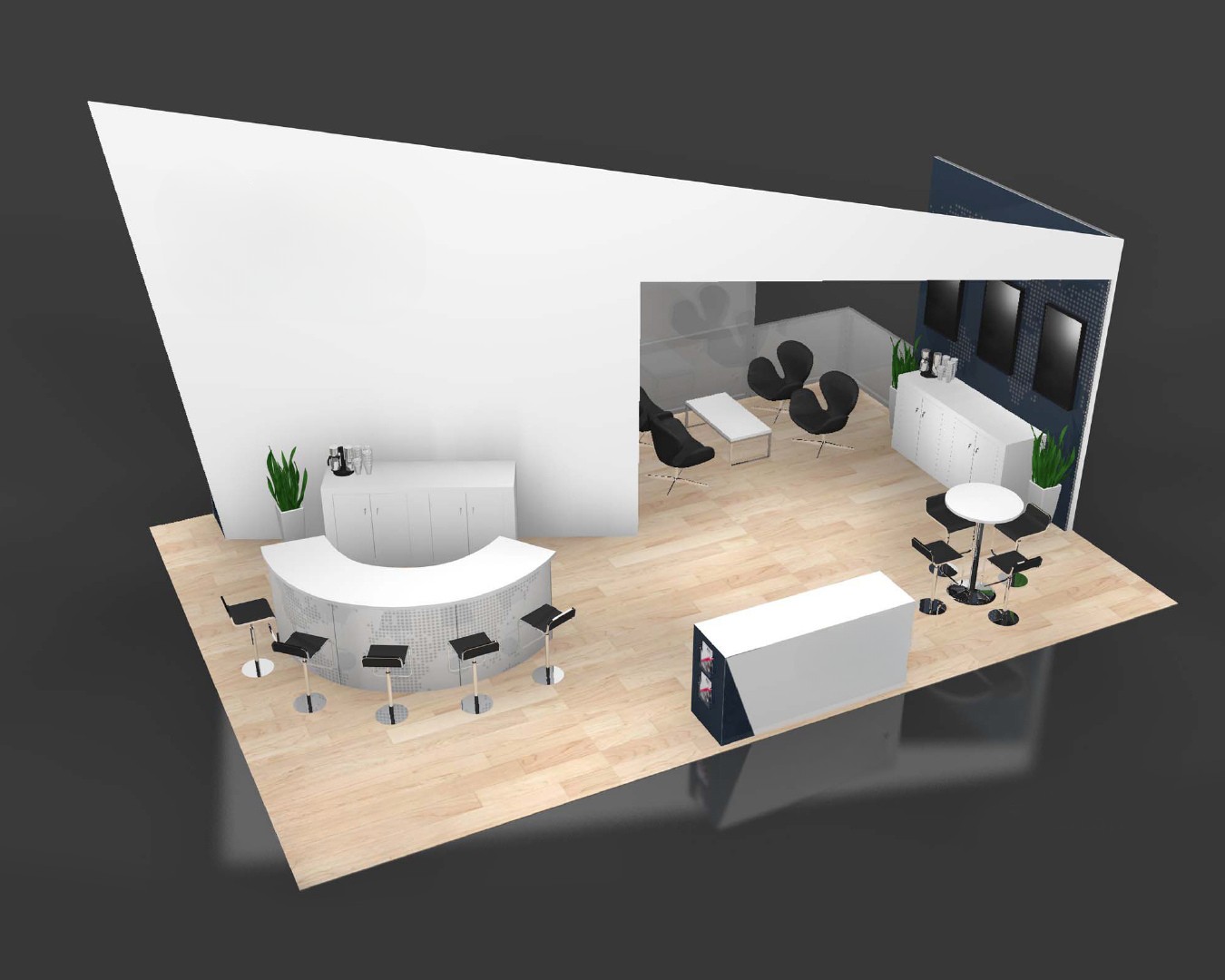
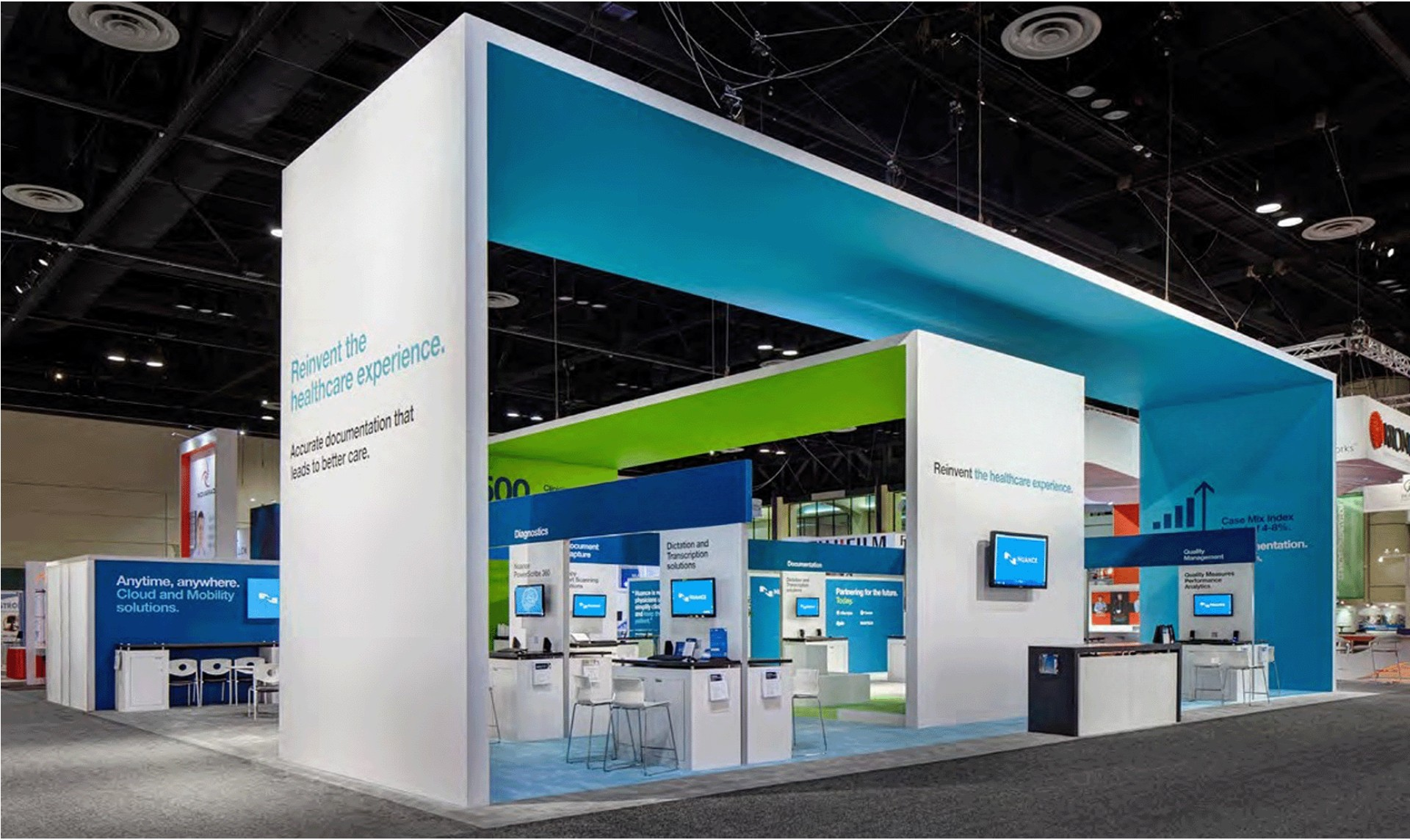
Island exhibits occupy a freestanding floor space open on all four sides, typically starting at 20×20 feet. They offer 360-degree visibility and access, allowing exhibitors to attract traffic from every direction simultaneously.
Island exhibits are the prestige format at most major US trade shows. They allow for private meeting areas, product demonstration zones, elevated structures, hanging signage, and immersive brand environments that are simply not possible in an inline configuration. Most major shows require a minimum of a 20×20 footprint for island placement.
- Best for: Established brands making a significant floor presence, product-led companies with large demo requirements, exhibitors at major national shows where competitive visibility is critical.
Cost range: $25,000–$150,000+ for custom island builds. Rental island options start around $15,000–$30,000.
Peninsula Exhibits
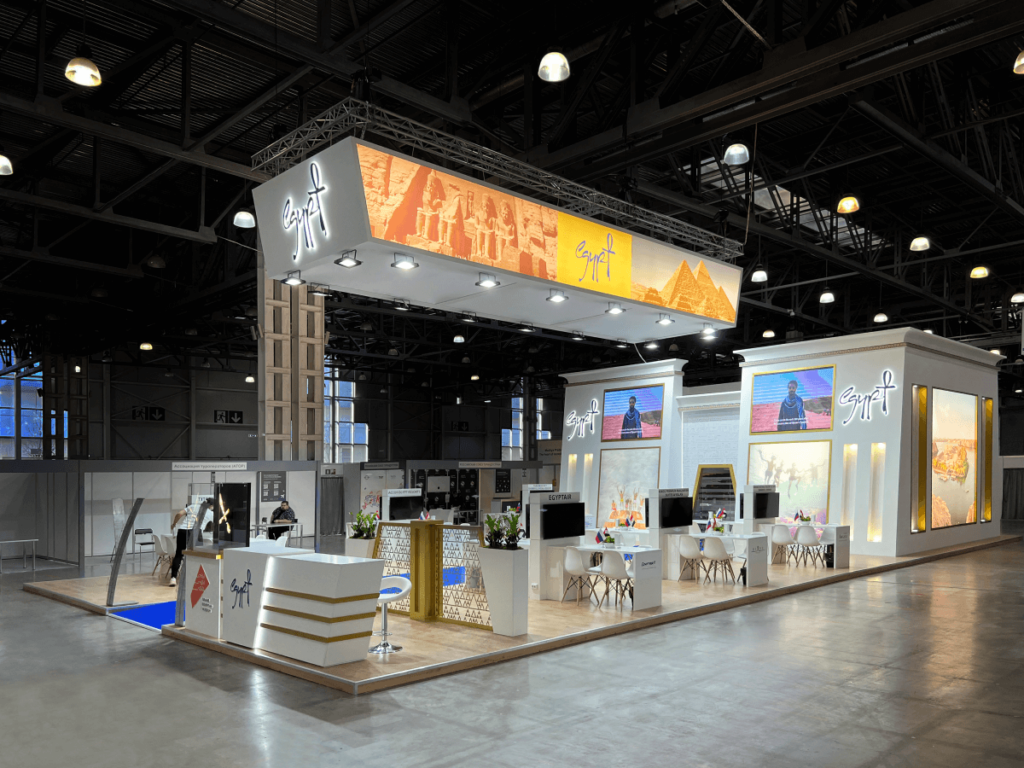
A peninsula exhibit occupies a corner or end-cap position, open on three sides rather than four. This format offers most of the visibility advantages of an island exhibit at a footprint that costs less — both in floor space fees and construction. Peninsula placements are often available at shows where true island spots are sold out or prohibitively expensive.
- Best for: Brands graduating from inline to island-style presence, exhibitors prioritizing traffic flow from multiple directions without full island cost.
Cost range: $15,000–$80,000 depending on size and custom vs. modular build.
Modular Exhibits
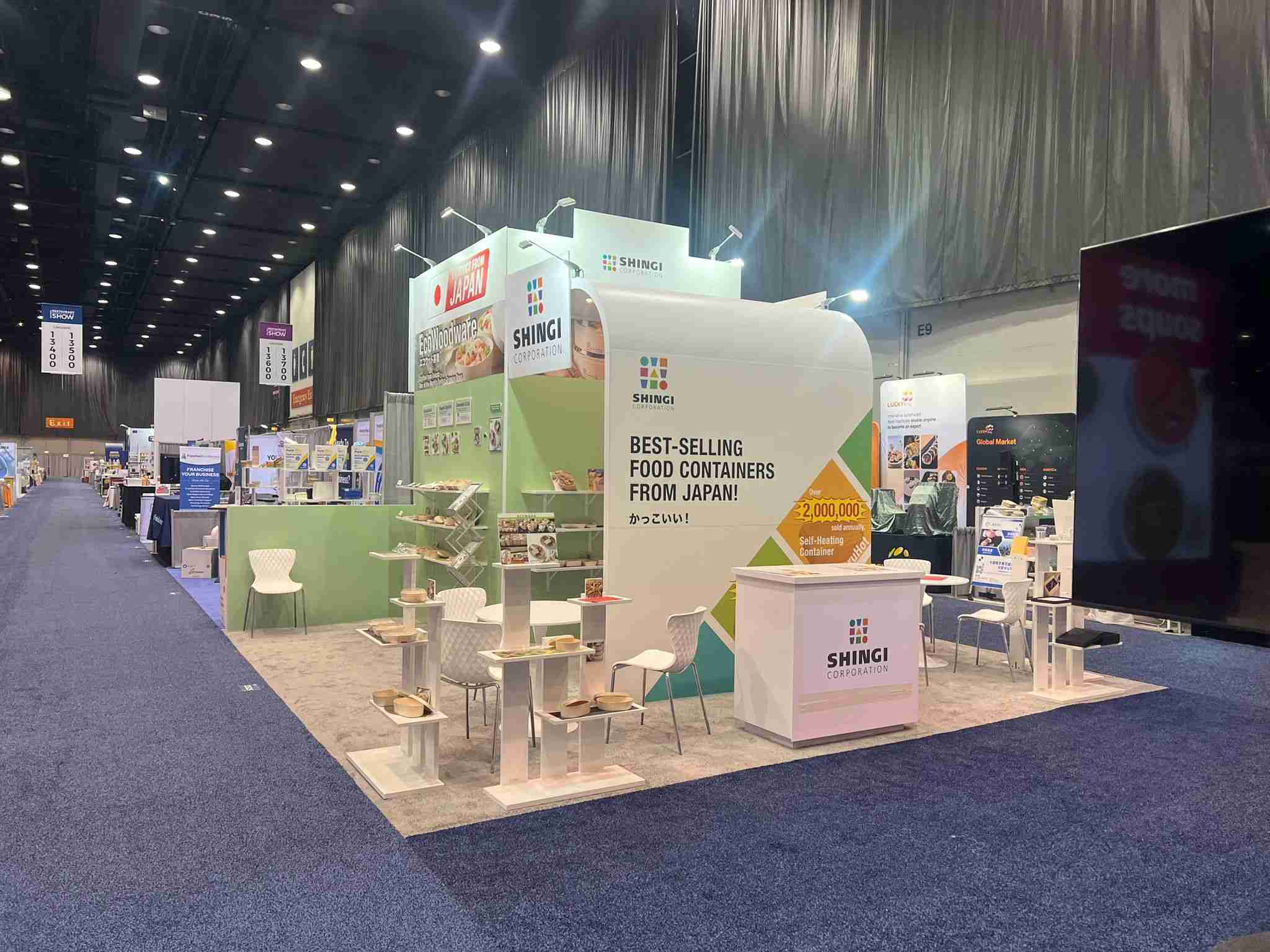
Modular exhibits use interchangeable, reusable aluminum extrusion or panel systems that can reconfigure into different booth sizes and layouts. The same structural components that build a 10×20 inline can often reconfigure into a 20×20 island with additional purchased components.
For brands that exhibit at five or more shows per year with varying booth sizes, modular systems offer the best long-term cost efficiency. They ship more economically than custom builds, require less installation labor, and allow graphic updates without purchasing new structures. Modern modular systems — including backlit tension fabric configurations — are visually indistinguishable from custom builds on the show floor.
- Best for: Multi-show exhibitors, brands with variable booth sizes across their show calendar, organizations prioritizing ROI over maximum design flexibility.
Cost range: $8,000–$50,000 for a complete system with graphics and accessories.
Custom-Built Exhibits
Custom exhibits are designed and fabricated from scratch to the exhibitor's exact specifications — unique shapes, brand-specific materials, integrated technology, private meeting rooms, and environments that exist nowhere else on the show floor. Custom builds are the most expensive and least portable exhibit format, but they produce the most powerful, distinctive brand experiences.
Most custom builds are owned by the exhibitor and stored, maintained, and shipped by a dedicated exhibit house or exhibit management partner. Some exhibitors commission custom builds that are designed to be partially disassembled and reconfigured across different show sizes.
- Best for: Top exhibitors at flagship industry shows, brands where differentiation and brand experience are primary objectives, companies with dedicated exhibit management teams.
Cost range: $40,000–$500,000+ for fully custom island environments.
Rental Exhibits
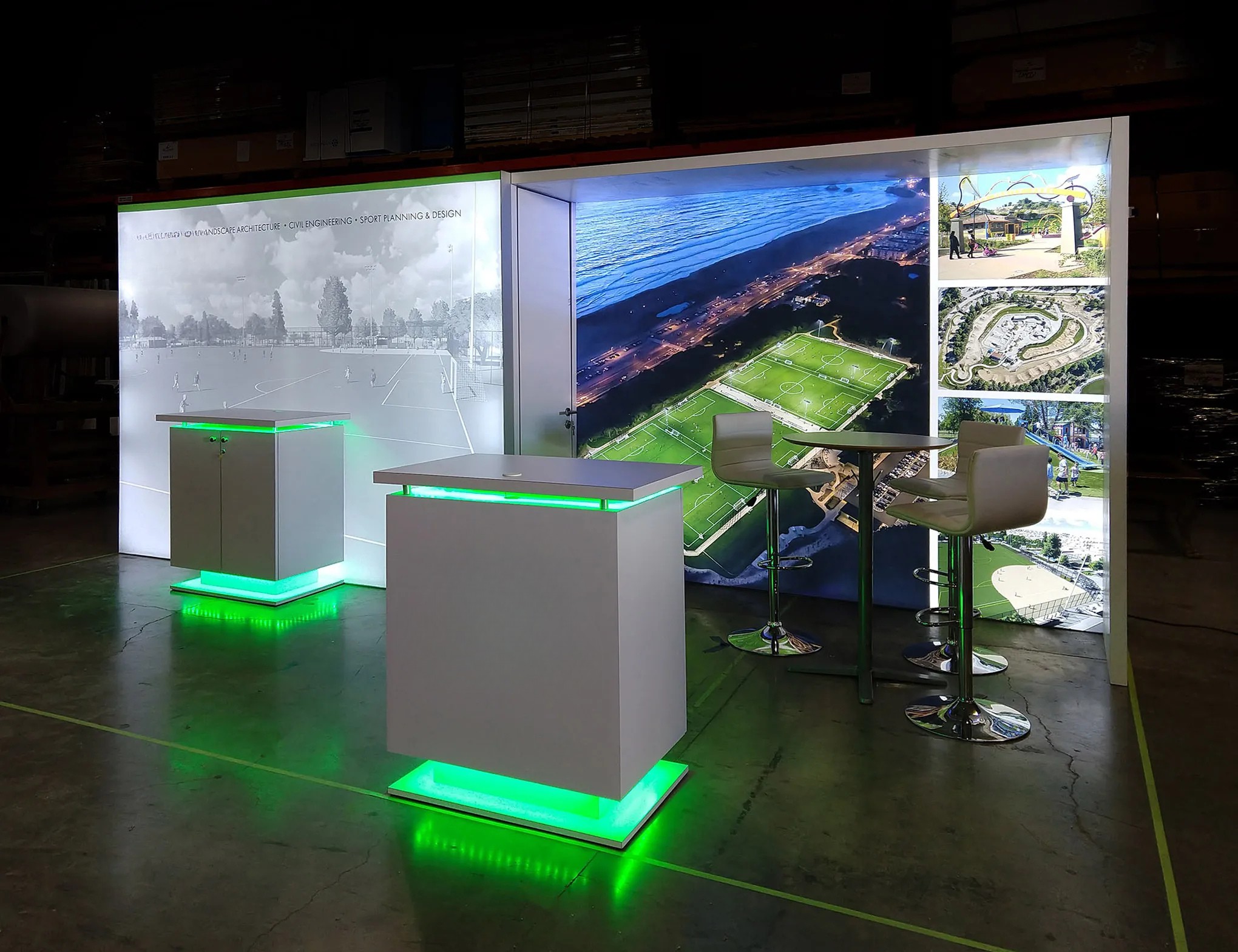
Rental exhibits allow exhibitors to access professional-grade display structures for a per-show fee rather than purchasing. Modern exhibit rental programs offer tension fabric systems, backlit displays, monitor integration, counters, and accessories at levels of quality that are visually equivalent to purchased displays on the show floor.
Renting converts exhibit investment from a capital expense to a predictable operational cost. It eliminates storage, maintenance, and graphic reprint obligations, and allows exhibitors to scale up or down between shows without structural inventory commitment. Most major exhibit builders offer rental programs alongside purchase options.
- Best for: Exhibitors attending one to three shows annually, brands testing new shows, exhibitors with overlapping show dates requiring simultaneous displays, first-time exhibitors not ready to commit capital.
Cost range: $3,000–$30,000 per show depending on exhibit size and configuration.
For a deeper breakdown of design approaches that drive traffic and ROI regardless of exhibit format, read the Ultimate Guide to Trade Show Booth Design and Modern Booth Design Trends 2026.
How to Choose the Right Trade Exhibit Size
Booth size is one of the most consequential decisions in trade exhibit planning — and one where exhibitors frequently miscalculate, going either too large for their staffing and activation budget or too small to compete effectively in a given show environment.
10×10: The Standard Starting Point
The most common booth size in the US. A 10×10 gives you 100 square feet of floor space, a single aisle-facing side, and an 8-foot backwall height restriction at most shows. It's the right choice for first-time exhibitors, regional events, and high-frequency programs where portability and efficiency matter.
A well-designed 10×10 trade exhibit — with strong graphics, good lighting, and a clean open layout — can compete effectively with larger booths. The common mistake is trying to cram too much into the space, creating visual clutter that pushes visitors away rather than drawing them in.
10×20: The Performance Upgrade
The 10×20 is the most significant booth size jump in terms of strategic value. Doubling your footprint gives you room to zone the space — one area for product display or demo, one for conversation and lead capture — without requiring a premium island position. It also gives you substantially more backwall graphic real estate, which is your highest-visibility surface.
Most exhibitors who attend the same show two or more years in a row with a 10×10 report that upgrading to a 10×20 produces a disproportionate increase in foot traffic and lead volume. Height, visibility, and spatial openness all compound in a 10×20.
20×20 and Larger: Island Territory
Once you move to a 20×20 or larger, you're in island exhibit territory. Four-sided access, elevated structures, hanging signs, and private meeting areas all become available. The investment at this scale is substantially higher — not just in exhibit cost, but in show floor fees, shipping, installation labor, and drayage.
Island exhibits are the right choice when brand presence and competitive differentiation are primary objectives — not when a smaller, well-executed exhibit would achieve the same lead generation goal at a fraction of the cost.
Trade Exhibit Design: What Actually Works on the Show Floor
Design is where most exhibitors either win big or leave significant opportunity on the table. The fundamental challenge: you have approximately three seconds to stop a walking visitor. Everything in your trade exhibit design must serve that goal.
The Back Wall Is Your Most Valuable Real Estate
The backwall of your trade exhibit is visible from across the aisle, over the heads of other visitors, and sometimes from adjacent aisles. It's the single most impactful graphic surface in your booth. Your brand name, primary headline, and core value proposition should dominate this space — large, clear, and readable from 20 feet.
The most common back wall mistake: treating it like a brochure. Feature sets, product specs, and company history belong in leave-behind materials, not on your most visible graphic panel.
Lighting Is Not Optional
A trade exhibit without proper lighting looks under-invested — even if the structure itself is high quality. LED backlit graphics, overhead spotlights, and accent lighting dramatically increase perceived exhibit quality and visibility across a busy floor. Backlit tension fabric displays, where LED panels illuminate the graphic from behind, are the current standard for professional inline exhibits because they're both visually striking and portable.
Open Space Is a Competitive Advantage
Counterintuitively, the best trade exhibits use less of their available floor space, not more. Keeping 40–50% of your footprint open, with clear sightlines through the booth, makes it dramatically easier for visitors to enter. Cluttered, furniture-heavy exhibits feel like a commitment — open, airy layouts feel approachable.
Interactive Elements Extend Dwell Time
Every minute a qualified visitor spends in your trade exhibit increases the probability of a meaningful conversation. Interactive elements — product demonstrations, touchscreen kiosks, live presentations, product sampling, and even simple branded activities — extend dwell time and give your staff natural conversation entry points.
The most effective interactive elements are tied directly to your product or service, not generic engagement gimmicks. A relevant live demo will outperform a branded game every time in a professional B2B environment.
Staff Positioning and Engagement
The most overlooked design variable is where your staff stands and how they engage. Booths where staff cluster at the back talking to each other generate a fraction of the leads of booths where staff position themselves at the front corners or aisles and engage proactively. Train your team before every show — not just on messaging, but on posture, positioning, and qualification technique.
For practical ideas on what drives traffic at all types of trade exhibits, 20 Trade Show Booth Ideas That Attract Visitors in 2026 covers proven tactics from major US shows.
Budgeting for a Trade Exhibit in 2026
One of the most common planning failures is treating the exhibit build cost as the budget, rather than one line item in a larger exhibit investment. Here is a realistic framework for total trade exhibit budgeting:
- Exhibit design and fabrication or rental: $5,000–$150,000+ depending on size, type, and custom vs. modular.
- Graphic design: $1,000–$5,000 for professional design if not in-house.
- Freight and shipping: $500–$5,000 depending on exhibit weight and destination.
- Drayage (material handling at venue): $500–$5,000 — the venue's fee to move your shipment from loading dock to booth.
- Installation and dismantling (I&D) labor: $1,000–$15,000 depending on exhibit complexity and union venue rules.
- Electrical and AV services: $500–$5,000
- Show floor fees (booth space): $2,000–$50,000+ depending on show, size, and location.
- Branded collateral and giveaways: $1,000–$10,000
- Staff travel and accommodation: $2,000–$15,000 depending on team size and show location.
A complete 10×10 trade exhibit at a mid-size US trade show typically runs $15,000–$30,000 all-in. A 20×20 island at a major national show commonly reaches $80,000–$200,000 when all costs are included. Building a realistic total cost picture before committing to a show is essential — the booth build is typically 20–40% of the total exhibit investment.
The Trade Exhibit Timeline: When to Start Planning
Late planning is the single most common and costly mistake in trade exhibit management. Here is a recommended timeline by exhibit type:
Custom Island Exhibit (20×20 and larger)
- 12+ months before show: Define exhibit strategy, set budget, shortlist builders
- 9–10 months: Select builder, begin design development
- 6–8 months: Finalize design, begin fabrication
- 3–4 months: Graphics approved, shipping coordinated
- 6–8 weeks: Final installation walkthrough and pre-show prep
Modular or Custom Inline Exhibit (10×10 to 10×30)
- 6–9 months before show: Budget set, builder search begins
- 4–6 months: Builder selected, design underway
- 2–3 months: Graphics approved, fabrication complete
- 4–6 weeks: Shipping arranged, pre-show logistics confirmed
Rental Exhibit
- 3–6 months before show: Confirm rental availability with builder
- 6–8 weeks: Submit custom graphics, confirm configuration
- 2–3 weeks: Final logistics and show-specific documentation confirmed
For a complete planning checklist and timeline framework, the Ultimate Guide to Trade Show Planning walks through every phase from strategy to post-show ROI measurement.
Trade Exhibit Marketing: Before, During, and After the Show
A great trade exhibit generates its best return when it's part of an integrated marketing effort — not a standalone investment. Here's how to extend the impact of your exhibit across all three phases:
Pre-Show Marketing
The exhibitors who generate the most leads are consistently the ones who started promoting their presence weeks before the show opened. Email your target accounts, use LinkedIn outreach, leverage show-specific hashtags, and request a pre-registered attendee list if the show provides one. A well-designed exhibit performs significantly better when qualified buyers already know where to find you.
On-Floor Strategy
Designate a lead capture system before the show — whether that's a badge scanner, a dedicated lead app, or a structured paper form. Set a daily lead target for your team. Brief your staff on qualification criteria so you're capturing high-quality prospects, not just badge scans. Brief them also on post-show follow-up timing so no one leaves the show unclear on next steps.
Post-Show Follow-Up
The most underinvested phase of trade exhibit strategy. Build your follow-up sequence before the show begins — not after. Segment leads by interest level and timeline during the show, and have personalized outreach ready to send within 48 hours of closing day. Leads that don't receive follow-up within 72 hours convert at a fraction of the rate of leads contacted immediately after the event.
For a complete strategy framework covering all three phases, the Ultimate Guide to Trade Show Marketing is the right resource.
How to Find the Right Trade Exhibit Builder
The builder you choose for your trade exhibit is one of the most consequential vendor decisions you'll make. Design quality, graphic production, fabrication durability, logistics support, and on-site service all vary enormously across the market — and surprises during installation are extremely expensive to fix.
Most exhibitors face the same challenges when sourcing a builder: they don't know which vendors are reliable in a specific city, they receive wildly inconsistent quotes, and they have no objective way to compare builder capabilities before committing.
That's exactly the gap Exhibitorly.com fills. Exhibitorly is a marketplace platform that connects exhibitors with verified booth builders across the United States. You can browse builder profiles, review past exhibit work, compare capabilities across vendors, and connect with the right partner for your specific show, exhibit format, and budget — all in one place.
For a step-by-step guide to evaluating and hiring an exhibit builder, read The Ultimate Guide to Hiring a Trade Show Booth Builder.
Top US Trade Shows to Plan Your Trade Exhibit Around in 2026
Whether you're planning a portable inline exhibit or a full custom island, Exhibitorly connects you with verified builders experienced at these major 2026 shows:
- Booth Builders for FABTECH 2026
- Booth Builders for IMTS 2026
- Booth Builders for InfoComm 2026
- Booth Builders for SEMA Show 2026
- Booth Builders for PACK EXPO 2026
- Booth Builders for BIO International Convention 2026
- Booth Builders for SHRM 2026
- Booth Builders for NAB Show 2026
- Booth Builders for RE+ 2026
- Booth Builders for SuperZoo 2026
- Top US Trade Shows June & July 2026
- Top US Trade Shows August 2026
Build Your Trade Exhibit Strategy with Exhibitorly
A great trade exhibit doesn't happen by accident. It's the result of clear goals, early planning, smart design decisions, and the right builder partner executing on every detail. Get any of those elements wrong and the investment suffers — on the floor and in your pipeline.
Exhibitorly.com makes the builder selection piece easier. Browse verified booth builders across the US, compare their capabilities and past work, and connect with the right partner for your next trade exhibit — whether that's a 10×10 inline at a regional show or a custom island build at one of the country's biggest industry events.