

Custom Trade Show Exhibits: Process, Timeline and Cost
A custom trade show exhibit is designed and built around one brand, its products and its goals, and it is the easiest booth to get wrong on time and budget. This guide explains when custom makes sense, walks through the eight steps from brief to storage, and sets out a realistic timeline starting 9–12 months before the show. It covers 2026 costs by booth size, the hidden costs of owning an exhibit, how custom compares with modular and rental, and how to choose the right custom exhibit builder.
The custom trade show booth is developed and constructed from ground zero based on one company, one line of products, and one set of objectives. This is the best approach to making an impression on the show floor, but also the simplest to mess up when you misjudge the time factor and costs involved. This guide walks through how custom trade show exhibits are made, how long each step takes, what they cost in 2026, and when custom is worth it compared with rental or modular.
Every custom project starts with choosing the right builder, and you can compare 3D concepts and itemized quotes from vetted custom trade show booth builders before you commit.
What is a Custom Trade Show Exhibit?
- A custom trade show exhibit is a tailor-made exhibition structure designed and built specifically around a brand's visual identity, product display requirements, and functional event goals.
- Unlike pre-packaged pop-up displays, a custom exhibit booth integrates specialized architectural elements, custom lighting arrays, built-in technology, and dedicated meeting spaces to optimize floor flow and audience engagement.
For the short version of the choice, our CES 2027 booth rental vs. custom build comparison lays out the trade-offs for one of the biggest shows of the year.
Benefits of Custom Trade Show Booths
Selecting custom trade show booths gives your brand several distinct advantages over competitors relying on standard modular setups:
- Unmatched Brand Differentiation: Custom architecture ensures your space looks entirely unique on a crowded show floor.
- Tailored Functional Zones: Design precise areas for live product demonstrations, semi-private sales meetings, and interactive lead-capture kiosks.
- Scalable Structural Designs: Reconfigure components across different footprint sizes throughout your trade show calendar.
- Long-Term Asset Value: High-quality fabrication materials allow exhibits to be reused over multi-year marketing campaigns.
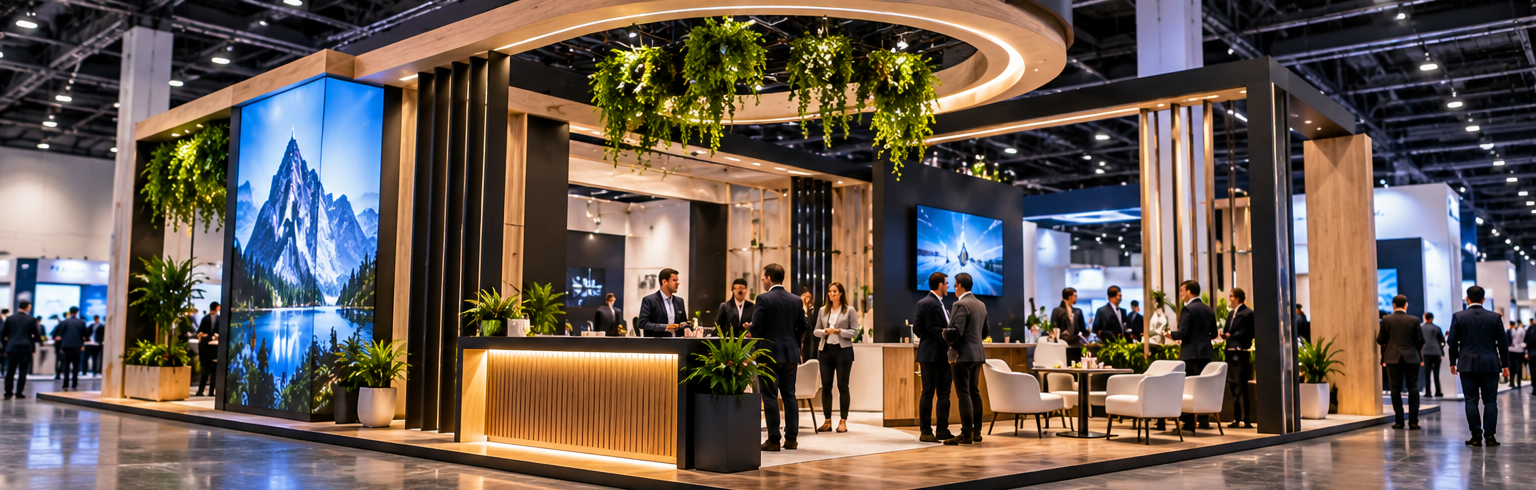
When a Custom Exhibit Design Makes Sense
- You use the same footprint to exhibit at multiple trade shows throughout the year.
- Your product requires unique structures, storage, power, or demonstration.
- You need an island or peninsula booth at your key show
- Brand experience is just as important as lead generation
- You have the budget and space to create a long-term piece
If you exhibit only once or twice a year, or your booth size changes from show to show, a trade show booth rental or modular booth usually costs less. AMW estimates that modular or rental exhibits save 40–60% compared with full custom builds.
The Custom Trade Show Exhibit Process, Step by Step
1. Brief and budget: Define your goals, show list, booth sizes, products, must-have features, and a realistic budget. A clear one-page brief makes quotes comparable; our trade show booth design guide for first-time exhibitors includes a template.
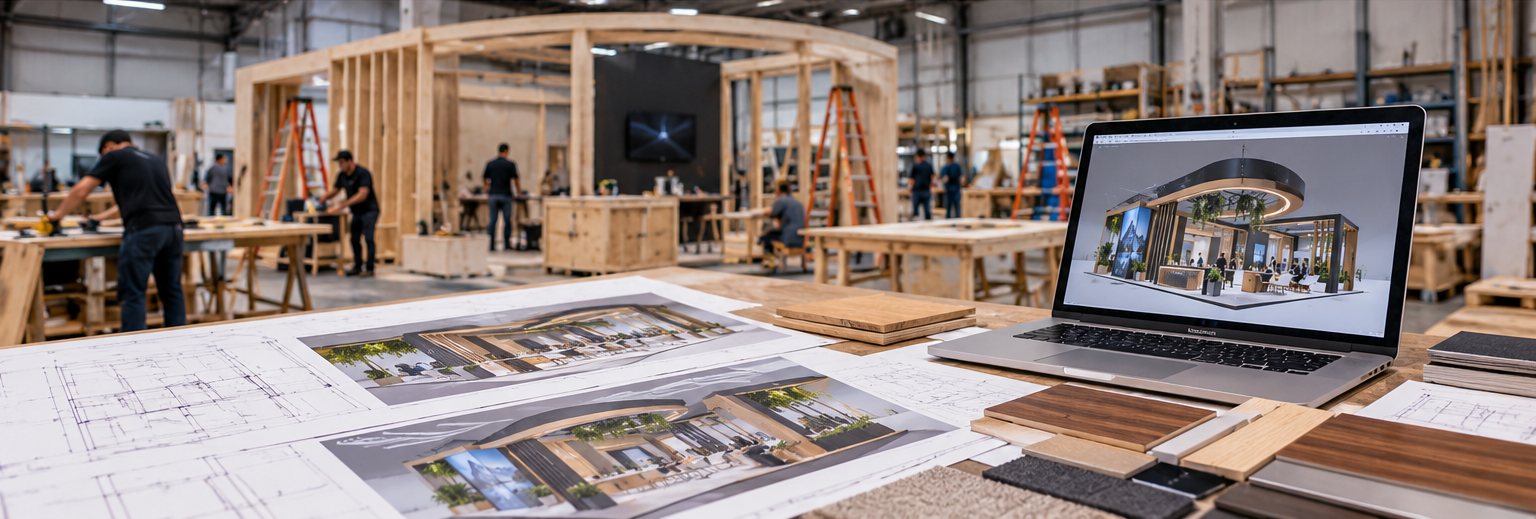
2. Concept and 3D design: The builder turns the brief into floor plans and 3D renderings. Expect one or two rounds of revisions before you approve a direction.
3. Engineering and show approvals: Structural drawings, electrical plans, and rigging for hanging signs are prepared and submitted. Double-deck exhibits often need a building permit as well.
4. Fabrication: Carpenters, metal fabricators, and finishers build the structure, counters, storage, and fixtures in the builder's shop.
5. Graphics and technology: Graphics are proofed and printed, and screens, lighting, and any interactive elements are installed and tested.
6. Pre-build: The complete exhibit is assembled in the shop before it ships. This is your chance to walk through it and fix problems while it is still cheap to do so.
7. Shipping, installation, and dismantling: The exhibit is crated, shipped to the advance warehouse or show site, and installed by labor that follows the venue's union rules.
8. Storage and refurbishment: After the show, the exhibit returns to storage, where damage is repaired, and graphics are updated before the next event.
See our install day guide for what happens on site and trade show logistics 101 for freight and warehousing.
How Long Does a Custom Trade Show Exhibit Design Process Take?
Plan in months, not weeks. TrueBlue Exhibits recommends starting design 9–12 months before the show for a large custom build, and Design Factory Las Vegas says fabricators need a minimum of six to eight weeks even for a simpler project. Rush jobs are possible, but they cost more and leave no time to fix mistakes.
| Phase | Typical Duration | When to Start |
|---|---|---|
| Brief, design, and approval | 8–12 weeks | 9–12 months before the show |
| Engineering and show approvals | 2–4 weeks, in parallel | As soon as the design is final |
| Fabrication | 6–12 weeks after approval | 3–6 months before the show |
| Graphics, AV, and pre-build | 2–4 weeks | Before the exhibit ships |
| Shipping | 1–2 weeks in transit | 4–6 weeks before the show |
| Installation | Hours to several days | Show move-in dates |
Design, fabrication, and shipping timing follows TrueBlue Exhibits' planning guide; the other durations are typical planning estimates. Hanging signs usually need approval at least 60 days before installation under IAEE guidelines, so build that into the schedule.
Custom Trade Show Booth Cost
Custom exhibits are usually priced by the square foot of booth space. AMW puts design and construction at $100–$200+ per square foot, and Metro Exhibits quotes $100–$250 per square foot depending on size, complexity, lighting, and technology. That cost is for the exhibit itself: booth space, show services, freight, and travel come on top.
| Booth Size | Square Feet | Custom Build (2026) | Rental per Show (2026) |
|---|---|---|---|
| 10x10 | 100 | ~$8,000–$20,000 | ~$3,500–$6,500 |
| 10x20 | 200 | ~$15,000–$40,000 | ~$6,500–$14,000 |
| 20x20 | 400 | ~$40,000–$120,000+ | ~$14,000–$45,000 |
| 30x30 and larger | 900+ | Often $100,000+ | Varies widely |
Ranges for 10x10 through 20x20 come from Exhibitorly's trade show booth sizes guide. AMW notes that large islands with architectural design and technology can exceed $100,000.
Remember the rest of the show budget too. GES puts booth space at an average of $100–$150 per square foot, and reports that total show costs average about three times the cost of the space. Our trade show budget planning guide helps you build the full picture.
Custom Exhibit Booths: Key Factors Influencing Total Expenses:
- Fabrication Materials: Premium hardwoods and heavy structural aluminum cost more than standard modular framing.
- Audio-Visual Tech: Integrated LED video walls, interactive touch monitors, and specialized lighting increase initial builds.
- Logistics and Drayage: Larger, heavier custom structures incur higher shipping, material handling, and storage fees.
- On-Site Labor: Complex builds require more specialized labor hours for setup and teardown.
The Hidden Costs of Owning a Custom Exhibit
- Storage between shows, billed monthly
- Repairs and refurbishment after every event
- New graphics: GES says booth graphics last about a year
- Installation and dismantle labor: Metro Exhibits quotes $125–$475 per hour depending on city and union rules
- Freight and drayage, which rise with the weight of a custom build
- Rush fees when design or approvals run late
Weight is the one most exhibitors forget. Read our guide to trade show drayage before you choose heavy materials, and see the trade show booth repair guide for keeping an owned exhibit in shape. The modular trade show booths guide shows how storage and refurbishment change the break-even.
Custom vs Modular vs Rental Exhibits
- Custom – most branding impact and flexibility of design; most expensive, longest lead times, storage required
- Modular – can be used across different booth sizes; cheaper in the long term; more restrictive architecture
- Rental – least expensive initially and no storage costs; custom graphics; few structural changes
- Hybrid – custom element atop rental or modular platform; best value often for developing programs
If you are leaning toward rental or turnkey, compare turnkey trade show services and the top trade show booth rental companies in the USA.
How to Choose a Custom Exhibit Builder
- Request builds that are comparable in size, industry, and location.
- Confirm that design, construction, and graphics are all handled in-house.
- Get a walk-through before any build is shipped.
- Get an itemized price for the exhibit, graphics, freight, labor, and storage.
- Find out who handles installation and dismantling in your location.
- See how they manage storage, repairs, and reconfiguration.
Our ultimate guide to hiring a trade show booth builder goes deeper, and you can browse vetted trade show booth builders by city. Exhibiting in Las Vegas? See custom trade show booths in Las Vegas and compare Las Vegas builders.
Common Custom Exhibit Mistakes
- Starting late and paying rush charges
- Designing for only one event when the exhibition has to work in many events
- Not considering height, rigging, and permit requirements until they fall through
- Using materials that will make the cost of shipping high each time
- Budgeting only for construction but not for storing and reconditioning
- No pre-build walk-through
Best Practices for Custom Exhibits
Maximizing attendee dwell time requires balancing visual appeal with functional spatial layout:
- Leverage Vertical Height: Use overhead hanging signs and tall structural towers so attendees can locate your booth from across the hall.
- Keep Sightlines Open: Avoid placing tall walls or high display counters near main aisles to create an open, welcoming entryway.
- Integrate Backlit Graphics: Use illuminated SEG fabric walls to eliminate shadows and maintain crisp visual clarity under harsh hall lighting.
- Plan Storage Efficiently: Build hidden storage closets into central towers to keep extra collateral, packing cases, and staff items off the floor.
Final Thoughts on Custom Trade Show Exhibits
A custom trade show exhibit is a multi-year investment, not a one-show purchase. The exhibitors who get the most from one plan early, design for their whole show calendar, and budget for the cost of ownership as well as the build.
Concentrate on what really makes the difference – your most frequently used footprint, the capabilities you will need, and a builder who can demonstrate their experience building similar displays. Once you get these right, the rest of the process will be easy to predict.
Keep in mind that it multiplies. Your high-quality custom display with updated graphics will serve your program for a few years, while a poorly built display will cost more each time it goes out the door.
Lastly, do not forget about the goal behind everything. The custom display is the way to achieve the goal - engaging conversations with your buyers. Evaluate every decision according to its ability to help start such conversations.
What to Look for in an Exhibit Partner
Much of it depends on whom you choose for your booth construction and management. A competent exhibition partner goes way beyond constructing your booth; he sees possible pitfalls, keeps your project schedule intact, and takes full responsibility for it from the very beginning till the end of the show. When choosing an exhibition partner, make sure you don't just go after low estimates; instead, you should consider his competence, transparency, and relevant experience.
- A history of building custom booths in your segment of the market
- Complete in-house design, engineering, manufacturing, and graphics services
- A pre-construction walkthrough of your booth
- Experience with your venues’ ceiling heights, rigging, and permit restrictions
- Detailed itemization of all expenses with booth storage and refurbishing costs included.
- One responsible representative for your booth throughout the whole process
Custom Exhibit Design: How Exhibitorly Can Help
Exhibitorly is a free marketplace where exhibitors can connect with screened trade show booth builders throughout the US. Rather than reaching out to builders individually, exhibitors send in one short request with their show, booth size, dates, and budget. Within 24 hours, exhibitors are paired with up to three builders who know their show and venue, and they receive 3D booth design proposals and detailed scopes of work along with transparent pricing to compare all in one place. Exhibitors can compare the cost of custom-built booths against modular or rental booths at the same show to see exactly what custom booths cost before making any commitment.
- One brief, up to three proposals from screened builders
- Pairing based on show, venue, industry, booth size, and budget
- 3D booth designs and detailed itemized pricing in one standardized form
- Custom, modular, rental, and turnkey solutions for any budget
- Builders throughout Las Vegas, Chicago, Orlando, Anaheim, and 50+ US cities
- Free for exhibitors, no obligation to hire
For related reading, explore our complete guide to trade show booth design, how Exhibitorly works, and the trade show ROI guide.