

What is a Trade Show Booth? Types, Sizes and Costs
A trade show booth is two things: the floor space you rent from the show and the display you put in it. This guide explains the main booth types, from inline and corner booths to peninsulas and islands, and how many open sides each has, what height and hanging-sign rules usually apply, and the standard US booth sizes with typical 2026 rental and custom costs. It also covers what comes with booth space and what you order separately, what a booth costs, and five steps to getting your own booth.
A trade show exhibit (booth) is the rented space on the trade show floor, along with the booth display that a business creates in order to network, demonstrate products, and get leads. There are various standard booth types and sizes available, and the decisions that you make regarding booth type and size determine what you can create, how much you have to spend, and how many people will see your booth.
This guide will discuss trade show booths in general, types and sizes of trade show booths, booth amenities, and cost of trade show booths in 2026.
Once you know what you need, you can compare designs and quotes from vetted trade show booth builders for any booth size.
What is a Trade Show Booth?
A trade show booth consists of two elements. One is the floor space, which is bought from the trade show company. The other is the entire display setup supplied by the exhibitor, consisting of backdrops, signs, displays, etc. The primary goal of a booth trade show setup is to capture attendee foot traffic, facilitate face-to-face sales discussions, and capture qualified business leads.
- Booth space: the rented area on the floor plan
- Booth display: the structure and graphics you build or rent
- Booth package: the basic items some shows include with the space
- Exhibit or stand: other words for the same thing; "stand" is common in the UK and Europe
A booth has one job: stop people walking the aisle, explain what you do in seconds, and give your team room to qualify leads, run demos, or hold meetings. If you are new to shows, see our guide to conventions vs trade shows.
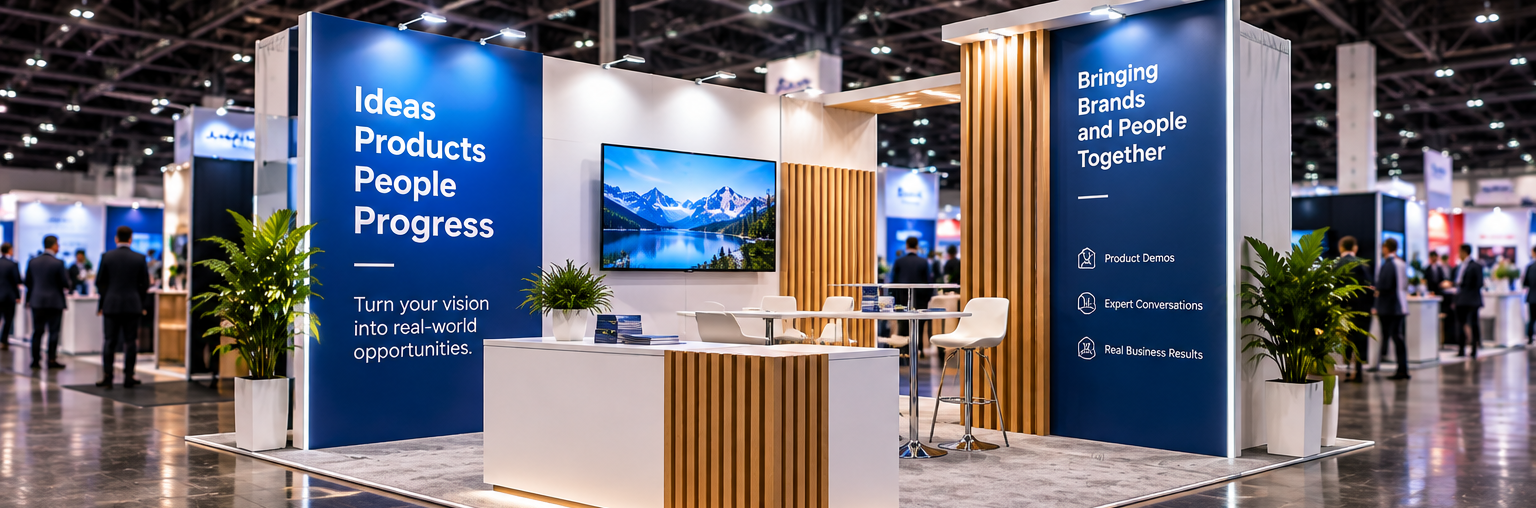
Types of Trade Show Booths
Booth type describes how many sides face an aisle. It controls how tall you can build and whether you can hang a sign. These are the typical limits under the IAEE display guidelines; your show's manual has the final say.
| Booth Type | Open Sides | Typical Size | Typical Max Height | Hanging Sign |
|---|---|---|---|---|
| Inline (linear) | 1 | 10x10, 10x20 | 8 ft back wall; 4 ft in front half | No |
| Corner | 2 | 10x10, 10x20 | Same as inline | No |
| Perimeter | 1 (backs onto hall wall) | 10x10 and up | 12 ft back wall | Usually no |
| End-cap | 3 | 10x20 | 8 ft in rear half; 4 ft elsewhere | Not permitted |
| Peninsula | 3 | 20x20 and up | 16–20 ft at center | Usually yes |
| Island | 4 | 20x20 and up | 16–20 ft, including signage | Usually yes |
- Inline Booth: the most common and most affordable booth type
- Corner Booth: an inline booth at the end of a row, often at a premium
- Peninsula Booth: open on three sides and backing onto inline booths
- Island Booth: open on all four sides, with the most visibility and the most rules
- Tabletop Booth: a 6- or 8-foot table at smaller conferences and job fairs
Standard Trade Show Booth Sizes
Understanding standard trade show booth sizes helps marketing teams select floor space that aligns with their budget and display goals.
US floor plans are laid out in 10-foot increments, so most trade show booths are multiples of 10. The 10x10 is the standard starting size.
| Booth Size | Square Feet | Usual Types | Rental per Show | Custom Build | Staff |
|---|---|---|---|---|---|
| 10x10 | 100 | Inline, corner | ~$3,500–$6,500 | ~$8,000–$20,000 | 1–2 |
| 10x20 | 200 | Inline, corner, end-cap | ~$6,500–$14,000 | ~$15,000–$40,000 | 2–3 |
| 20x20 | 400 | Peninsula, island | ~$14,000–$45,000 | ~$40,000–$120,000+ | 4–8 |
| 20x30 and larger | 600+ | Island | Varies | Often $100,000+ | 8+ |
Costs come from Exhibitorly's trade show booth sizes guide; staffing uses AMW's rule of one staffer per 50 square feet. For size-by-size detail, see the 10x10 trade show booth guide, 10x20 booth guide, and 20x20 island booth guide.
Primary Types of Trade Show Booths by Construction Style
Selecting hardware for your exhibit depends on portability needs, setup bandwidth, and overall visual goals. Reviewing popular types of trade show booths helps narrow down your options:
- Pop-Up Displays: Lightweight expanding frames covered with fabric graphics that open quickly without tools; see portable pop-up displays
- Tension Fabric Exhibits: Aluminum tubing frames wrapped in tight, wrinkle-free stretch fabric for a modern visual look.
- Modular Lightbox Systems: Illuminated SEG fabric frames with internal LED lights that make graphics stand out under venue lighting; see modular booths
- Custom Structural Builds: Tailor-made exhibits featuring specialized woodwork, hard walls, and multi-level decks for large-scale presentations; see custom trade show exhibits
- Rental booths: a builder supplies the structure and your graphics for one show; see trade show booth rental
What Comes With Booth Space (and What Does Not)
A standard inline booth package is minimal. At the NAFSA 2023 conference, for example, Freeman's standard 10x10 booth included:
- 8 ft. high back drape
- 3 ft. high side drapes
- 7" X 44" ID sign, with company name and booth number
- Carpet (included in some shows, additional cost in others)
Almost everything else is ordered separately, usually from the show's official contractor:
- Furniture, counters, and tables
- Electrical, internet, and phone
- Material handling, or drayage, to move your freight to the booth
- Installation and dismantling labor: see our install day guide
- Booth cleaning, security, and audio-visual equipment
Island and peninsula space is usually sold as raw space: a taped outline on bare floor.
How Much Does a Trade Show Booth Cost?
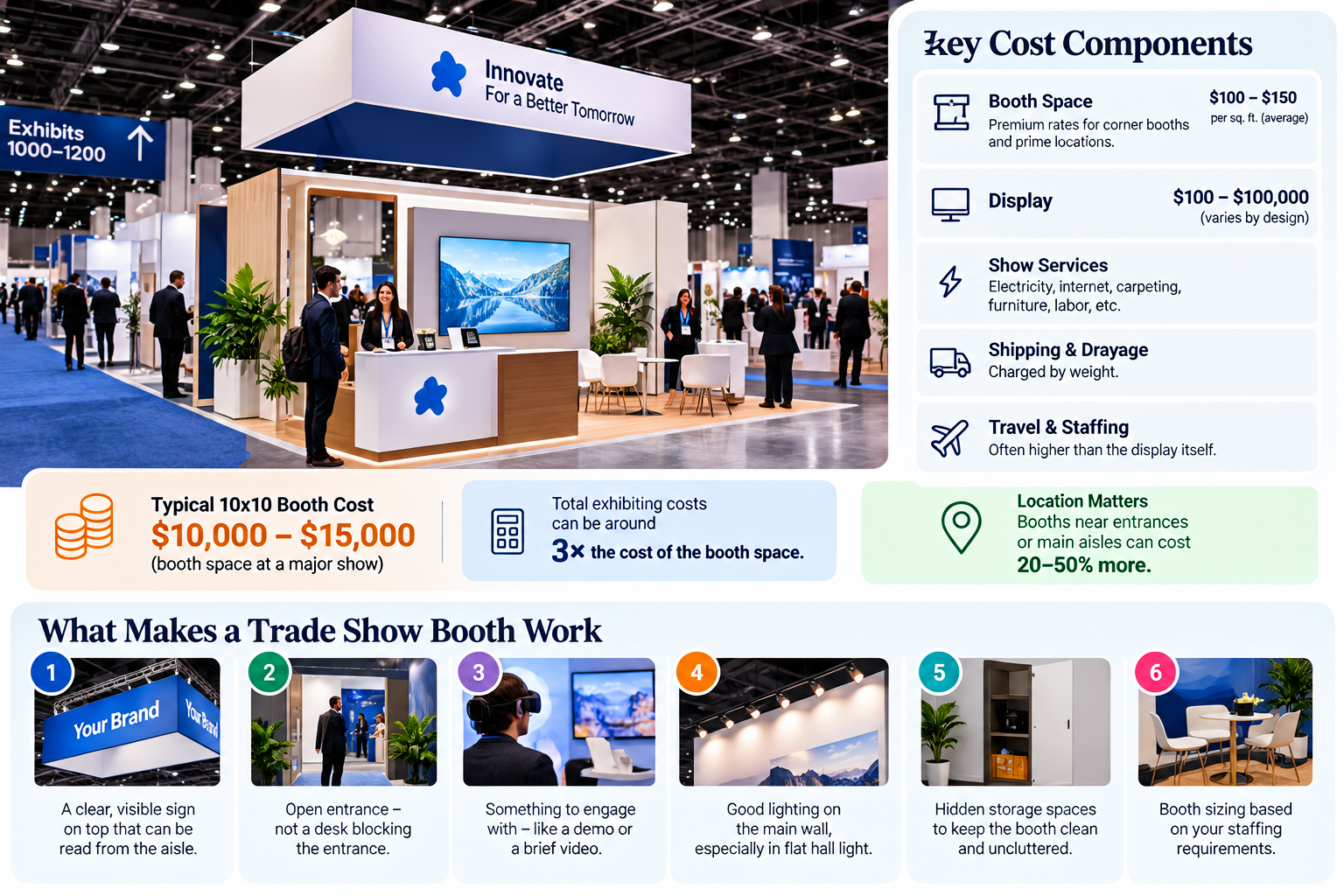
Booth space is the first cost. GES puts it at an average of $100–$150 per square foot, so a 10x10 often costs $10,000–$15,000 in space alone at a major show. Also, according to GES, the total costs of exhibiting amount to approximately three times the cost of the booth space. Location is another critical factor, as AMW states that booths that are located near entrances or the main aisle will incur an additional charge of up to 20–50%.
- Booth space – charged per square foot, premium rates for corner booths and choice locations
- Display – $100-$100,000
- Services in the show – electricity, internet, carpeting, furniture, labor
- Shipping and drayage – charged by weight
- Travel and staffing – more expensive than the display itself
Plan every line with our trade show budget planning guide, and see trade show booth on a budget for ways to spend less.
What Makes a Trade Show Booth Work
- One very clear sign on top that can be read from the aisle
- Open entrance – not a desk obstructing the entrance
- Something to engage with – like a demo or a brief screening of a video
- Lighting on the main wall, because the lighting of the hall is flat
- Hiding storage spaces so that there are no incomplete corners in the booth
- Booth sizing depending on staffing size
Read our full trade show booth design guide and browse 50 creative exhibit booth design ideas.
Best Practices for Optimizing Your Display Space
To get maximum value out of your exhibit setup, follow these essential design rules:
- Keep Sightlines Open: Avoid placing tall display counters or heavy furniture near front entry points to keep access open for attendees.
- Place Branding High: Position main logos and headlines above 5 feet so standing crowd traffic never blocks your core message.
- Use High-Contrast Lighting: Incorporate LED arm lights or backlit backwalls to eliminate dark shadows and maintain graphic clarity.
- Establish Dedicated Zones: Create distinct areas for initial greetings, interactive product demonstrations, and private sales discussions.
How to Get a Trade Show Booth: 5 Steps
1. Book your space: Choose the show, then the booth size and type. Popular shows sell out, so apply 6–12 months ahead for major events. Browse our upcoming trade shows calendar.
2. Read the exhibitor manual: Note height limits, approval deadlines, carpet rules, and the cutoff for discounted service orders.
3. Write a booth brief: List your goals, booth size, budget, key messages, demos, storage, and show dates.
4. Compare builders: Send the same brief to several builders so proposals line up side by side.
5. Approve the design and order services: Sign off on renderings, submit any required drawings, and order flooring, electrical, and labor before the advance-rate deadline.
Common Trade Show Booth Mistakes
- Reserving booth size that cannot be manned
- Assuming furniture, electricity, or carpet is provided in the booth space
- Overlooking the regulations regarding booth height and hanging signage
- Planning budget for booth display but not the space and services
- Overlooking the advance rates for services at the show
Final Thoughts on Trade Show Booths
A trade show booth is two decisions in one: the space you rent and the display you put in it. Get the type and size right for your goals, then choose the display that fits how often you exhibit and what your product needs.
It helps to focus on the factors that actually move results: who walks your aisle, how many staff you can put in the booth, and what you need visitors to do once they step in.
Bear in mind that this builds on itself. Each trade show will give you lessons on scale, placement, and design, and exhibitors who take stock after each one will keep getting more value out of their money.
Most importantly, don’t forget what your objective is. Your booth is simply a means to an end – engaging in real conversations with real buyers. Evaluate every decision based on how well it will help you to do this.
What to Look for in an Exhibit Partner
A lot is going to depend on who constructs your exhibit and who looks after it. Your choice of partner isn't about building your booth – it's about problem-solving, making sure everything runs smoothly, and taking responsibility for your project all the way from drawing board to takedown. When you select a partner, remember that the best price is not always the best choice.
- Show and venue experience and knowledge of the specific rules for those shows
- A track record of similar booth sizes in your industry
- In-house design, build, and graphics capabilities
- Clear guidance about portable, modular, rental, or custom booths
- Fully itemized transparent pricing with no fuzzy lump sums
- Single responsible point of contact all the way through from concept to takedown
How Exhibitorly Can Help
Exhibitorly is a free platform connecting exhibitors with carefully selected trade show booth builders all around the United States. Rather than reaching out to builders individually, you only need to fill out one brief containing information about your show, your booth size, timelines, and budget.
Within 24 hours, you will be matched with up to three builders who have knowledge about your specific show and venue, and you will get 3D concepts of your booth along with scope of work and pricing to make comparisons. No matter whether you need a 10 x 10 for your first show or an island booth for a flagship event – you can select the best builder for your business without any charges.
- One brief, up to three proposals from verified builders
- Matching based on show, venue, industry, booth size, and budget
- 3D booth concepts and detailed pricing in a standard format
- Custom, modular, rental, and turnkey options for any budget
- Builders in Las Vegas, Chicago, Orlando, Anaheim, and more than 50 US cities
- 100% free for exhibitors, no obligation to hire
For related reading, explore the ultimate guide to hiring a trade show booth builder, how Exhibitorly works, and our trade show checklist for exhibitors.