

Trade Show Displays: The Ultimate Guide
A trade show display is the structure inside your booth that holds your graphics, lighting and products. This guide walks through every major display type, from retractable banner stands, tabletop and pop-up displays to tension fabric, modular and fully custom builds. It shows which display fits a 10x10, 10x20 or island booth, with 2026 rental and custom cost ranges, compares portable, modular and custom options, and explains when renting makes more sense than buying. It also covers graphics, lighting, AV, show rules, shipping and the common mistakes to avoid.
The trade show displays are what will convert the space on the floor into an exhibit booth. These include the graphics, the wall frames, and the fixtures – ranging from $100 worth of banners to an island booth which may cost more than a vehicle, and getting it wrong is among the most costly blunders in an exhibition. This guide covers every type of trade show display, what each costs in 2026, which display fits which booth size, and when to buy, rent, or go custom.
The display is only part of the job; someone still has to design, print, ship, and install it. You can compare proposals from vetted trade show booth builders for any of the display types below.
What are Trade Show Displays?
A trade show display is a structure that is meant to house the graphics and products for your booth. Displays in trade show booths will generally consist of a backwall, graphics, lighting, and often some combination of a counter, monitor mounting devices, shelving, or storage space. A booth is the space you are renting from the show organizers, while a display is the product that goes inside the booth.
- Structure – frames, panels, or modular extrusions
- Graphics – printed fabric, vinyl, or hard panels
- Lighting/AV – backlighting, spotlights, monitors
- Fixtures – counters, shelving, pedestal units, storage lockers
- Accessories – flooring, furniture, hanging signage
Types of Trade Show Displays
This list includes all the major display categories, from the least complicated to the most complicated. The prices are the average cost of purchases as of October 2026 and do not include transportation costs.
Retractable Banner Stand
Retractable banner stands are the workhorses of live trade shows, setting up in seconds and storing safely inside protective aluminum bases during transport.
Portable Trade Show Displays
For small teams traveling frequently, portable trade show displays offer fast, tool-free setup and easy transport. These units collapse into compact rolling cases that fit in standard vehicle trunks or ship via standard courier services, minimizing drayage and freight expenses.
Backlit Displays
Backlit displays use internal LED lighting to illuminate custom fabric graphics from behind. This setup prevents shadows, eliminates glare from overhead convention lights, and makes colors pop across a crowded expo floor.
Pop-Up Trade Show Displays
Classic pop-up trade show displays utilize an expanding accordion frame that locks into place within minutes. Vibrant fabric graphics attach via magnetic strips or silicone edge graphic (SEG) channels, creating a seamless, professional backdrop.
Tabletop Displays
Tabletop displays give you a full branded presence without paying for floor space.
Tension Fabric Displays
Modern tension fabric displays feature pillowcase-style stretch fabric graphics fitted over lightweight aluminum tubing frames. The fabric pulls taut to eliminate wrinkles, delivering a sleek, glare-free finish under harsh convention center lighting.
Modular Trade Show Displays
If you adjust your booth size between 10x10 and 10x20 layouts throughout the year, modular trade show displays provide flexible reconfigurations. Standardized aluminum extrusions allow exhibitors to expand wall sections, add monitor mounts, or incorporate private meeting rooms seamlessly.
Custom Trade Show Displays
When brand differentiation is paramount, custom trade show displays deliver bespoke architecture tailored specifically to your visual identity. These structural builds often integrate multi-level decks, interactive demonstration stations, and custom LED lighting displays.
Price sources: Westshade for banner stands, American Image's booth cost guide for tabletop displays and its backdrop guide for pop-up, fabric, SEG, and backlit displays, and Displays2go 10x10 listings for modular kits.
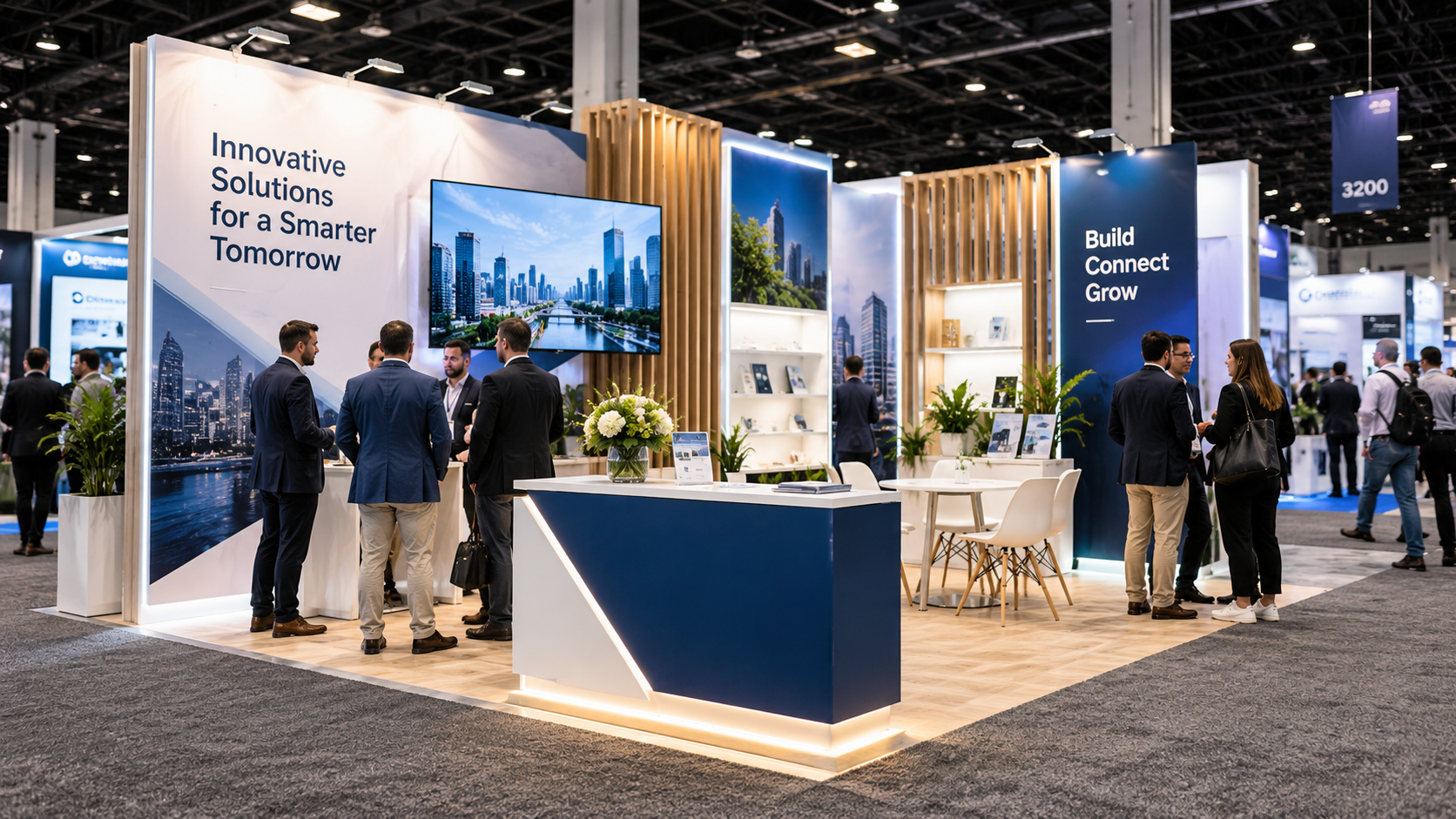
What Each Setup Does
| Display Type | Best For | Setup | Ships As |
|---|---|---|---|
| Retractable banner stand | Accents, tabletop shows, entrances | Minutes, one person | Carry bag |
| Tabletop display | Table-only shows, conferences | Minutes, one person | One small case |
| Pop-up display | First shows, tight budgets | 15–30 min, one person | One case |
| Tension fabric / SEG | Clean look, frequent travel | 20–45 min, one or two people | One or two cases |
| Backlit display | Standing out under hall light | 30–60 min, two people, needs power | Cases or crate |
| Modular system | Several shows and booth sizes a year | Hours, small crew | Crates or pallets |
| Custom display | Islands, flagship shows, brand experiences | Days, installation crew | Crates, freight truck |
For more depth on the lighter end, see our guides to portable and pop-up trade show displays and portable show displays. For lit walls, read the SEG backlit trade show booth guide.
Which Trade Show Display Fits Your Booth Size?
The right display depends first on your footprint and then on how often you exhibit.
- Tabletop: a tabletop display plus one or two banner stands
- 10x10 inline: a 10-foot pop-up, tension fabric, or backlit wall with a counter; see the 10x10 booth guide
- 10x20 inline: a 20-foot back wall or two 10-foot units, plus a demo station; see the 10x20 booth guide
- 20x20 island: modular or custom structure, branded on four sides, often with a hanging sign; see the 20x20 booth guide
- 30x30 and larger: custom or large modular builds with meeting rooms and storage
Exhibitorly's guide to trade show booth sizes puts typical 2026 costs at about $3,500–$6,500 per show to rent a 10x10 and $8,000–$20,000 to build one custom, rising to $40,000–$120,000+ for a custom 20x20 island.
| Booth Size | Typical Display Setup | Rent per Show | Custom Build |
|---|---|---|---|
| 10x10 | 10 ft back wall, counter, monitor | ~$3,500–$6,500 | ~$8,000–$20,000 |
| 10x20 | 20 ft back wall, demo station, counter | ~$6,500–$14,000 | ~$15,000–$40,000 |
| 20x20 | Island structure, hanging sign, storage | ~$14,000–$45,000 | ~$40,000–$120,000+ |
Portable vs Modular vs Custom Trade Show Displays
Most exhibitors end up choosing between three paths.
- Portable: cheapest and lightest; best for small booths and teams that set up themselves
- Modular: one kit reconfigured for different booth sizes; best for five or more shows a year.
- Custom: built around your brand and products; best for islands and flagship shows
Our modular trade show booths guide shows the break-even math between modular and rental, and the CES 2027 rental vs. custom build comparison walks through the same choice for a large show.
When to Consider a Trade Show Display Rental
Deciding between buying and opting for a trade show display rental depends primarily on event frequency and logistics capabilities.
Advantages of Leasing a Trade Show Exhibit:
- Reduced Initial Investments: No need to buy expensive equipment for a new trade show trial or annual exhibition.
- No Cost of Warehousing & Repair: Save yourself from paying any warehousing costs and from repairing your graphics after each event.
- Easy-to-Reconfigure Booths: Change booth designs, themes, and product displays without buying any additional hardware.
- Convenience: Most rentals come complete with booth delivery and setup services.
A trade show booth rental or a modular booth covers most needs. For a full rental comparison, see our trade show display rentals guide and the list of top trade show booth rental companies in the USA.
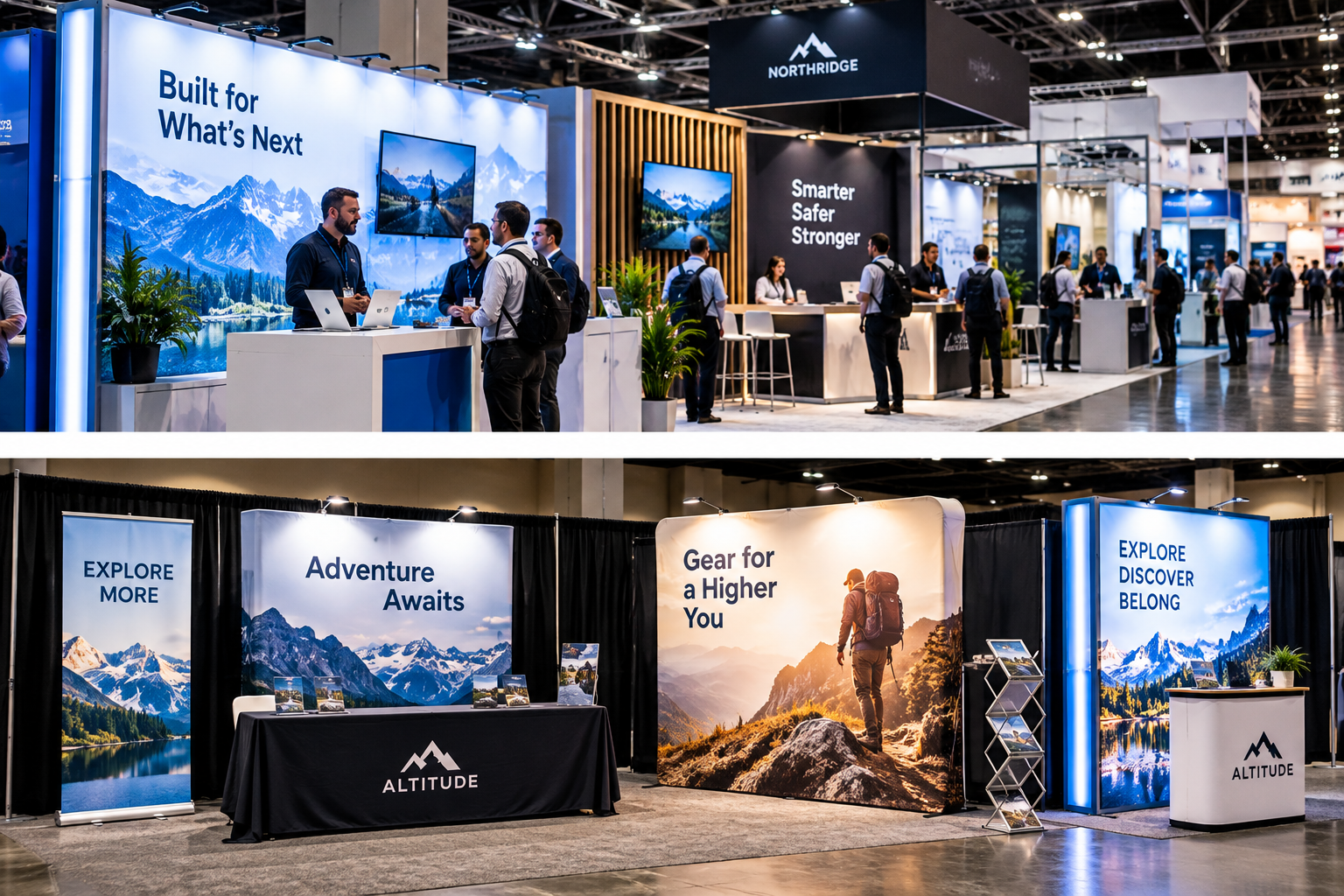
Essential Elements of an Effective Trade Show Display
To stand out on a crowded exhibition floor, your trade show display must communicate your value proposition instantly.
- High-Contrast Focal Graphics: Place main branding elements and core messaging above waist height (5 feet and above) so sightlines remain clear over foot traffic.
- Integrated LED Lighting: Well-lit displays attract up to 30% more attendee walk-ups compared to unlit booths.
- Clutter-Free Floor Plan: Maintain clear pathways into your exhibit space to encourage attendees to enter and converse with staff.
- Interactive Engagement Zones: Incorporate touchscreens, product demonstration counters, or digital presentations to increase dwell time.
Graphics: The Part of the Display People Actually See
- Fabric graphic prints compactly, is anti-glare, and is easily reprinted
- Place the logo and one line above 7 feet tall where people can’t obstruct
- The headline should be short enough to be readable from across the aisle
- High-resolution images are best because low-resolution photos show badly when backlit
- Get the proof and color check before printing
For more on design, read our trade show booth design guide, and browse 50 creative exhibit booth design ideas for inspiration.
Lighting, AV, and Furniture
Hall lighting is flat, so a display without its own light can look dull. Backlit walls, LED edge lighting, and spotlights fix that. Screens need power, mounts, and a content plan. Remember to order electrical from the show. See our trade show lighting setups guide and the trade show furniture and flooring guide.
Display Rules, Shipping, and Setup
Every display has to fit the show's rules. Under the IAEE display guidelines, inline booths generally have an 8-foot back wall limit, and anything in the front half of the booth is limited to 4 feet. Weight matters too: drayage is billed by weight, so a lighter display can save hundreds of dollars per show. Read our guide to trade show drayage and the install day guide before you ship.
Common Trade Show Display Mistakes
- Purchasing a screen without knowing how large your booths will be throughout the year.
- Too many words on the rear wall.
- Placing the logo in an area too low, where people and furniture can obscure it.
- Overlooking cases, storage, and drayage when developing your budget.
- Disregarding height and line of sight guidelines.
- Lack of power for backlit walls and screens.
Final Thoughts on Trade Show Displays
The best trade show display is the one that fits your booth size, your show calendar, and your message, not the most expensive one on the floor. Start with the footprint, then pick the display family, then spend on the graphics people will actually see.
It's best to concentrate on the elements that make a difference, namely, how frequently you will be displaying, how much you can store and transport, and whether your staff or the construction firm will be setting it up. Most likely, this will lead you straight to portable, modular, rental, or custom.
Don't forget, this builds on itself. The ability to configure and print on demand allows you to grow into your plan, but making the wrong choice means having something stored and losing money every year.
Lastly, do not forget what it is all about. A display is a tool that helps you achieve your objective, and that objective is conversations with potential customers.
What to Look for in an Exhibit Partner
- A lot depends on who will construct and run your booth.
- The best exhibit partner not only constructs your booth but also identifies potential challenges, ensures that your project runs on schedule, and takes responsibility for all activities from the first design to the last one.
- While scouting for partners, remember that you do not have to go for the cheapest quotes.
How Exhibitorly Can Help
Exhibitorly is a free marketplace connecting exhibitors to qualified trade show booth builders all over the United States. Rather than reaching out to builders one by one, you just fill out a short request for your show, the dimensions of your booth, deadline, and budget. In 24 hours, we connect you with up to three builders familiar with your event and venue, providing you with 3D booth designs, scopes of work, and clear pricing in order to allow comparison among them. You can compare three different types of booths for the same show without spending a dime.
- One brief, up to three proposals from vetted builders
- Matching by show, venue, industry, booth size, and budget
- 3D booth concepts and itemized pricing in one standard format
- Custom, modular, rental, and turnkey options for every budget
- Builders across Las Vegas, Chicago, Orlando, Anaheim, and 50+ US cities
- Completely free for exhibitors, with no obligation to hire
For related reading, explore the ultimate guide to hiring a trade show booth builder, our trade show booth on a budget guide, and custom trade show booths.